
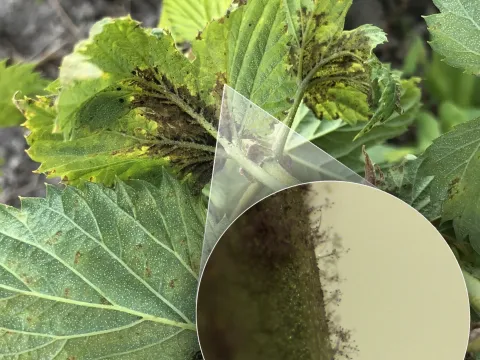
Downy mildew of hops
Pseudoperonospora humuli
The causal agent of this disease is the obligate oomycete Pseudoperonospora humuli. It is a highly specialized pathogen that exclusively affects plants within the Humulus genus.
What the section contains
Downy mildew of hops
The life cycle of the pathogen is characterized by the production of zoospores, which are motile in water. These spores allow the disease to spread rapidly across fields during periods of wet weather.
Oospores represent the sexual survival stage of the pathogen. They can persist in the soil or within dead hop tissue for extended periods, serving as the primary source of infection in the spring.
Infection cycles begin when the pathogen colonizes host tissues, absorbing nutrients through specialized structures that penetrate the plant cells. This cycle can repeat every few days under favorable environmental conditions.
The pathogen is known for its ability to overwinter not only in the soil but also within the crowns and rhizomes of infected hop plants, making it a persistent problem in established fields.
One of the earliest signs of the disease is the development of "spikes" — stunted, deformed, and brittle shoots that are often covered with a characteristic greyish-purple fungal growth.
On leaves, the symptoms appear as angular chlorotic spots, limited by the leaf veins. As the infection progresses, these spots become necrotic and turn brown or dark grey.
During periods of high humidity, the underside of infected leaves shows a dense, dark-colored mass of conidiophores and conidia, which is the primary mode of spreading the disease.
Infected cones turn brown, shrivel, and stop developing. Such cones lose their essential oils and lupulin content, rendering them completely useless for the brewing industry.
Severe infestations lead to premature defoliation, which causes significant stress to the plant, reduces the overall vigor of the crown, and threatens the survival of the plant in the long term.
Pseudoperonospora humuli thrives in environments where relative humidity is above 90% and where free water remains on the plant surface from rain, mist, or heavy dew.
The pathogen prefers mild temperatures, typically between +15°C and +20°C. In this range, the development of the disease is at its most rapid, potentially leading to widespread epidemics.
Dense canopies and poor air circulation within the hop yard create a microclimate that prevents foliage from drying out, which significantly increases the risk of successful infection.
Fields with poor drainage or those located in low-lying areas are especially susceptible, as the higher humidity levels in these sites facilitate the movement of motile zoospores.
Prolonged rain events during the bloom and cone-forming stages are critical windows where the disease can cause devastating losses if proper protective measures are not in place.
The economic impact of hop downy mildew is severe, as it can reduce yields by up to 50% or more in a single growing season by destroying the developing cones.
Beyond quantity, the quality of the hop crop is significantly degraded. The decrease in alpha acids and essential oils makes the harvest unsuitable for commercial brewing purposes.
Continuous infection weakens the rhizome system, which limits the plant's ability to store carbohydrates. This leads to reduced yields in subsequent seasons and may cause the premature death of the plants.
Management costs are high due to the necessity of multiple fungicide applications, specialized monitoring equipment, and labor-intensive cultural practices throughout the season.
In extreme cases, the total failure of the hop yard may occur, requiring costly removal of the infected plants and soil treatment before the area can be replanted.
The most effective strategy for managing downy mildew is the selection and cultivation of resistant hop varieties, combined with the use of pathogen-free planting stock.
Cultural management is vital, including the pruning of basal spikes, removing sucker shoots, and ensuring the trellis system allows for adequate light penetration and air movement.
Chemical control programs rely on the rotation of systemic and contact fungicides. Preventive spraying is essential, as once the disease becomes established, it is much harder to contain.
Sanitation practices after harvest, such as removing and destroying all infected crop debris, are crucial to reducing the primary inoculum levels for the following season.
- Implement regular scouting for early symptom detection.
- Apply copper-based fungicides as a preventative measure.
- Improve field drainage to prevent water accumulation.
- Maintain optimal soil fertility to keep the plants healthy and resilient.