
Downy mildew of lesser celandine
Peronospora ficariae
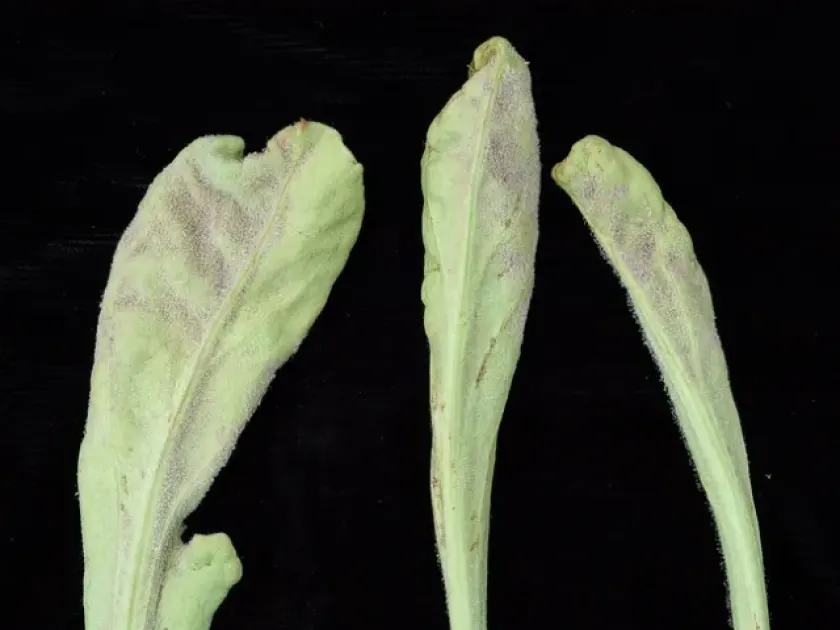
Description
Symptoms
Infection is typically characterized by the development of pale-green or chlorotic lesions on the upper surface of the leaves.
A distinct feature is the appearance of a grayish or purplish downy mold growth on the underside of the leaves corresponding to the lesions.
Leaves often become distorted, curled, or crinkled as the infection progresses throughout the tissue of the plant.
Severely infected foliage may turn brown and necrotic, leading to premature wilting and collapse of the plant's above-ground parts.
- Chlorotic leaf spotting.
- Grey-purple fungal down on the leaf underside.
- Leaf distortion and curling.
- Premature senescence of foliage.
- Stunted plant growth.
Pathogen
The causal agent of this disease is the oomycete Peronospora ficariae, which is an obligate parasite of the Ranunculaceae family.
This pathogen specifically infects Ficaria verna, completing its life cycle alongside the host's active spring growth period.
The pathogen utilizes intercellular hyphae and haustoria to extract nutrients directly from the host's tissues, eventually emerging to sporulate.
It overwinters in the form of resistant oospores within plant debris, allowing it to survive adverse environmental conditions in the soil.
The life cycle relies on the rapid production of sporangia, which are disseminated by wind and splashing water to facilitate new infections.
Conditions for development
Downy mildew development is heavily favored by cool, moist spring conditions, which are ideal for zoospore germination.
Extended periods of rainfall or high morning humidity provide the surface wetness necessary for the pathogen to penetrate the leaf.
Dense clusters of plants create a microclimate with stagnant air and high humidity, accelerating the spread of the disease.
Temperature fluctuations, particularly cool nights paired with humid days, promote rapid sporulation cycles of the oomycete.
Poor soil drainage that leads to waterlogging can increase plant stress and susceptibility, further enabling the spread of the pathogen.
Why it matters
The infection significantly impairs photosynthesis by damaging leaf tissues, which starves the plant of essential energy resources.
Persistent infestations weaken the root system and reduce the plant's ability to produce flowers and healthy vegetative growth.
In ornamental settings, the visible damage reduces the aesthetic appeal and quality of the lesser celandine population.
Severe outbreaks can cause significant population decline in local patches, disrupting the normal ecological cycle of the plant.
Weakened plants become less resistant to secondary infections or environmental stress, further complicating their survival.
Protection
Strict sanitation is the most effective control measure; all infected leaves and plant material must be removed and destroyed immediately.
Improving air circulation by spacing plants appropriately helps to reduce the leaf surface moisture required for infection.
When necessary, fungicides containing copper or other systemic anti-oomycete compounds can be applied as a protective or curative measure.
Monitoring the site early in the season is critical to identify and isolate early infections before they spread across the entire patch.
Managing soil moisture levels and avoiding overhead irrigation during damp weather can significantly decrease the risk of disease transmission.
Discussion
No discussions yet — be the first.