
Downy mildew of loosestrife
Peronospora grisea
Description
Symptoms
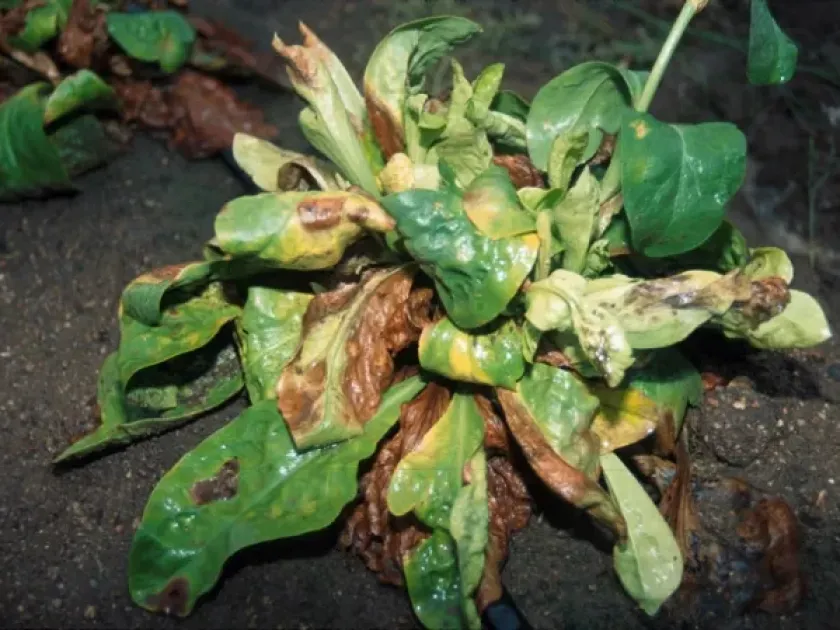
The initial signs of infection include the appearance of chlorotic (yellowish) spots on the adaxial leaf surface. These spots often become angular as they are restricted by the leaf veins, leading to a mosaic-like pattern.
A hallmark symptom is the presence of a gray or purplish-gray fungal growth on the underside of the leaves. This layer is most visible during periods of high humidity and is composed of the pathogen's reproductive structures.
As the infection progresses, the yellowed areas undergo necrosis, turning brown and brittle. Heavily infected leaves eventually wilt, curl, and drop prematurely, causing the plant to lose its ornamental appeal.
In severe cases, the pathogen can spread to young stems and flower spikes. This causes significant deformation, stunted growth, and failure of the plant to produce healthy blooms during the growing season.
- Chlorotic yellow spots on the upper leaf surface.
- Gray fuzzy fungal growth on the leaf underside.
- Premature leaf senescence and defoliation.
- Stem deformation and stunted plant growth.
- Brown necrotic lesions on leaf tissue.
Pathogen
The causal agent of this disease is Peronospora grisea, an obligate biotrophic oomycete. It belongs to the Peronosporaceae family and specifically targets plants within the Primulaceae family, particularly the genus Lysimachia.
The pathogen completes its lifecycle by producing zoosporangia, which are disseminated by wind, rain splashes, or irrigation. During adverse conditions, it survives as thick-walled oospores within infected plant debris.
The mycelium of the fungus develops intercellularly, absorbing nutrients from the host tissues via haustoria. This invasive growth pattern is characteristic of many downy mildews, causing significant physiological stress to the plant.
Diagnostic microscopic examination reveals branching conidiophores emerging through the stomata on the abaxial leaf surface. This massive production of sporangia is what gives the underside of the leaf its characteristic dusty appearance.
This pathogen is well-adapted to cool, humid temperate environments, making it a persistent problem for gardeners and nursery producers who cultivate loosestrife species.
Conditions for development
High humidity and moisture are the primary drivers for Peronospora grisea development. Frequent rainfall, heavy morning dew, and fog provide the necessary free moisture for sporangia germination and infection.
The pathogen thrives in moderate temperature ranges, typically between +15°C and +22°C. During these conditions, the disease cycle can repeat every few days, leading to rapid spread throughout the planting area.
Poor air circulation, often caused by overplanting or lack of thinning, creates a microclimate with high humidity around the plant canopy. This environment is highly conducive to the establishment of the disease.
Overhead irrigation is a significant factor in disease propagation. Water droplets splashing from the ground or from infected leaves to healthy ones efficiently disperse the inoculum across the garden bed.
Plants growing in shaded or sheltered areas with little wind exposure are particularly susceptible. The lack of sunlight and airflow prevents leaves from drying out, allowing the pathogen to persist and infect new tissues.
Why it matters
The primary impact of downy mildew on loosestrife is the severe reduction in its ornamental value. Distorted and necrotic foliage makes the plant unsuitable for decorative landscaping or floral displays.
By interfering with the plant's photosynthetic capacity, the disease severely limits the energy reserves the plant needs to survive winter and initiate strong growth the following spring.
Continuous infection can weaken the root system, eventually leading to plant decline or mortality. This is particularly problematic for perennial species that rely on vigorous root development to expand and thrive.
In commercial plant nurseries, this disease can cause substantial economic losses due to reduced plant quality and the necessity of discarding infected batches of nursery stock.
Furthermore, an infected loosestrife plant serves as a reservoir of inoculum that can jeopardize other nearby susceptible species in the garden, necessitating rigorous disease management.
Protection
Effective management begins with strict sanitation. Removing and destroying all infected plant material at the end of the season is critical to reducing the carry-over of oospores in the soil.
If the infection is spotted early, the application of appropriate fungicides is recommended. Products containing copper or specific systemic anti-oomycete agents are generally the most effective choices.
Improving cultural practices is vital. Thinning out dense plantings ensures adequate airflow, which keeps the leaf surface dry and significantly lowers the likelihood of successful pathogen colonization.
Transitioning to drip or soil-level irrigation is a highly recommended preventive measure. By keeping the foliage dry, you eliminate the key pathway for spore transmission and infection.
Monitoring the garden regularly allows for the early detection and removal of diseased plants, preventing the spread of the pathogen to healthy sections of the garden.
Discussion
No discussions yet — be the first.