
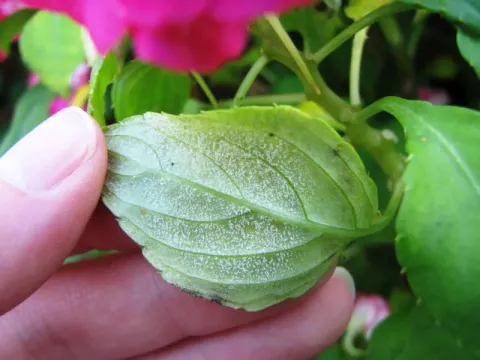
Downy mildew of impatiens
Plasmopara obducens
The initial symptom of the disease is the appearance of light green or yellow chlorotic spots on the upper surface of the leaves.
What the section contains
Downy mildew of impatiens
Under conditions of high humidity, a dense white or grayish fungal growth appears on the underside of the leaves, which is characteristic of sporulation.
As the infection progresses, the leaves become yellow, curl downwards, and eventually fall off, leaving the stems completely bare.
Infected plants exhibit a significant reduction in growth rate and often wilt rapidly, leading to the eventual death of the entire specimen.
Stems may become thin and stunted, and the growing tips may collapse, severely compromising the aesthetic value of the plant.
The pathogen is Plasmopara obducens, an oomycete that acts as a specialized obligate parasite on Impatiens species.
It is classified as a downy mildew, a systemic disease that colonizes the plant's vascular and intercellular tissues.
The pathogen produces long-lived oospores that can survive in the soil or plant debris for several years, acting as a primary source of infection.
Sporangia are disseminated by wind currents, splashing water from irrigation, or direct contact with infested materials.
Once it penetrates the stomata, the mycelium rapidly colonizes the host, absorbing nutrients and eventually killing the host tissue.
High relative humidity (above 85%) is the most critical environmental factor required for the germination and spread of the pathogen's spores.
Temperatures ranging from 18°C to 24°C (64-75°F) provide the optimal biological window for the rapid development of the disease cycle.
Poor air circulation, often caused by overcrowding or dense planting, creates stagnant moisture pockets that favor fungal proliferation.
Overhead irrigation is a major risk factor, as water droplets on foliage provide the necessary medium for spores to enter the stomata.
Lack of proper ventilation in greenhouse settings combined with cool, damp conditions can trigger a full-scale epidemic in a short period.
Downy mildew is considered the most destructive disease for Impatiens walleriana, often causing total loss of the crop in commercial and garden settings.
The pathogen's ability to remain dormant in the soil makes it extremely difficult to eradicate once it has been introduced to a garden area.
Economic damage includes the loss of plant inventory, significant costs associated with disease management, and the need for complete soil replacement.
The disease is highly contagious, meaning that a single infected plant can lead to an rapid outbreak across the entire planting area.
Plants affected by this pathogen cannot be salvaged for ornamental use, as the damage to the leaves and stem structure is irreversible.
The best management practice is to utilize drip irrigation or careful watering at the base of the plant to keep the foliage completely dry.
Sanitation is paramount; immediately remove and destroy all infected plant material, including roots and soil from the root zone.
Apply systemic fungicides containing active ingredients such as fosetyl-aluminum or mefenoxam as a preventive measure in high-risk environments.
Always use pasteurized, high-quality soil and maintain appropriate plant spacing to ensure effective air circulation throughout the foliage canopy.
- Monitor plants weekly for early signs of yellowing or underside fungal growth.
- Avoid using soil from previously infected beds for future plantings.
- Ensure greenhouses are well-ventilated during cool, damp weather.
- Rotate different classes of fungicides to prevent the pathogen from developing chemical resistance.