
Downy mildew of Lunaria
Hyaloperonospora hesperidis
Description
Symptoms
Initial symptoms include the appearance of chlorotic, yellow-green spots on the upper side of the leaves, often bounded by leaf veins.
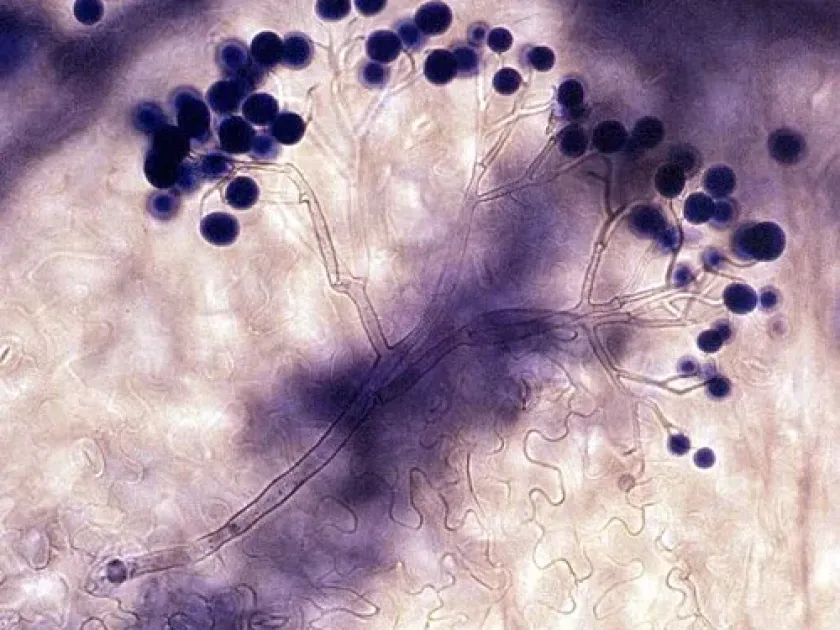
On the underside of these spots, a fuzzy, greyish-violet fungal growth emerges, which consists of the pathogen's sporangiophores.
As the disease progresses, these lesions turn brown or necrotic, eventually causing the leaves to dry out and fall prematurely.
In high humidity, the affected tissue may develop soft rot, and the plant may show overall stunting or distortion of the stems and flowers.
Diagnosis can be confirmed by microscopic observation of the characteristic branched sporangiophores typical for this species.
Pathogen
The causative agent of this disease is the oomycete Hyaloperonospora hesperidis, which is classified as a downy mildew pathogen.
This parasite is strictly specialized, infecting plants mainly within the Brassicaceae family, specifically the genus Lunaria.
The fungus survives the winter in the form of oospores located in infected plant debris, showing high resistance to adverse environmental conditions.
During the growing season, it spreads via zoospores that require water films on leaf surfaces for successful germination and infection.
The mycelium colonizes intercellular spaces, absorbing nutrients from the host through specialized structures called haustoria.
Conditions for development
The disease thrives in conditions with high relative humidity, generally above 80%, and cool to moderate temperatures.
The optimal temperature range for the development of Hyaloperonospora hesperidis is between 15°C and 20°C.
Dense planting environments with poor airflow are particularly susceptible, as they trap moisture and facilitate the spread of the pathogen.
Frequent rainfall or overhead irrigation that leaves water on the foliage for extended periods acts as a primary trigger for outbreaks.
Shaded locations with limited sunlight prevent leaves from drying quickly, further promoting the infection cycle.
Why it matters
Downy mildew causes significant aesthetic damage, rapidly destroying the foliage and reducing the ornamental value of Lunaria.
By interfering with photosynthesis, the disease stunts the growth of the plant and reduces its overall vigor and vitality.
If the infection reaches the flowers, it can inhibit seed production and affect the viability of seeds, impacting future propagation.
The presence of oospores in the soil can lead to chronic re-infection of the site, making it difficult to maintain healthy plants in subsequent years.
Severe infestations can lead to complete plant collapse, especially in young seedlings or nursery-grown plants.
Protection
Effective management begins with proper cultural practices, such as maintaining adequate spacing to promote airflow and leaf drying.
Sanitation is critical; all infected plant parts should be removed and disposed of properly to reduce the inoculum level in the garden.
Fungicide applications, specifically those effective against oomycetes, should be applied preventively or at the earliest sign of disease.
- Utilize disease-resistant cultivars whenever available.
- Ensure irrigation is directed at the root zone rather than overhead.
- Implement crop rotation to break the life cycle of the pathogen.
Regular scouting of plants during humid weather allows for early detection and intervention before the disease becomes widespread.
Discussion
No discussions yet — be the first.