
Downy mildew of geranium
Peronospora jacksonii
The causal agent of this disease is the oomycete Peronospora jacksonii, a specialized parasite that belongs to the group of downy mildew pathogens infecting the Geraniaceae family.
What the section contains
Downy mildew of geranium
This pathogen is an obligate parasite, meaning it relies entirely on the host plant's living tissues to complete its life cycle and obtain essential nutrients via haustoria.
During the sporulation stage, the fungus pushes its sporangiophores through the stomata of the leaf, creating a distinct fungal growth visible on the leaf surface.
The spread of the pathogen is facilitated by conidia, which are easily disseminated by wind currents, splashing rain, or contact with contaminated garden tools and equipment.
The fungus can overwinter as oospores within plant debris or in the rhizomes of perennial geraniums, allowing the infection to re-emerge when favorable conditions return.
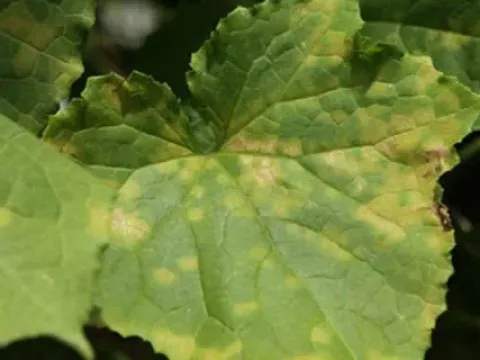
The primary symptom is the appearance of chlorotic, yellowish spots on the upper leaf surface, which often appear angular because they are delimited by leaf veins.
A grayish or violet-gray fuzzy growth, consisting of fungal spores, becomes visible on the underside of the leaves, especially when humidity levels are high.
As the infection progresses, the spots darken and turn brown or necrotic, indicating the death of the leaf tissue and the collapse of the plant's structural integrity.
Heavy infections lead to premature yellowing, wilting, and widespread leaf drop, significantly reducing the plant's health and aesthetic appeal in gardens or landscapes.
In humid conditions, the pathogen may also infect flower stalks and buds, causing them to deform, wither, and fail to open properly, hindering overall plant development.
High relative humidity is the most critical environmental factor driving the development of downy mildew, especially in environments where moisture lingers on foliage.
The pathogen thrives under moderate temperatures, often associated with cool spring or autumn weather accompanied by frequent dews or rainfall.
Poor air circulation, often caused by overly dense planting or lack of proper spacing, allows moisture to collect and remain on the leaves, creating an ideal breeding ground.
Overhead irrigation acts as a trigger for disease spread, as splashing water droplets move spores from infected leaves to healthy ones and keep the foliage wet for extended periods.
Prolonged cloudy and wet weather patterns are particularly conducive to outbreaks, as they prevent the foliage from drying out and provide constant conditions for spore germination.
The main damage is caused by the loss of photosynthetic leaf area, which weakens the plant by reducing its ability to produce energy and store nutrients in the roots.
The disease severely compromises the visual quality of geraniums, making them unsuitable for decorative use in parks, public gardens, or home landscaping.
Plants weakened by the fungus become significantly more susceptible to secondary infections, pests, and environmental stressors, often leading to premature death.
In perennial varieties, the pathogen may move into the crown or roots, lowering the plant's winter hardiness and causing survival rates to drop drastically during colder months.
For commercial growers, an outbreak of downy mildew can result in severe economic losses, as entire batches of plants may be rejected due to poor appearance and disease spread.
Cultural practices are the first line of defense, focusing on providing adequate plant spacing to promote air circulation and reduce humidity around the foliage.
Sanitation is crucial; all infected plant parts should be promptly removed and destroyed to prevent the buildup of inoculum in the environment.
Avoid overhead irrigation by using drip or surface watering methods, ensuring that foliage remains dry throughout the day and evening hours.
Effective chemical control involves the use of registered fungicides, particularly those containing copper or systemic active ingredients, applied preventatively or upon early detection.
- Regular inspection of the plant canopy.
- Disinfection of pruning tools between uses.
- Crop rotation or moving plantings to sunnier, drier locations.