
Downy mildew of cucurbits
Pseudoperonospora cubensis
The disease is caused by the oomycete Pseudoperonospora cubensis, which is a highly specialized pathogen targeting cucurbitaceous plants.
What the section contains
Downy mildew of cucurbits
It is an obligate parasite, meaning it requires living host tissue to complete its life cycle and multiply throughout the growing season.
The pathogen reproduces via sporangia, which are easily disseminated by wind currents, splashing rain, or overhead irrigation systems.
The fungus survives the off-season as oospores in plant debris or soil, and it can also persist on living host plants in protected cultivation environments.
Given optimal conditions, the life cycle of the pathogen is extremely rapid, allowing for multiple infection cycles within a single growing period.
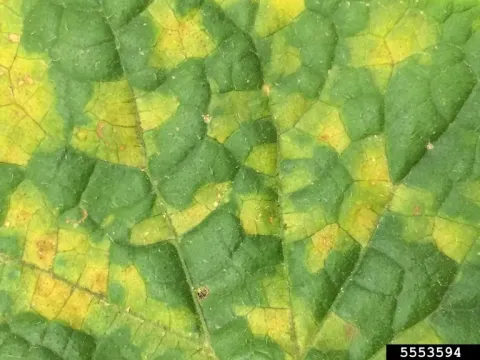
The primary symptom is the appearance of chlorotic, angular spots on the upper surface of the leaves, typically bounded by leaf veins.
Under humid conditions, a characteristic grey or purple-colored fungal growth appears on the lower leaf surface, marking active sporulation.
As the infection progresses, the yellow spots turn necrotic and brown, leading to widespread leaf tissue death and premature plant defoliation.
While fruit infection is rare, the severe loss of foliage halts the photosynthetic process, resulting in stunted fruits and reduced yields.
The disease can strike at any stage of plant development, with the most severe damage usually occurring during the active fruiting period.
Downy mildew thrives in environments with high relative humidity, typically above 80%, and cool to moderate temperatures ranging from +16°C to +25°C.
Leaf wetness, caused by dew, fog, or overhead irrigation, is essential for the germination of spores and their subsequent entry into plant tissues.
Poor ventilation in greenhouses or high planting density creates a stagnant microclimate that accelerates the spread of the disease.
The pathogen is highly sensitive to extreme environmental factors; hot and dry weather can significantly suppress its development.
Incidence is most severe during late summer and autumn when nocturnal temperature drops lead to heavy dew formation on foliage.
Downy mildew is considered one of the most destructive diseases for cucurbits, capable of causing total crop failure under severe outbreaks.
Early-season infections can kill seedlings or severely compromise plant vigor, leading to significant losses in potential market yield.
The rapid destruction of leaves leads to sunscald on fruits and a marked decrease in sugar content and overall nutritional quality.
Economic losses are compounded by the high costs of frequent fungicide applications required to keep the disease at manageable levels.
Weakened plants are prone to secondary pathogens, further complicating crop management and reducing the effective lifespan of the crop.
Effective management begins with robust cultural practices, including strict crop rotation and the removal of infected plant material after harvest.
Cultivation of resistant or tolerant cultivars is the most effective long-term strategy for preventing widespread infection in commercial fields.
Greenhouse management must prioritize humidity control, adequate spacing, and ventilation to keep leaf surfaces dry for as long as possible.
Chemical control involving systemic and contact fungicides should be implemented as a preventative measure or at the very first sign of symptoms.
- Use of drip irrigation to avoid leaf wetness.
- Scouting programs for early detection.
- Sanitation measures to eliminate inoculum sources.
- Application of balanced fertilizers to support plant health.