
Downy mildew of crucifers
Hyaloperonospora parasitica
Description
Symptoms
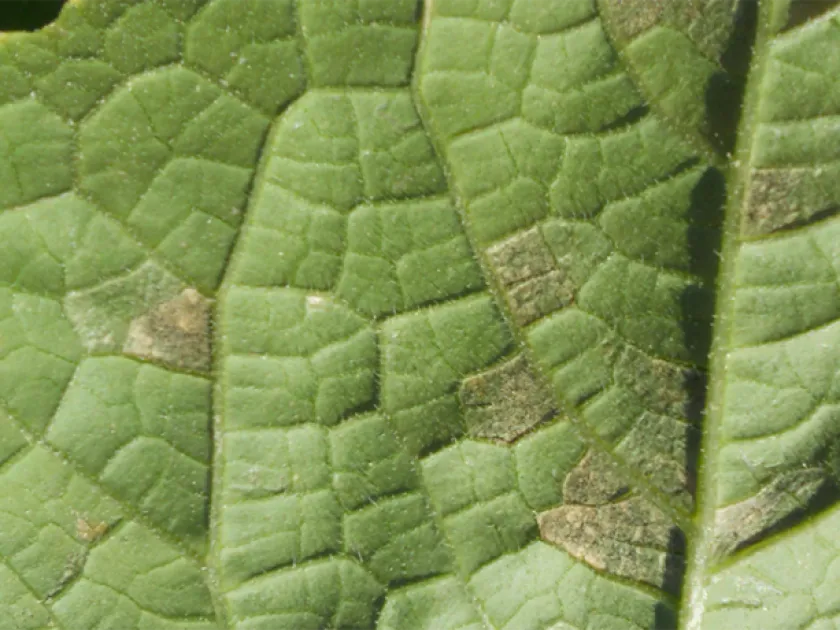
The first signs of the disease appear on cotyledons and leaves as irregular yellowish spots, which eventually turn brown or necrotic over time.
On the underside of the leaf surface, directly beneath the lesions, a characteristic grayish-white fungal growth consisting of sporangiophores and sporangia develops.
As the infection progresses, affected leaves turn yellow, wilt, and drop prematurely, significantly hindering the overall growth of the plant.
In young seedlings grown in greenhouses, the disease often leads to the distortion of the growing point and the total loss of the crop.
On mature cabbage heads, symptoms may manifest as deep dark lesions, which can later facilitate secondary decay during storage and transportation.
Pathogen
The disease is caused by the oomycete Hyaloperonospora parasitica, an obligate parasite that completes its life cycle within the host plant tissues.
The pathogen survives in the soil as oospores, which are highly resistant structures capable of remaining viable for several years.
The infection can also be introduced through contaminated seeds and infected crop debris left on the field surface after harvest.
The pathogen activates upon spore germination, entering the leaf tissues through stomata or directly via the epidermis using haustoria to extract nutrients.
Sporangia are disseminated by wind, rain splashes, or irrigation water, leading to rapid disease spread among neighboring plants in the field.
Conditions for development
Disease development is favored by high relative humidity, typically between 80–100%, and moderate temperatures ranging from +15 to +22 degrees Celsius.
Dense plant stands and poor ventilation in greenhouses create perfect microclimatic conditions for the rapid multiplication and spread of spores.
Frequent fog, heavy morning dew, or persistent rain provide the free moisture necessary for zoospore germination and subsequent host infection.
Failure to control weeds belonging to the Brassicaceae family (such as shepherd's purse or field pennycress) helps maintain the pathogen's inoculum in the area.
Neglecting proper crop rotation and planting cruciferous crops in the same field more frequently than once every 3–4 years significantly increases epidemic risk.
Why it matters
The primary damage results from the reduction of the photosynthetic leaf area, which severely limits the plant's metabolic activity and overall development.
Severe infection during the early stages of growth often leads to significant stand loss and the necessity of reseeding large agricultural areas.
For commercial brassica crops, including cabbage and oilseed rape, the disease reduces overall yield and negatively affects the quality of the harvested produce.
Physiological stress caused by the pathogen makes the plants more susceptible to secondary infections and unfavorable environmental conditions.
Infection in seed-producing crops reduces the quality of the seed stock, perpetuating the disease cycle in subsequent planting seasons.
Protection
Effective management requires an integrated approach, primarily focusing on strict crop rotation cycles where crucifers are not replanted for at least 4 years.
Field sanitation is critical; this involves the thorough removal of crop residues and deep tillage to bury and destroy oospores present in the soil profile.
Utilizing genetically resistant cultivars and hybrids is the most cost-effective strategy for minimizing economic losses caused by this disease.
Chemical control programs include the application of systemic and contact fungicides as soon as the first disease symptoms are detected in the field.
- Maintaining optimal plant density
- Rigorous weed management
- Seed treatment before sowing
- Timely fungicide applications
Discussion
No discussions yet — be the first.