
Downy mildew of foxglove
Peronospora digitalidis
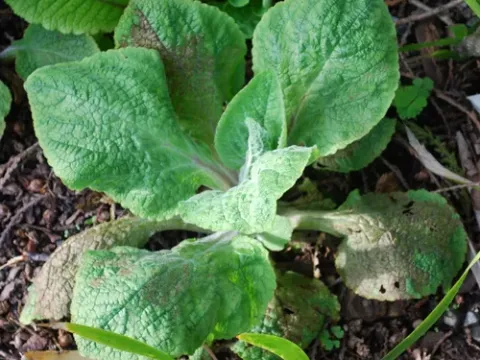
The primary symptom of downy mildew on foxglove is the development of pale green or yellowish chlorotic patches on the upper surface of the leaves.
What the section contains
Downy mildew of foxglove
These spots often correspond to the areas where the pathogen has penetrated the leaf tissue, restricting normal chlorophyll production.
A diagnostic feature is the appearance of a white, greyish, or purplish fuzzy fungal growth on the underside of the infected leaves.
As the infection progresses, these spots may expand, turn necrotic (brown or black), and eventually lead to the collapse of the leaf tissue.
Affected plants often exhibit overall stunted growth, reduced leaf size, and significant loss of foliage in severe infestation cases.
The disease is caused by Peronospora digitalidis, an obligate biotrophic oomycete that specifically targets members of the Digitalis genus.
The pathogen extracts nutrients from the host plant via haustoria, which are specialized structures that penetrate the plant cells without killing them immediately.
It survives harsh conditions by producing oospores, which are dormant, thick-walled structures that can remain viable in the soil for several years.
When environmental conditions become favorable, the oospores germinate to produce sporangia, initiating the primary infection cycle of the season.
Secondary infections occur via airborne conidia, allowing the disease to spread rapidly between plants during periods of wet and humid weather.
High relative humidity is the most critical environmental factor for the successful infection and colonization by Peronospora digitalidis.
Prolonged leaf wetness, caused by rain, heavy dew, or overhead irrigation, facilitates the germination of sporangia on the leaf surface.
Cooler temperatures, typically ranging from 15°C to 20°C, are considered ideal for the rapid development of the disease cycle.
Poor air circulation within dense plantings prevents foliage from drying out quickly, significantly increasing the risk of an outbreak.
Environmental stress, such as poor light or low soil nutrients, can make the foxglove plants more susceptible to initial pathogen attack.
The economic impact of this disease is significant because it directly degrades the quality and quantity of the foxglove foliage.
Since the leaves are the primary source of pharmaceutical compounds (digitalis glycosides), any necrotic damage renders the harvest worthless.
Severe epidemics can lead to total crop failure, resulting in substantial financial losses for growers and pharmaceutical suppliers.
Beyond crop loss, the disease weakens the plant's overall health, making it unable to produce healthy seeds for future plantings.
Invasive infections can quickly spread through an entire nursery or field, requiring drastic measures to contain the spread of the pathogen.
Effective control starts with strict sanitation practices, including the removal and destruction of all infected plant material at the end of the season.
Implementing a proper crop rotation program of at least three years reduces the survival rate of oospores in the soil.
Fungicide applications, particularly those containing copper or systemic anti-oomycete agents, are necessary if environmental conditions are highly conducive.
Ensuring adequate plant spacing allows for better air movement, which keeps the foliage dry and discourages fungal growth.
Monitoring fields regularly during moist weather allows for early detection, enabling spot treatments that can prevent a larger scale outbreak.