
Downy mildew of crucifers
Peronospora hariotii
Description
Symptoms
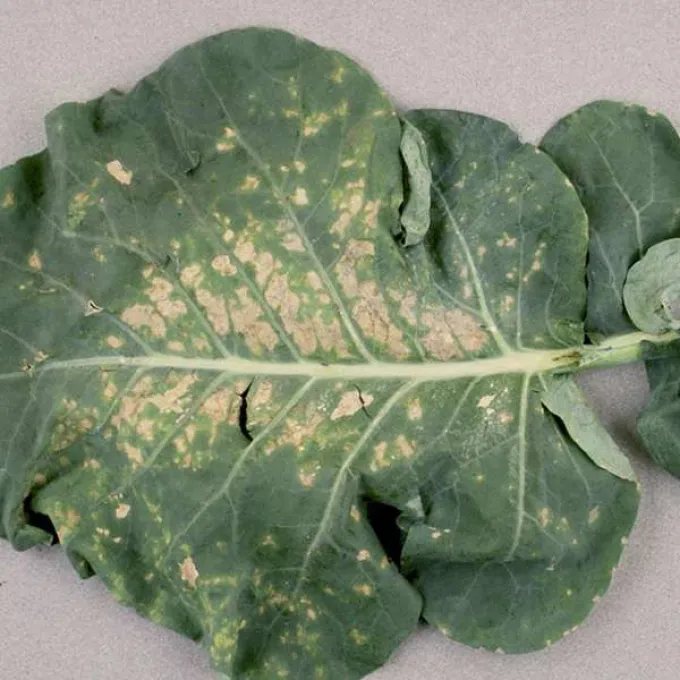
Initial symptoms include chlorotic, pale yellow spots on the upper leaf surface, often delineated by the leaf veins, giving them an angular appearance.
A characteristic grayish-violet or white downy growth, consisting of conidiophores and spores, appears on the underside of the leaves directly beneath the spots.
As the disease progresses, these lesions turn necrotic or brown, leading to premature senescence and falling of the leaves in severe infestation cases.
In seedlings, infection causes stunting, twisting of the foliage, and significant reduction in vigor, frequently resulting in seedling death.
Head-forming brassicas, such as cabbage, may suffer from internal browning or decay when the pathogen colonizes the outer leaves and facilitates secondary rot.
Pathogen
The causal agent of this disease is Peronospora hariotii, an obligate oomycete pathogen specifically targeting plants within the Brassicaceae family.
The pathogen produces sporangia that are dispersed by wind, rain splashes, and irrigation water, facilitating rapid spread across cultivated fields.
The fungus develops mycelium intercellulary, absorbing nutrients directly from the host plant's tissues, which disrupts normal plant physiological processes.
Survival occurs through oospores that persist in soil, crop debris, or sometimes on contaminated seeds, remaining viable over long periods.
Because it is an obligate parasite, its life cycle is strictly dependent on the presence of living host tissues for successful reproduction and infection.
Conditions for development
Downy mildew thrives under conditions of high relative humidity (above 80%) and cool to moderate temperatures, typically between 15°C and 20°C.
Free moisture on the leaf surface, such as dew, fog, or rain, is an absolute requirement for the germination of spores and successful infection of the host.
Densely planted crops create a microclimate with restricted air movement, which keeps leaves wet longer and accelerates the epidemic development.
Poor ventilation in greenhouse environments is a major factor that can lead to rapid and devastating outbreaks of the disease among young transplants.
Periods of prolonged cloudy weather combined with frequent precipitation provide the most favorable environment for widespread disease outbreaks.
Why it matters
The economic impact of the disease is substantial due to significant yield losses and reduction in the overall market quality of the harvested produce.
Heavy infestation reduces the photosynthetic capacity of the plant, leading to smaller heads, reduced root weight, and poor quality of seed crops.
Affected tissues are predisposed to opportunistic secondary bacterial and fungal infections, which cause soft rots during storage and transportation.
Farmers often experience increased production costs as they must apply multiple fungicide treatments to protect their crops from potential outbreaks.
Severe epidemics can lead to total crop failure, necessitating costly reseeding or resulting in a complete loss of investment for the season.
Protection
Crop rotation remains the most effective long-term management strategy, aimed at breaking the pathogen's life cycle by eliminating its host source.
Sanitation practices, including the removal and destruction of crop residues, are vital to reducing the primary inoculum source for subsequent seasons.
Selecting and planting resistant cultivars is a key component of an integrated pest management program to minimize dependency on chemical sprays.
Chemical control involving timely application of contact or systemic fungicides is essential when weather conditions favor disease development.
- Maintaining optimal spacing to improve air circulation.
- Control of cruciferous weeds which serve as alternative hosts.
- Using clean, certified seeds for all plantings.
Discussion
No discussions yet — be the first.