
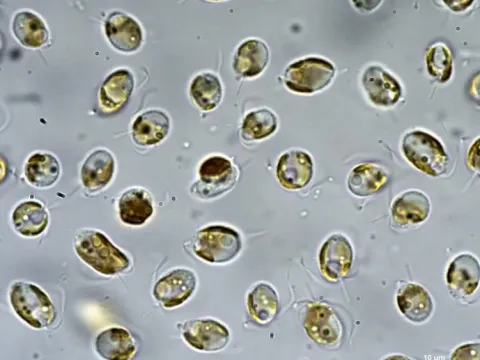
Prymnesium
Prymnesium
Prymnesium (lat. Prymnesium parvum) is a genus of haptophyte microalgae. It is primarily recognized as a toxic species capable of causing massive die-offs in aquatic environments used by agricultural producers.
What the section contains
Prymnesium
These organisms are motile, flagellated cells that possess both photosynthetic and heterotrophic capabilities, allowing them to thrive even under unfavorable environmental conditions.
The primary concern regarding Prymnesium is its production of powerful toxins known as prymnesins. These toxins cause significant damage to the gills of fish and shellfish.
While not a direct pathogen of terrestrial crops, its presence in irrigation water can indirectly affect farming operations that integrate aquaculture or water recycling systems.
Taxonomically, it is classified within the division Haptophyta, and its ability to switch between food sources makes it a highly resilient and difficult-to-control organism in aquatic systems.
The development of Prymnesium parvum is highly dependent on water salinity. It thrives best in brackish waters with salinity levels ranging from 1 to 10 parts per thousand.
Temperature is a key driver, with the most aggressive proliferation occurring between 15°C and 25°C, although the species demonstrates significant tolerance to fluctuations.
Nutrient loading, particularly of nitrogen and phosphorus from agricultural runoff, acts as a primary catalyst for bloom formation in irrigation ponds and reservoirs.
Still water conditions, lacking significant mixing or flow, provide an ideal niche for the accumulation of cells and the concentration of toxins to lethal levels.
Ample sunlight exposure, combined with high nutrient levels, can lead to sudden bloom events that appear unexpectedly, especially during warmer spring and summer months.
The main economic harm caused by Prymnesium is the total or partial loss of fish populations in farm-managed ponds and tanks, which can destroy aquaculture ventures.
The toxin-rich water becomes toxic not only to fish but potentially harmful to other aquatic life, destabilizing the entire ecological balance of the water source.
Agricultural operations relying on infested water may face challenges regarding the biological health of their infrastructure and the quality of water used for daily tasks.
The secondary economic impact includes the costs of remediation, such as draining and disinfecting water systems, and the loss of operational time during bloom events.
Long-term degradation of water quality necessitates more advanced and expensive filtration systems for farms relying on natural water sources.
Effective control of Prymnesium starts with regular water sampling and microscopic analysis to identify the presence and density of the organism early.
Mitigating agricultural runoff that is high in phosphates and nitrates is essential to prevent the nutrient enrichment that favors bloom development.
In managed aquaculture systems, salinity regulation can be used to keep water outside of the optimal range for the organism's survival, effectively inhibiting its growth.
Targeted chemical applications, such as specific algaecides, may be used cautiously, ensuring they do not harm other aquatic flora or the intended water usage.
- Regular monitoring of water sources.
- Buffer zones to reduce nutrient runoff.
- Water circulation to prevent stagnation.
- Precision use of approved algaecides.