
Pseudephebe
Pseudephebe
Pseudephebe is a genus of lichens within the Parmeliaceae family. In agricultural settings, it is classified as an epiphytic lichen rather than a plant pathogen or a traditional disease.
What the section contains
Pseudephebe
As an epiphyte, it relies on the tree for structural support only. It does not penetrate the host's vascular tissues or extract nutrients, meaning it does not act as a true parasite.
The organism is a stable symbiotic association between a fungus (mycobiont) and an alga (photobiont). This allows the lichen to thrive on bark surfaces by absorbing minerals and moisture from the air.
Pseudephebe typically prefers cool, moist environments. While common in wild forests, its presence in orchards is often associated with older trees or those with suboptimal growth conditions.
Labeling it a "disease" is a common misconception, as the lichen itself is essentially a passive colonizer that appears when environmental conditions favor its growth.
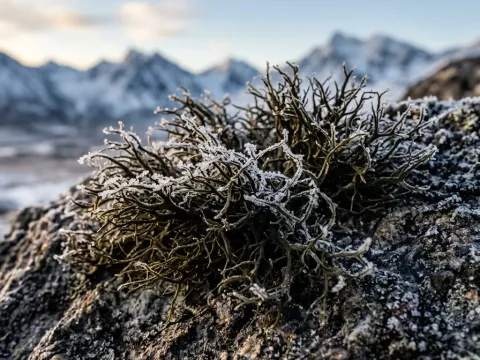
The primary indicators of Pseudephebe are the dark, brownish-black, hair-like or thread-like structures visible on the bark of trunks and main branches.
These thalli appear as dense, branched networks that tightly adhere to the surface of the tree, sometimes trailing slightly in humid conditions.
There are no accompanying lesions, necrosis, or systemic plant health issues such as chlorosis or leaf spot directly caused by the lichen’s attachment.
Increased density of the lichen typically occurs on the north side of the tree or in parts of the crown that remain shaded and humid for long periods.
Unlike pathogenic fungi, Pseudephebe does not cause rot or structural softening of the bark; the underlying tissues usually remain healthy and intact.
The development of Pseudephebe is primarily governed by high humidity and the presence of clean air, as lichens are highly sensitive to pollutants.
Shaded, poorly ventilated areas within an orchard canopy provide the ideal moisture-retaining conditions for the lichen to establish and expand.
Old or slow-growing trees with rough, porous bark are the most frequent hosts, as the texture provides a stable anchor for the lichen's attachments.
Frequent fog or dew in the orchard environment stimulates the growth of the photobiont, allowing the lichen to thrive throughout the growing season.
The lack of proper pruning and orchard maintenance exacerbates the colonization, as light penetration and airflow are insufficient to dry out the bark surfaces.
The direct harm caused by Pseudephebe is minimal, as it does not compete with the host for water or photosynthates from the soil.
However, the lichen can provide a physical habitat for various insect pests, such as scales or mites, which may seek shelter beneath the lichen's dense thallus.
Dense coverage may slightly interfere with gas exchange through the bark lenticels, although the impact on the tree's overall metabolism is generally negligible.
The main concern is that excessive lichen growth can hide early signs of genuine diseases like bacterial canker, hindering early detection and control.
Ultimately, a heavy presence of lichens often serves as an indicator that the tree is lacking vitality or that the orchard requires better management.
Mechanical removal is the most effective way to manage Pseudephebe. Brushing the bark with stiff-bristled brushes during the dormant season is highly recommended.
Good orchard sanitation practices, such as proper pruning to improve crown ventilation and sunlight penetration, are essential for discouraging lichen regrowth.
Applying a lime wash to trunks during the spring or fall can alter the pH of the bark surface, making it unsuitable for lichen colonization.
- Perform regular winter pruning to remove old wood.
- Ensure adequate nutrient management to boost bark vitality.
- Monitor trees for actual pests hiding beneath the lichen.
Effective control is achieved through consistent agrotechnical practices that prioritize the health and vigor of the fruit trees.