
Psathyrella candolleana
Psathyrella candolleana
Description
Symptoms
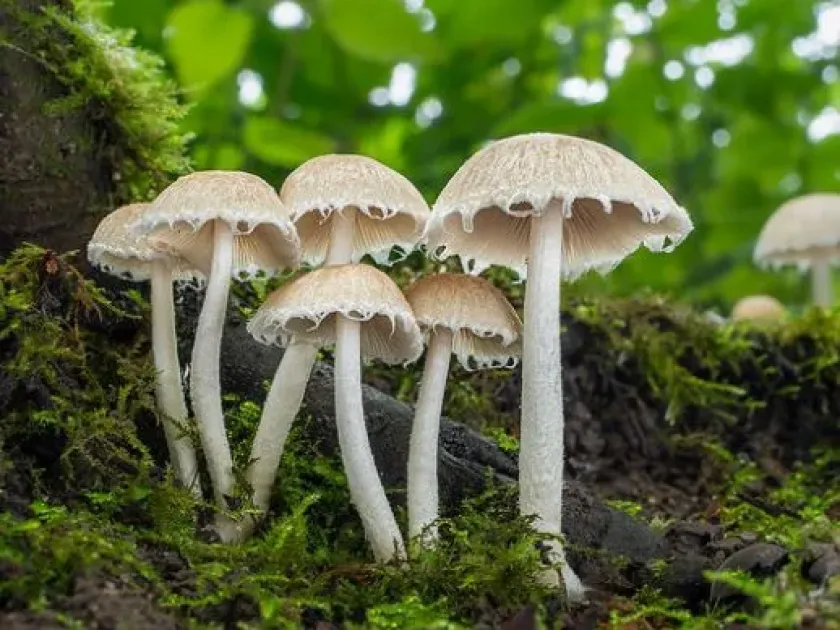
The most visible signs of its presence are the fruiting bodies, which appear in clusters. These mushrooms have fragile caps that shift from a honey-yellow or brownish color when moist to a paler, almost white hue when dry.
A key diagnostic feature of this species is the color of the gills, which are a distinct violet-brown in younger specimens. This helps distinguish it from other wood-decaying fungi.
The fruiting bodies frequently sprout around decaying stumps, buried wooden debris, or in areas heavily mulched with wood chips, often appearing suddenly after heavy rainfall.
The mycelium manifests as a network of fine white threads spreading through decaying wood. It does not produce spots, wilting, or lesions on leaves, stems, or fruits of living plants.
Large colonies can appear rapidly during warm and wet weather, forming tight, visible clusters that are purely indicative of the substrate's organic decomposition stage.
Pathogen
Psathyrella candolleana is a species of mushroom that is not a plant disease or a pathogen. It belongs to the group of saprotrophs, organisms that derive their nutrition from dead organic matter, primarily decaying wood.
Biologically, this fungus acts as a decomposer in forest and garden ecosystems. It lacks the biological machinery to penetrate or infect living plant tissues, making it harmless to crops and ornamental plants.
Unlike true phytopathogens, it does not produce toxins or obstructive mycelia that could interfere with a plant's vascular system. It thrives exclusively in non-living lignocellulosic substrates.
Classified within the Psathyrellaceae family, this species plays a vital role in soil ecology by recycling nutrients from dead wood back into the soil, promoting healthier growing conditions over time.
Therefore, it is a scientific error to classify this organism as a crop disease. It is a beneficial part of the ecosystem that indicates the presence of decomposing plant debris.
Conditions for development
Psathyrella candolleana requires a specific environment characterized by decaying deciduous wood. It is most commonly found colonizing old tree roots, stumps, and areas with significant wood chip mulch.
Optimal development of fruiting bodies occurs in a temperature range between 15°C and 25°C. High levels of humidity are essential for the mycelium to break the surface and form mushrooms.
Shaded, moisture-retentive areas of the garden are perfect breeding grounds for this fungus. In contrast, well-aerated, dry, and sunny locations are rarely suitable for its colonization.
Soil pH is generally not a limiting factor; however, the presence of nitrogen-rich organic material can accelerate the colonization process within the debris.
The fungus is highly dependent on consistent moisture; during prolonged dry spells, the mycelium remains dormant within the wood, waiting for sufficient rainfall to reappear.
Why it matters
There is no direct harm caused by this fungus to agricultural, horticultural, or grain crops. It competes with absolutely nothing and does not hinder plant growth in any capacity.
Indirectly, the presence of the fungus simply serves as a biological signal that there is a large amount of decaying wood in the area, which might be aesthetically undesirable for some gardeners.
Misidentifying this saprotroph as a root rot or pathogen often leads to the unnecessary and harmful application of fungicides, which can damage the essential beneficial bacteria and fungi in the soil.
In rare cases, the presence of excessive dead wood can encourage other insects, but the fungus itself does not invite these pests. It is purely a harmless decomposer of dead plant materials.
Gardners can rest assured that Psathyrella candolleana will never kill a tree or shrub; it only colonizes what is already dead and decaying.
Protection
Since the fungus is not a pathogen, no chemical control or fungicide treatments are necessary or recommended. Such actions are ineffective against saprotrophs living on decaying wood.
The most effective strategy is proper garden hygiene, which involves removing old tree stumps and excessive wood debris that act as food sources for the fungus.
Improving soil drainage and aeration can significantly reduce the humidity levels in the soil, creating an environment that is less hospitable for mushroom fruiting.
Manual removal of the fruiting bodies before they release their spores is a simple and ecological method to limit their appearance in the garden.
- Remove old stumps and decaying wood debris.
- Avoid over-mulching with raw, fresh wood chips.
- Ensure proper garden drainage to avoid water stagnation.
- Maintain a healthy soil ecosystem by avoiding unnecessary pesticide use.
Discussion
No discussions yet — be the first.