
Pseudevernia
Pseudevernia
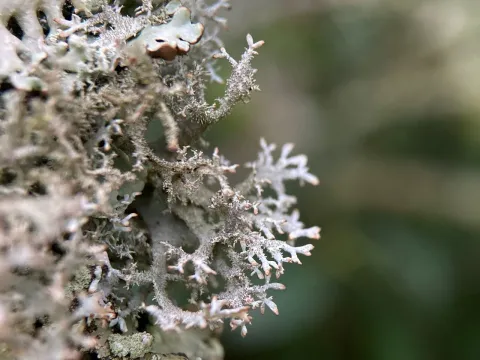
Pseudevernia is a genus of fruticose lichens that grow on the bark of trees and shrubs. It is not a disease in the biological sense but an epiphytic organism.
What the section contains
Pseudevernia
The lichen exists in a symbiotic relationship between fungi and algae, utilizing the tree merely as a physical anchor for its growth.
The most common species is Pseudevernia furfuracea, often observed in orchards, forests, and parklands with specific microclimatic conditions.
It does not feed on the tree's sap or nutrients, as it derives its sustenance through photosynthesis and absorption from the atmosphere.
Its presence is primarily a biological indicator of high humidity and environmental stability rather than a direct parasitic threat to the plant.
The primary sign of Pseudevernia is the development of grey-green or whitish, branched thalli that hang from the bark like small shrubs.
These growths often start as small, granular patches or rosettes that expand over time to cover large sections of the trunk and branches.
The texture of the lichen is usually dry and crisp, and it can be easily removed from the tree surface without tearing into the bark layers.
In wet weather, the lichen may become more flexible and appear more vibrant, making it highly visible against the dark color of the bark.
Massive colonization can result in a "bearded" appearance, where the branches appear densely covered in foliage-like growths.
High humidity and poor air circulation are the key environmental conditions that encourage the spread and growth of Pseudevernia.
Orchards located in shaded, damp valleys or areas with thick canopies often experience higher rates of colonization by these lichens.
Mature trees with rough, deeply fissured bark provide the perfect substrate for spores to settle and establish a stable hold.
Lack of routine pruning leads to dense foliage, which traps moisture and reduces the amount of sunlight reaching the inner trunk surfaces.
Stable, long-term conditions with minimal disturbance allow these colonies to grow undisturbed for many years.
While not inherently parasitic, excessive Pseudevernia growth can create a mechanical barrier that hampers the bark's ability to breathe.
The thick cover can retain moisture for prolonged periods, creating an environment favorable for the development of fungal pathogens and insect pests.
Hidden by the lichen, early signs of serious diseases, such as bark necrosis or cankers, may go undetected by the grower.
In some cases, heavy lichen growth is a secondary symptom of a tree that is already in decline due to poor health or senescence.
Removing the lichen is important not just for aesthetics but to restore the natural physiological environment of the tree bark.
Physical removal using specialized scrapers or stiff-bristled brushes is the most effective way to clear the bark of established lichen colonies.
Pruning the canopy to improve light penetration and air movement is essential for preventing the regrowth of lichen on tree branches.
Spraying the trunk and skeletal branches with a 3-5% iron sulfate solution is a common horticultural practice that effectively kills lichen.
Springtime whitewashing of trunks with lime helps protect the bark and provides an unfavorable surface for lichen spores to re-colonize.
Improving the overall vigor of the tree through fertilization and proper irrigation helps the tree shed old bark, naturally limiting lichen growth.