
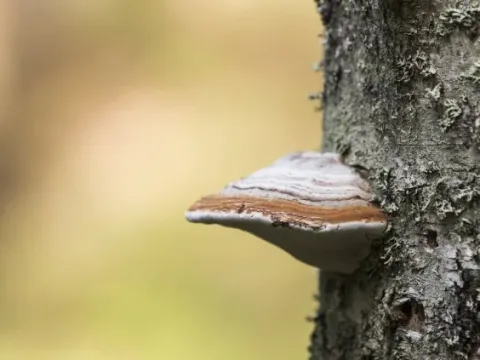
Polyporus
Polyporus
Polyporus is a genus of wood-decaying fungi within the order Polyporales, which play a significant role in forest ecosystems as decomposers but act as harmful parasites in orchards.
What the section contains
Polyporus
The fungus invades trees through wounds, pruning cuts, or environmental injuries, where its mycelium begins to break down cellulose and lignin within the wood structure.
The fungus produces visible fruiting bodies on the surface of the trunk or branches, often referred to as conks or bracket fungi, which release airborne spores.
These spores travel across gardens, germinating on susceptible exposed wood surfaces, effectively starting a new infection cycle within the host tree.
The pathogenic process involves a slow but persistent decay of the tree's internal structure, leading to the formation of cavities and structural weakness.
The most distinctive sign is the appearance of woody, shelf-like fruiting bodies protruding from the trunk or main branches of the affected tree.
Foliage often shows signs of chlorosis, premature wilting, or reduced leaf size as the vascular system becomes compromised by the advancing rot.
The bark covering the infected area may appear discolored, sunken, or cracked, often feeling soft to the touch in advanced stages of decay.
A hollow sound when tapping the trunk indicates internal wood degradation, signaling that the structural integrity of the tree is significantly compromised.
- Visible fungal brackets or conks.
- Unusual limb dieback.
- Soft, spongy wood in wounded areas.
- Reduced vigor and stunted growth.
Infection thrives when tree bark is damaged by improper pruning techniques, winter frost, or severe sunburn, creating entry points for fungal spores.
High humidity and mild weather conditions are essential for the germination of spores and the subsequent colonization of wood tissues by the mycelium.
Trees subjected to environmental stress, such as drought or lack of essential nutrients, exhibit weakened natural defense mechanisms against fungal attacks.
Overcrowded orchards with poor air circulation create stagnant, humid pockets that favor the survival and spread of Polyporus spores.
Poor orchard sanitation, such as leaving fallen branches or diseased wood on the ground, increases the inoculum pressure in the environment.
The primary danger of Polyporus infection is the development of extensive heart rot, which substantially increases the risk of tree limb failure or total collapse.
Productivity in fruit-bearing trees drops significantly as the tree channels resources towards fighting the infection rather than fruit development.
The progressive nature of wood rot means that by the time external symptoms are visible, the internal damage may already be irreversible.
In urban landscapes, infected trees present a significant safety hazard, as they are prone to shedding heavy branches or falling unexpectedly.
The long-term presence of the fungus significantly shortens the lifespan of the host, leading to early mortality of both orchard and ornamental trees.
Sanitation is the most critical control measure; all infected branches and dead wood should be removed and destroyed to minimize spore production.
Always sterilize pruning tools with alcohol or a bleach solution between cuts to prevent cross-contamination between trees.
Protect exposed wood on large pruning cuts with appropriate wound dressings or sealants to prevent the entry of airborne fungal pathogens.
Maintain tree health through proper fertilization and irrigation regimes to boost the tree's ability to compartmentalize and seal off wounds naturally.
Regular inspections of the orchard or garden allow for early detection of fungal growth, making it possible to address the problem before extensive damage occurs.