
Polyscytalum infection
Polyscytalum fecundissimum
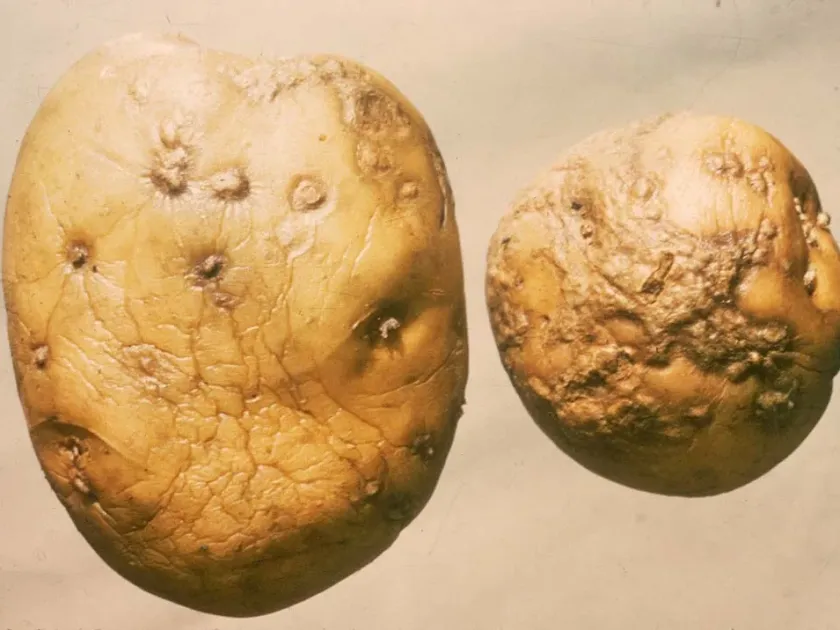
Description
Symptoms
Symptoms initially manifest as chlorotic spots on leaves, which gradually develop into dark necrotic lesions surrounded by a distinct halo effect.
Under high humidity, a fine, powdery sporulation layer may appear on the undersides of infected leaves, indicating an active state of the fungal infection.
Advanced stages of the disease lead to severe leaf distortion, premature senescence, and ultimately the necrosis of the entire plant canopy.
Stem infections can cause sunken lesions, which compromise the plant's structural integrity and may lead to lodging or systemic wilting.
Overall plant vitality is significantly reduced, resulting in stunted growth and a noticeable decline in the health of the entire crop population.
Pathogen
The causative agent is the anamorphic fungus Polyscytalum fecundissimum, a hyphomycete that poses a significant threat to various plant tissues.
The pathogen survives primarily in soil and on crop debris, functioning as a saprotroph during non-growing seasons to maintain its population density.
The fungal life cycle involves the rapid production of conidia, which act as the primary inoculum for spreading the disease through air currents and irrigation.
Morphologically, the fungus is distinguished by branched conidiophores and colorless spore chains, which are critical for its identification in clinical plant pathology.
The resilience of the fungus in diverse soil conditions makes it a persistent challenge for producers, particularly in intensive cultivation systems.
Conditions for development
The development of the disease is highly dependent on high relative humidity levels, ideally exceeding 80%, combined with moderate temperatures of 18–24°C.
Dense plant spacing creates stagnant air pockets, which facilitate the rapid spread of fungal spores and prevent leaves from drying properly.
Leaf wetness duration is a critical factor, as moisture on the foliage is essential for the germination of conidia and successful colonization by the fungus.
Poorly ventilated greenhouses often serve as reservoirs for the pathogen, as constant environmental conditions provide a perfect haven for the infection to flourish.
Plants suffering from nutrient stress or improper irrigation management are significantly more susceptible to successful infection by Polyscytalum fecundissimum.
Why it matters
The primary impact of this disease is the reduction of the leaf surface area, which leads to diminished photosynthetic efficiency and lower overall yields.
Heavy infections can cause total crop loss in susceptible varieties, as the plant's ability to produce quality fruit or foliage is compromised.
Product quality is severely affected, as necrotic lesions make the harvest unsuitable for market sale or long-term storage due to rot susceptibility.
The disease weakens the plants, making them more prone to opportunistic pests and secondary infections that further complicate crop management strategies.
Economic losses arise not only from reduced volume but also from the increased costs associated with repeated fungicide applications and plant disposal.
Protection
Integrated pest management, including crop rotation, is essential for reducing the inoculum load of the pathogen within the soil profile.
Sanitation practices such as the removal and destruction of infected plant debris are fundamental in breaking the disease's lifecycle.
Proper canopy management, including thinning and pruning, improves airflow and helps maintain lower humidity levels that discourage fungal growth.
Chemical control using systemic and contact fungicides should be applied preventively or at the earliest sign of disease based on regional guidelines.
- Selecting resistant varieties for cultivation.
- Ensuring proper tool and equipment sanitation.
- Monitoring irrigation systems to prevent leaf wetness.
- Maintaining optimal soil nutrient balances.
Discussion
No discussions yet — be the first.