
Polyscytalum
Polyscytalum
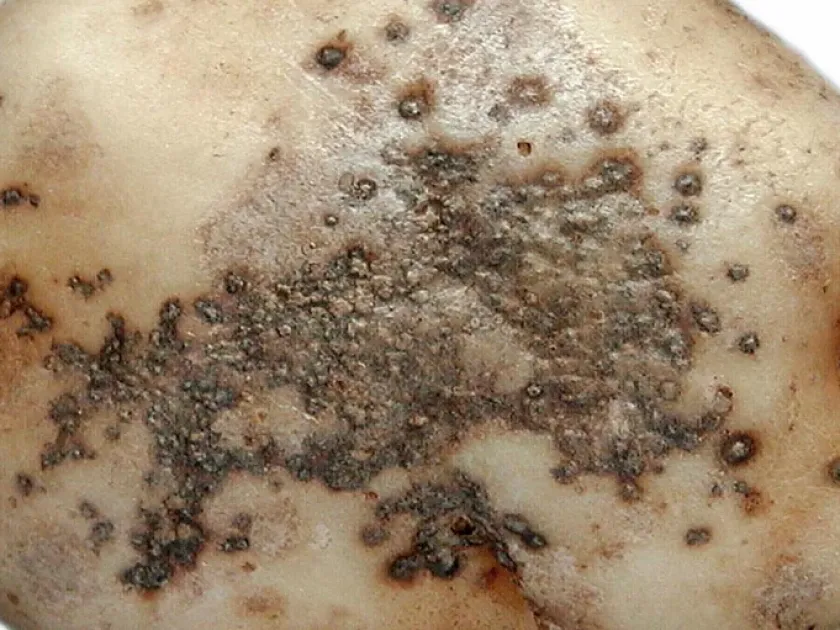
Description
Symptoms
The initial signs of Polyscytalum infection often appear as chlorotic spots on the leaf surface. Over time, these spots expand, darken, and eventually develop into necrotic lesions.
Stem infection is characterized by localized darkening or depressed spots, which indicate that the fungus is damaging the vascular bundles responsible for nutrient and water transport.
Wilting of individual leaves or entire shoots is a common secondary symptom, resulting from the vascular blockage caused by the fungal infection. This disrupts the plant's normal physiological processes.
Roots may also show signs of the disease, appearing discolored or exhibiting decay. This leads to a compromised root system, which further hinders the plant's ability to absorb water and nutrients.
- Yellowing of leaf margins.
- Necrotic spots with dark halos.
- Premature leaf abscission.
- General stunted growth and development.
Pathogen
The causal agent of this disease is a fungus from the genus Polyscytalum. It is a filamentous microorganism that primarily infects the vascular system and tissue structures of susceptible plants.
The fungus propagates through conidial spores, which serve as the primary source of inoculum. These spores are easily disseminated across fields by wind currents, splashing rain, and mechanical farm equipment.
The biological cycle of Polyscytalum is closely associated with plant debris, where the fungus survives during the off-season. It can persist in the soil for extended periods as mycelium or dormant structures.
This pathogen demonstrates a high degree of adaptability, capable of transitioning between a parasitic lifestyle and a saprotrophic one depending on the availability of a host plant.
The aggressiveness of the fungus is determined by the specific strain and the physiological state of the host plant. Once established, it can rapidly colonize tissues through enzymatic degradation.
Conditions for development
High relative humidity, typically exceeding 80%, is the primary factor favoring the development and spread of Polyscytalum. Prolonged wet conditions significantly accelerate the infection rate.
The optimal temperature range for the pathogen's growth is between 18°C and 25°C. Within these parameters, the fungal mycelium colonizes host tissue at its highest velocity.
Dense planting patterns that restrict airflow create a humid microclimate within the crop canopy. This environment is highly conducive to the proliferation of spores and the development of disease patches.
Poor crop rotation practices play a crucial role in disease spread. Returning the same crop to the same field too frequently allows the pathogen population to accumulate to damaging levels.
Mechanical damage to plants during cultivation provides easy entry points for spores. Wounded tissues are significantly more susceptible to infection than intact plant surfaces.
Why it matters
The primary harm caused by Polyscytalum is the reduction of the photosynthetic leaf area. This significantly decreases the plant's capacity to accumulate biomass and nutrients.
By damaging the vascular system, the fungus prevents the upward transport of water and essential nutrients, which leads to physiological drought even under adequate irrigation conditions.
Product quality is severely affected; yields may be deformed or show reduced shelf life, making the produce less valuable for the fresh market or industrial processing.
Plants weakened by the disease are more prone to secondary infections from other pathogens, such as soft rot bacteria, which can exacerbate the damage and lead to crop loss.
Economic losses are compounded by the costs associated with fungicide applications and the necessity of discarding contaminated produce during harvest and storage.
Protection
Effective management begins with strict adherence to crop rotation, which breaks the pathogen's life cycle. Utilizing resistant or tolerant cultivars is the most effective long-term strategy.
Agronomic practices, including deep plowing to bury crop residues and proper weed management, help to significantly reduce the primary inoculum load in the field.
Systemic fungicides are recommended for the chemical control of Polyscytalum, especially when applied at the first signs of infection to prevent further spread.
Balanced fertilization, particularly the application of potassium, helps strengthen cell walls and improves the overall resilience of the plant to fungal entry and colonization.
Regular field scouting is essential to identify early outbreaks. Promptly isolating or removing infected plants can prevent the spread of the disease to healthy parts of the crop, saving resources.
Discussion
No discussions yet — be the first.