
Polystictus
Polystictus
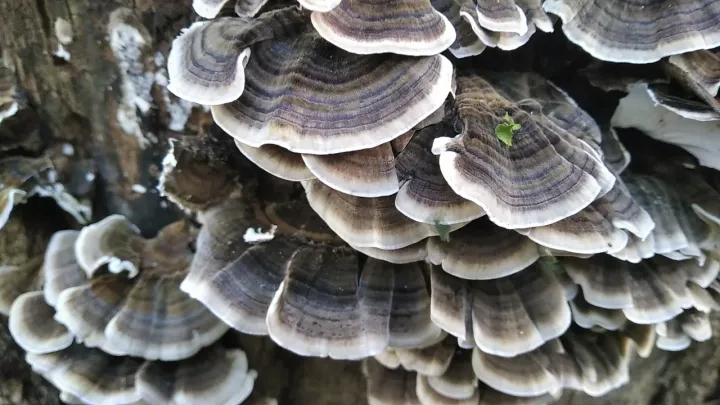
Description
Symptoms
Early symptoms often include the appearance of necrotic spots on foliage, which eventually lead to browning, curling, and premature leaf drop.
The most distinctive sign of the disease is the emergence of hard, corky, or leathery fruiting bodies on the bark or stems, indicating established colonization.
Internal tissue decay is common; upon examination, the affected wood often turns soft, discolored, and fragile, losing its ability to transport water and nutrients.
Visible cracks in the bark and oozing of sap or resin are often secondary reactions of the tree trying to contain the spreading fungal mycelium.
The overall vigor of the host plant declines visibly, showing stunted growth and dieback of branches starting from the canopy downwards.
Pathogen
The disease is caused by fungi belonging to the genus Polystictus, which are recognized as destructive wood-decaying organisms. These fungi are part of the basidiomycete group and often thrive on both weakened living trees and dead wood debris.
The biological cycle involves the development of specialized fruiting bodies that usually appear as fan-shaped, shelf-like, or crust-like structures on the host surface.
The mycelium of the pathogen penetrates deep into the plant tissue, secreting enzymes that actively break down lignin and cellulose, which are essential for the structural integrity of the plant.
Transmission primarily occurs through wind-dispersed spores and water droplets during rainy seasons. These spores can travel significant distances to infect new susceptible hosts.
The fungus is highly resilient and can survive in dormant states within infected woody parts, waiting for favorable climatic conditions to resume its invasive growth.
Conditions for development
High relative humidity and consistent moisture levels are the most critical factors driving the rapid development and sporulation of the fungus.
Temperatures ranging from 15°C to 25°C provide the optimal metabolic environment for the fungus to expand its mycelial network within the plant tissues.
Poor airflow within the canopy, typically caused by lack of pruning or overcrowding, allows moisture to linger, significantly increasing the likelihood of infection.
Host susceptibility is greatly increased by mechanical injuries such as pruning wounds, frost cracks, or damage from heavy machinery, which expose the inner wood.
Plants suffering from drought stress, nutrient deficiency, or pest damage have compromised defense mechanisms, making them highly prone to successful fungal colonization.
Why it matters
The primary impact of the disease is the gradual structural compromise of the plant, often leading to the death of major limbs or the entire tree.
Economic loss is significant in agricultural and forestry settings, as the quality and volume of the harvest, as well as the value of the timber, are severely reduced.
Infected plants become increasingly sensitive to environmental stressors, such as extreme cold or wind, due to their weakened state and poor vascular function.
The disease acts as a source of inoculum that can jeopardize neighboring healthy plants, necessitating expensive and time-consuming eradication efforts.
The long-term presence of the fungus reduces the aesthetic and commercial value of ornamental gardens and productive orchards alike.
Protection
Sanitation is the most effective control measure; all infected branches and dead wood should be promptly removed and burned to eliminate the inoculum source.
All pruning cuts and physical injuries should be treated immediately with appropriate wound sealants to prevent the entry of airborne fungal spores.
Applying copper-based fungicides during the dormant season helps to sanitize the bark surface and inhibit the germination of resting spores.
Maintaining optimal soil fertility through balanced fertilization helps the plant generate strong defense responses, reducing the chances of successful fungal invasion.
Regular monitoring of the orchard or garden allows for the early detection and isolation of infected areas, preventing the disease from spreading to the rest of the crop.
Discussion
No discussions yet — be the first.