
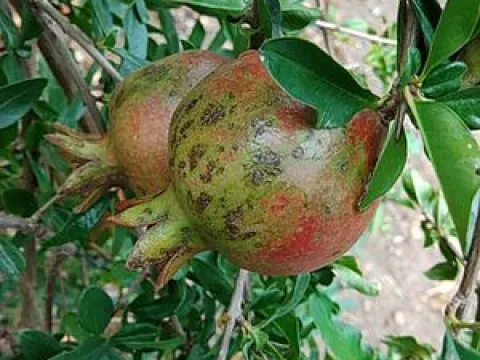
Pomegranate anthracnose
Elsinoë punicae
The causal agent of this disease is the fungus Elsinoë punicae, an ascomycete that thrives in warm and humid climates. It acts as a primary pathogen that specifically targets the pomegranate plant at various growth stages.
What the section contains
Pomegranate anthracnose
The fungus survives the winter primarily in infected woody tissues, mummified fruits left on the tree, or fallen leaves. As temperatures rise in spring, it produces conidia that spread the infection.
The pathogen initiates infection by germinating on the surface of young leaves, twigs, and developing fruit. Once it penetrates the epidermis, it rapidly colonizes the tissue using its mycelial network.
Under favorable environmental conditions, the fungus can produce multiple cycles of spores within a single season, leading to rapid disease progression throughout the pomegranate orchard.
The lifecycle of Elsinoë punicae is tightly coupled with host availability, as it can exploit wounds and natural openings like stomata to facilitate invasion into the plant tissues.
Initial symptoms are characterized by small, reddish-brown to dark brown spots appearing on the leaves, which often develop a distinct yellow halo around the lesion.
On young twigs, the fungus causes elongated, sunken cankers. If these lesions girdle the stem, the part of the branch above the infection will wilt and die back completely.
Developing fruits are highly susceptible, exhibiting dark, sunken spots that progressively enlarge, often leading to fruit deformation and premature dropping from the tree.
In humid conditions, the lesions on the fruit surface may develop a characteristic velvety texture due to the production of masses of fungal spores.
In severe cases, flowers may also show blight symptoms, failing to set fruit or resulting in aborted, necrotic fruit structures that remain attached to the branches.
High relative humidity is the most critical factor for the development of pomegranate anthracnose, especially during the fruit-set period and early development.
Frequent rainfall and prolonged leaf wetness duration provide the necessary moisture for fungal spores to germinate and infect the plant tissue efficiently.
Poor orchard sanitation, such as failing to remove infected plant debris, creates a persistent source of inoculum that encourages recurrent outbreaks year after year.
Densely planted orchards with inadequate pruning result in restricted airflow, creating a stagnant microclimate that traps moisture and favors fungal proliferation.
Unseasonable weather patterns, such as humid, warm springs followed by overcast summers, significantly increase the disease pressure within pomegranate plantations.
The economic impact of this disease is primarily felt through significant yield losses caused by the premature abscission of young fruits and rot of mature ones.
Beyond crop loss, the disease compromises the aesthetic quality of the fruit, making them unsalable in the fresh market due to unsightly lesions and deformation.
The persistent infection of twigs and branches leads to progressive dieback, which reduces the photosynthetic surface area and weakens the overall vigor of the tree.
Infected trees become more susceptible to other opportunistic pathogens, potentially leading to long-term decline and reduced lifespan of the orchard.
Managing anthracnose requires substantial investment in labor for sanitation and the purchase of fungicides, increasing the total production costs for growers.
Effective management begins with strict orchard hygiene, including the removal and destruction of all pruned branches and infected fruits to eliminate the inoculum source.
Pruning strategies should focus on thinning the canopy to promote air circulation and direct sunlight penetration, which helps to keep foliage and fruit dry.
Applying copper-based fungicides during the dormant season is a standard preventive practice to reduce the initial fungal load on the bark and dormant buds.
During the growing season, a scheduled fungicide program is necessary, especially during periods of wet weather, to protect young fruits from new infections.
- Selection of less susceptible pomegranate cultivars where possible.
- Application of balanced fertilizers to avoid excessive succulent growth.
- Sterilization of pruning tools to prevent spread between healthy and infected trees.