
Apple botryosphaeria rot
Botryosphaeria kuwatsukai
Description
Symptoms
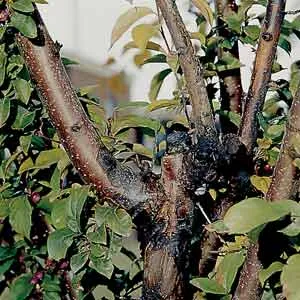
On the bark, the disease manifests as reddish-brown, necrotic lesions that later turn dark and become sunken, creating a characteristic canker. As the infection progresses, the bark may peel away, exposing the wood and potentially leading to the girdling and death of the branch.
Fruit symptoms typically appear as circular, slightly depressed brown spots. As these spots enlarge, they often develop concentric rings, and the surface becomes dotted with numerous tiny, black pycnidia, which are the reproductive structures of the fungus.
Affected fruits eventually rot completely and may become mummified. In high humidity, the fungal growth can be seen as a white mycelial mass emerging from the spots on the fruit surface, facilitating the further spread of spores via rain splash or wind.
Foliar symptoms, while less common, can manifest as chlorosis or premature senescence when the vascular transport system in the branches is severely impaired by the underlying wood infection. This leads to weakened trees and reduced overall vigor.
- Sunken, necrotic cankers on stems and branches
- Brown, circular spots on fruit surface
- Concentric rings on decaying fruit
- Black pycnidia dots on affected tissue
- Branch dieback and fruit mummification
Pathogen
The causal agent of this disease is the fungus Botryosphaeria kuwatsukai (syn. Physalospora piricola), an ascomycete pathogen known for causing significant damage to pome fruit trees. It is characterized by its ability to persist in bark tissues and form various types of fruiting bodies, such as pycnidia, which produce spores.
The fungus overwinters within infected bark, dead twigs, and mummified fruits remaining on the tree or fallen on the orchard floor. With the onset of warm, wet spring weather, the fungus releases conidia that serve as the primary inoculum for new infections in the growing season.
Infection primarily occurs through natural openings like lenticels, as well as mechanical injuries, pruning cuts, and cracks caused by environmental stress such as winter sunscald. The pathogen's ability to colonize woody tissues enables it to remain active within the tree for several seasons.
This pathogen has a wide host range, primarily infecting apple and pear trees. Its persistence in the orchard environment makes it a difficult disease to eradicate completely, requiring a long-term approach to orchard sanitation and monitoring.
Molecular studies show that the fungus can adapt to different environmental stresses, allowing it to survive in varied climates. The infection process is slow and often asymptomatic in the early stages, which complicates early diagnosis and timely intervention.
Conditions for development
The development of Botryosphaeria rot is strongly favored by warm and humid weather conditions. Optimal temperatures for spore germination and mycelial growth generally range between 20°C and 28°C, with high relative humidity playing a critical role in disease spread.
Dense tree canopies that restrict airflow maintain high humidity levels within the orchard, providing an ideal microclimate for the fungus. Lack of pruning exacerbates this problem, as trapped moisture prevents the rapid drying of plant tissues after rainfall.
Physical injuries to the tree, especially those caused by frost or sunscald, provide entry points for the pathogen. Trees under physiological stress are significantly more susceptible to infection, making site selection and proper care essential for disease prevention.
Inadequate orchard sanitation, such as failing to remove dead wood and mummified fruits, maintains a high inoculum load. This ensures that the disease cycle continues year after year, especially in regions with frequent summer rainfall or irrigation systems that wet the canopy.
Pest activity, particularly the presence of codling moth larvae, promotes infection by creating wounds in the fruit skin. These entry points allow the fungus to bypass the natural protective barriers of the fruit, leading to rapid development of rot.
Why it matters
The economic impact of this disease is substantial, resulting from direct fruit loss and reduced marketability. Even partially affected fruit is unsuitable for sale or long-term storage, as the rot spreads quickly and can affect healthy fruit in cold storage.
Severe bark infections can lead to the death of entire branches or the whole tree, necessitating expensive replanting. This loss of productive tree structure significantly impacts the long-term profitability of the orchard.
Increased costs associated with fungicide applications and labor-intensive sanitation measures drive up production expenses. This makes managing the orchard more complex and decreases the net profit for apple growers.
Trees weakened by the pathogen show reduced vigor and decreased yields over time. The cumulative stress from the disease makes them more vulnerable to secondary invaders and winter damage, further compromising the orchard's lifespan.
Infected fruit often suffers from poor quality and altered taste profiles, which lowers consumer trust and brand reputation. Preventing the spread of rot in storage is critical, as a single infected box can spoil an entire pallet.
Protection
The primary control strategy is strict orchard sanitation. This involves pruning out all symptomatic wood during the dormant season and removing all mummified fruits from the orchard to eliminate the primary sources of inoculum.
Fungicide applications should be timed carefully based on the disease risk periods, starting from the bloom phase. A protective spray program is often necessary to prevent initial infection of fruit and young bark.
Good orchard management, including proper pruning for canopy light penetration and airflow, is essential to keep tissues dry. This reduces the time available for fungal spores to germinate and infect the host plant.
Integrated pest management (IPM) is crucial, focusing on controlling insects like codling moth. By preventing fruit wounding, growers can drastically decrease the rate of fungal colonization in the developing crop.
Maintaining tree health through proper fertilization and irrigation helps prevent stress-related susceptibility. Protecting tree trunks from sunscald using white latex paint is a simple yet effective way to prevent bark injury and subsequent infection.
Discussion
No discussions yet — be the first.