
Pilobolus
Pilobolus
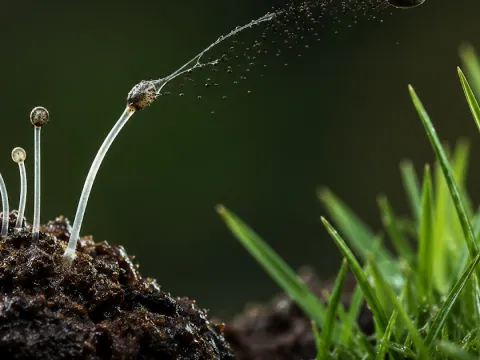
Pilobolus is a genus of fungi in the order Mucorales. Commonly known as the "dung cannon," it has evolved a highly specialized mechanism to ensure its survival and dissemination via herbivore digestive tracts.
What the section contains
Pilobolus
The fungus develops primarily on animal excrement, utilizing the nutrients present in the substrate to produce its distinctive sporangia, which are ejected with high velocity.
While not a classical plant pathogen, Pilobolus colonizes plant material adjacent to its substrate. Its life cycle involves passing through the gut of an animal to ensure germination.
The biological structure includes a light-sensitive vesicle that directs the sporangiophore towards a light source, allowing for an incredibly accurate projectile launch.
The rate of colonization is rapid, often completing its reproductive cycle within a few days when environmental conditions remain stable and favorable for growth.
The presence of Pilobolus is marked by the appearance of tiny, black, shiny dots (sporangia) adhered to leaves, stems, or blades of grass surrounding patches of manure.
Affected plant tissue may show small localized spots of discoloration where the sporangia have attached, which can be misidentified as minor fungal leaf blight.
In humid conditions, the fungus manifests as transparent, water-filled stalks topped with black caps growing directly from moist dung piles.
Visual inspection of pastures in the early morning often reveals the fungus before the sun causes the sporangia to dehydrate or be ejected.
Contaminated forage may emit a musty odor, particularly if large areas of the crop are infested, indicating the presence of fungal mycelium.
High moisture levels are the most critical factor for Pilobolus growth. Rainfall, heavy dew, and humid air provide the necessary environment for the fungus to thrive.
Optimal temperatures for the fungus range from 20 to 25 degrees Celsius, allowing for rapid metabolic activity and spore production.
Exposure to light is essential, as the fungus relies on phototropism to orient its sporangia away from the manure pile and onto clean, forageable vegetation.
Dense canopies and lack of air circulation in pastures create a conducive microclimate that allows the fungus to spread rapidly across the vegetation.
Fresh animal waste serves as the primary reservoir for the fungus, providing the specific nutrient profile required for the germination of its spores.
The infestation of Pilobolus reduces the palatability of forage crops, leading to grazing animals avoiding contaminated areas of the pasture.
Ingestion of contaminated vegetation can disrupt the natural intestinal flora of livestock, potentially leading to lower feed efficiency and reduced animal performance.
The presence of this fungus on forage contributes to the overall decline of pasture quality, requiring more intensive management to maintain clean grazing areas.
In stored hay, the fungus can facilitate the growth of other undesirable molds if the moisture content is not controlled, leading to significant forage losses.
Management costs increase when pastures must be rested or treated due to high levels of fungal colonization, impacting the profitability of livestock operations.
Rotational grazing is the most effective management practice to limit Pilobolus. Moving animals away from infested areas breaks the cycle and allows the vegetation to recover.
Sanitation practices, including the regular removal of manure from grazing paddocks, significantly reduce the potential sites for fungal development.
Mowing pastures to keep the vegetation at an optimal height makes the plants less attractive for spore attachment and improves light penetration to the soil surface.
Composting manure at high temperatures before applying it to fields destroys Pilobolus spores, preventing the spread of the fungus via fertilization.
Ensuring balanced nutrition for livestock helps bolster their resistance to potential digestive issues associated with the ingestion of fungi-contaminated feed.