
Pine bolete
Boletus pinophilus
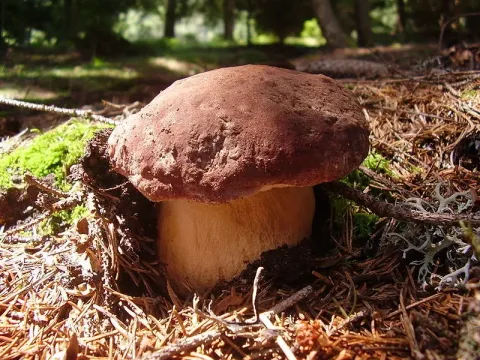
The pine bolete is a large, sturdy mushroom characterized by a massive fruiting body. Its cap usually features a rich reddish-brown or dark maroon color, often displaying a lighter margin when young.
What the section contains
Pine bolete
The pore surface beneath the cap is white in juvenile specimens, gradually turning into a yellow-olive shade with age. A notable diagnostic feature is that the pore layer does not change color when bruised or cut.
The stem is thick and fleshy, often broader at the base, and covered in a distinct white or brown reticulation (network pattern). The flesh remains solid and white when sliced, showing no discoloration upon exposure to air.
These mushrooms typically grow individually or in small clusters, partially hidden under pine needles or moss. Their morphology can slightly adapt to the local moisture levels and soil structure of their habitat.
Identification depends on observing the cap texture, which feels velvety when dry but may become slightly sticky or slimy under humid weather conditions, ensuring a clear distinction from other boletus species.
The pine bolete is not a plant pathogen or a disease; it is a beneficial mycorrhizal fungus. It forms a mutualistic relationship with forest trees rather than causing any form of decay or damage.
The fungus establishes a symbiotic link with the roots of conifers, especially the Scots pine. This structure, known as ectomycorrhiza, involves the fungal hyphae enveloping the root tips without penetrating the cells.
Through this connection, the fungus helps the host tree absorb water and essential minerals from the soil. In exchange, the tree provides the fungus with carbohydrates, which are necessary for the development of its fruiting bodies.
Because it does not attack or weaken the host, it is highly valued in forest ecology. It enhances the vitality of trees, making them more resilient to drought and poor soil nutrient content.
This species belongs to the family Boletaceae and is a vital link in the nutrient cycling of forest floors. It actively decomposes organic material, helping to fertilize the soil beneath the trees.
Ideal conditions for the development of pine bolete fruit bodies include acidic, well-drained soils found in mature pine forests. They thrive in areas with a thick layer of needle litter or moss.
The temperature range for optimal mycelial activity and mushroom production is generally between 15 and 22 degrees Celsius. Constant soil moisture is crucial for the initiation of the fruiting cycle.
Good soil aeration is also essential for the mycelium to spread effectively. These fungi are frequently found near forest edges or along woodland paths where light and heat help warm the soil surface.
The fruiting season typically lasts from early summer through late autumn. The frequency and timing of rainfall are the most critical environmental drivers influencing the abundance of the mushrooms.
Healthy soil structure, free from excessive mechanical compaction, ensures that the mycelial network remains vigorous over many years. The fungus is highly sensitive to significant disruptions in its subterranean environment.
The pine bolete does not cause any harm to trees or agricultural crops. On the contrary, its presence is a strong indicator of a healthy, balanced forest ecosystem and high soil quality.
There are no symptoms of plant disease associated with this fungus. It exists in complete harmony with the forest, contributing to the growth and development of the surrounding vegetation.
For humans, the species holds significant economic and culinary value. It is one of the most sought-after edible mushrooms, contributing to the recreational and economic activity within the forestry sector.
No attempts should be made to control or eradicate this fungus, as it provides ecological services that support the forest. Removing it from its habitat would disrupt the natural balance.
Consequently, the pine bolete is classified as a highly beneficial forest resident. It is protected by conservation practices that prioritize the sustainability of woodland areas.
Since the pine bolete is a beneficial organism, no protective measures or control treatments are required or recommended. Conservation of its natural habitat is the primary management strategy.
Forestry operations should minimize the use of heavy machinery in known habitats to prevent soil compaction and damage to the underlying mycelium. Preserving the integrity of the needle litter is also vital.
The application of fungicides in forest areas should be strictly managed or avoided to prevent unintentional damage to mycorrhizal networks, which are crucial for tree health.
Maintaining a natural forest structure, including old-growth trees, helps ensure the continuous existence of the fungus. This approach supports biodiversity and the long-term productivity of forest ecosystems.
Effective forest management practices incorporate the protection of soil health, allowing the natural symbiotic cycles to proceed without human intervention or chemical disruption.