
Pilobolus crystallinus
Pilobolus crystallinus
Description
Pathogen
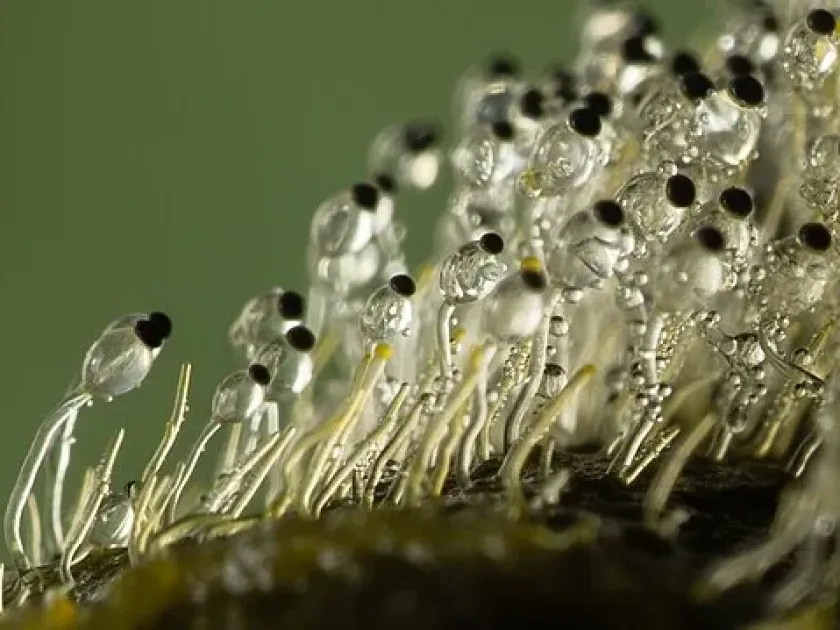
Pilobolus crystallinus, commonly known as the dung cannon fungus, is a species of fungus belonging to the Pilobolaceae family, specialized in growing on herbivore dung.
This fungus is famous for its powerful spore-launching mechanism, which allows it to eject its sporangia at high speeds toward bright light sources, often onto surrounding vegetation.
As a coprophilous organism, it is an essential part of the decomposition cycle, breaking down nutrient-rich organic matter in pastures and meadows.
Although it does not infect plants directly as a pathogen, it is a critical component of the field ecology that farmers must manage to maintain animal health.
Biological studies of this fungus highlight its rapid growth cycle, which can be completed within a few days under optimal conditions.
Conditions for development
Development of the fungus requires a moist environment and a specific substrate, primarily fresh nitrogen-rich herbivore manure.
Temperatures ranging from 15 to 25 degrees Celsius are ideal for its metabolic activity and the subsequent development of sporangiophores.
The fungus is positively phototropic, meaning its orientation is strictly governed by light levels, which guides the direction of spore dispersal.
Heavy rainfall periods increase the humidity levels on the surface of pasture grasses, creating ideal conditions for the fungus to persist after being ejected.
Accumulation of manure in poorly managed pasture areas significantly boosts the population density of Pilobolus crystallinus.
Why it matters
The primary concern regarding this fungus is its symbiotic relationship with parasitic nematodes, such as lungworms, which use the fungal sporangia as a transport mechanism.
Livestock grazing in areas contaminated with these fungi ingest the parasite larvae attached to the fungal structures, leading to severe animal health issues.
This interaction makes Pilobolus crystallinus a dangerous biological vector in livestock agriculture, causing significant losses in meat and milk production.
The presence of the fungus indicates poor pasture management and a high risk of parasite transmission among grazing animals.
Economic impact includes the costs of veterinary treatments and potential loss of pasture productivity due to restricted grazing zones.
Protection
Effective control strategies focus on sanitation and management practices to break the parasite cycle facilitated by the fungus.
Proper composting of manure is essential, as high temperatures during the composting process destroy both the fungus and the nematode larvae.
Rotational grazing allows for a natural reduction of the fungal spore concentration in the soil and grass by leaving areas vacant for extended periods.
Mechanical removal of dung and regular mowing of pastures can effectively limit the availability of the substrate required for the fungus to survive.
- Implement thorough composting of all animal waste.
- Practice intensive rotational grazing schedules.
- Perform regular mowing of pastures to reduce habitat.
- Ensure routine deworming of all livestock.
Discussion
No discussions yet — be the first.