
Pine lophodermium
Lophodermium molitoris
Description
Symptoms
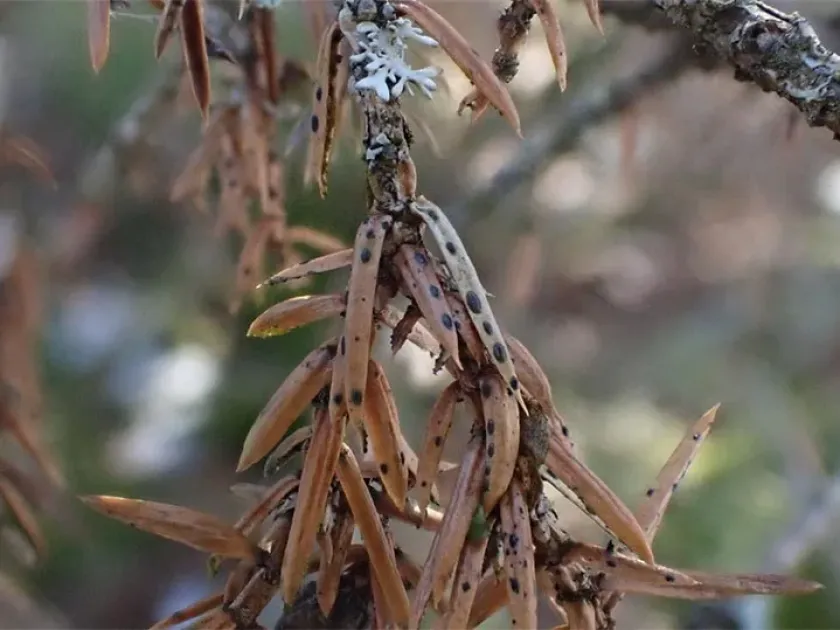
Initial symptoms are characterized by the discoloration of pine needles, which turn from a healthy green to a yellowish-brown or rusty shade.
As the infection progresses, small dark transverse lines appear on the needles, which are diagnostic indicators of the fungus breaking through the epidermis.
Visible black, shiny, elongated fruiting bodies develop on the surface of the dead needles, especially under humid weather conditions.
Severe infestation results in premature needle cast, leaving the shoots of young pine trees bare and significantly reducing their vigor.
The disease often spreads rapidly throughout the crown, giving the tree a scorched or distressed appearance due to massive foliage loss.
Pathogen
The causative agent of the disease is the ascomycete fungus Lophodermium molitoris, which exclusively targets the needles of pine trees.
The fungus completes its life cycle by forming small, dark-colored fruiting bodies known as apothecia on the surface of infected pine needles.
Mycelial growth occurs within the internal tissues of the needles, destroying the photosynthetic cells and leading to the eventual death of the organ.
Infection spreads primarily through ascospores, which are released into the air and dispersed over wide areas by wind currents during moist periods.
The pathogen is capable of surviving for long periods in infected leaf litter, ensuring a continuous source of inoculum for subsequent seasons.
Conditions for development
The fungus Lophodermium molitoris thrives in environments characterized by high humidity, frequent fog, and moderate temperatures.
Crowded planting conditions in nurseries prevent adequate airflow, creating a stagnant microclimate that is ideal for rapid spore germination and infection.
Extended periods of rainy weather, particularly during the autumn and spring, facilitate the successful colonization of healthy needles by fungal spores.
Trees subjected to environmental stress, such as poor soil nutrient status or mechanical damage, show increased susceptibility to the pathogen.
Warm and wet autumn months provide an excellent opportunity for the pathogen to establish itself before the onset of winter dormant periods.
Why it matters
Pine lophodermium causes significant economic damage to nurseries by potentially killing large numbers of seedlings in a single growing season.
In forest plantations, the disease causes chronic weakness, reducing the tree's growth rate and its ability to withstand secondary stressors like drought.
Persistent needle loss impacts the overall metabolism of the pine tree, leading to stunted growth, distorted shoots, and potential death of the tree.
The presence of lophodermium poses a risk to neighboring healthy stands, as the airborne nature of the spores facilitates easy transmission across landscapes.
Trees weakened by this fungus are frequently colonized by secondary pests, such as bark beetles, which ultimately lead to the tree's mortality.
Protection
Sanitation measures are paramount: the removal and destruction of infected needle litter are necessary to reduce the fungal spore load in the vicinity.
Regular fungicide applications, timed to coincide with the fungus's peak spore-dispersal periods, are the most effective chemical control method.
Managing planting density and ensuring proper spacing between trees improve air circulation, making the environment less hospitable for the pathogen.
Maintaining tree vigor through appropriate fertilization and soil management helps the host plant build up natural defenses against fungal colonization.
Routine scouting and early detection are essential for implementing timely interventions before the lophodermium infestation becomes widespread.
Discussion
No discussions yet — be the first.