
Pine cone cast
Lophodermium conigenum
Description
Symptoms
Early symptoms include the discoloration of cone scales, which shift from a healthy green or brown to a dull, necrotic greyish-brown shade.
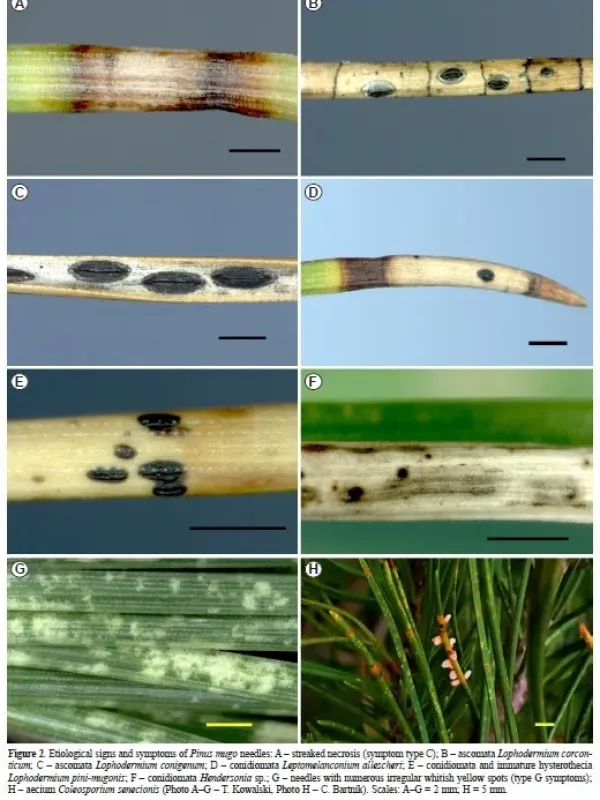
Small, black, elongated fruiting bodies of the fungus become visible on the surface of the scales, often occurring in dense clusters.
Affected cones frequently exhibit premature dropping, failing to open naturally and releasing significantly fewer viable seeds.
Under moist environmental conditions, the surface of the cones may show evidence of fungal spore production, presenting a darkened or dusty appearance.
Internal tissue decay can occur in severe cases, destroying the seed cavities and rendering the seeds within them unviable.
Pathogen
The disease is caused by the ascomycete fungus Lophodermium conigenum, which specifically targets the reproductive structures of pine trees.
The fungus completes its life cycle by forming reproductive structures known as hysterothecia on the scales of infested pine cones.
It acts as a parasite that survives on both mature cones on the tree and fallen cones on the forest floor, maintaining a permanent presence in the area.
Dissemination occurs via spores released from the fruiting bodies, which are easily transported by air currents to new hosts.
The fungus colonizes the cone tissue, utilizing the structural components of the scales for mycelial growth and development.
Conditions for development
High humidity and moderate temperatures are the most critical environmental factors that promote the development and spread of Lophodermium conigenum.
Densely planted forests with poor air circulation create a stable microclimate that protects the fungal spores during their germination phase.
Long periods of rain facilitate the discharge of spores, increasing the rate of infection during the critical stages of cone maturation.
Accumulated debris on the forest floor, specifically old infected cones, serves as a primary reservoir for the fungus to overwinter.
Trees that are under physiological stress or nutrient deficiencies show increased susceptibility to fungal colonization compared to healthy, vigorous specimens.
Why it matters
The primary concern regarding this pathogen is the significant reduction in seed quantity and quality, which impacts forestry reforestation programs.
Losses are often hidden, as infested cones may not show external signs immediately, leading to the collection of poor-quality or non-viable seed lots.
The disease negatively influences the natural regeneration of pine populations, potentially altering the structure and density of the forest over time.
Nurseries and seed orchards face increased operational costs due to the need for rigorous sanitation and protective chemical applications.
Reduced forest health and productivity diminish the overall economic value of timber stands meant for seed production.
Protection
Effective management begins with strict sanitation practices, such as the removal and destruction of fallen cones that harbor the pathogen.
Seed collection should be restricted to disease-free areas, with careful visual inspection of cones prior to processing and storage.
Applying appropriate fungicides during the growing season can protect developing cones from infection, particularly in high-value seed orchards.
Silvicultural measures like thinning help improve aeration and reduce moisture levels, creating a less hospitable environment for the fungus.
- Implement regular monitoring of tree stands for symptomatic cones.
- Ensure the destruction of all collected waste by burning or deep burial.
- Utilize protective fungicidal treatments following local forestry regulations.
Discussion
No discussions yet — be the first.