
Piedra
Piedraiaceae
The causative agent of the disease is a fungus belonging to the Piedraiaceae family, with Piedraia hortae being the most recognized species within this group.
What the section contains
Piedra
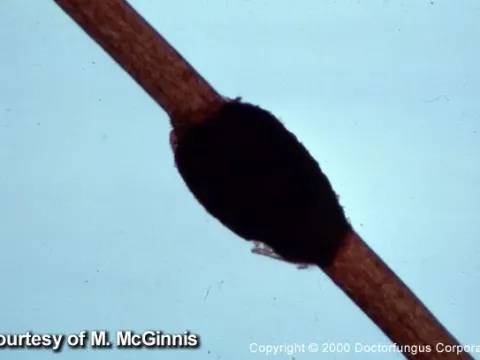
The pathogen is known for its ability to form resilient, dark, sclerotial-like nodules, which protect the organism from environmental stress and desiccation.
Biologically, the fungus operates as an ascomycete that thrives on surfaces, utilizing its structure to anchor itself firmly onto the host tissue.
Its life cycle involves a stable survival phase in soil or organic debris, allowing the fungus to persist long after the initial infection has occurred.
Spore production is a key component of its life cycle, triggered by specific moisture conditions that ensure the pathogen can colonize new host tissues efficiently.
The primary symptom of piedra is the development of distinct, hard, dark-colored nodules or incrustations on the surface of stems or leaves.
These nodules are typically rough to the touch and firmly attached to the plant surface, indicating that the fungal hyphae have deeply penetrated the outer layers.
As the infection progresses, affected plant organs may show visible signs of growth inhibition and minor surface deformations near the site of fungal clusters.
The dark coloration of the nodules is due to high melanin content, which protects the fungus from ultraviolet radiation during its outdoor development.
- Dark, hardened nodule formation
- Surface roughness of stems
- Localized tissue discoloration
- Reduced plant vigor
High relative humidity is the most significant factor that facilitates the rapid growth and sporulation of the piedra-causing fungus.
The disease tends to flare up during warm and wet weather conditions, with temperatures between 20°C and 30°C being ideal for the pathogen's metabolic activity.
Stagnant air and poor ventilation within dense crop canopies allow for the accumulation of moisture, creating a perfect microclimate for the fungus.
Splashing water, such as heavy rain or overhead irrigation, acts as a primary vector for spore dispersal, carrying the pathogen to nearby healthy plants.
Prolonged wet periods, especially those occurring in tropical or subtropical climates, significantly increase the risk of an widespread infection outbreak.
The economic harm caused by piedra stems from the reduction of plant vigor and the inhibition of normal physiological processes like transpiration and photosynthesis.
By covering the plant surface with fungal nodules, the pathogen disrupts the integrity of the cuticle, making the plant more susceptible to secondary pathogens.
In ornamental and commercial crops, the presence of these nodules drastically reduces the market value and visual appeal of the produce.
Continuous infection leads to the exhaustion of plant resources, which can eventually result in premature leaf drop or weakened stalks.
If left untreated, the cumulative impact of the disease can lead to significant crop failure, particularly in susceptible plant varieties grown in high-humidity areas.
Effective control starts with proper cultural practices, such as increasing plant spacing to improve air circulation and reduce canopy humidity.
Sanitation is crucial; all infected plant materials should be carefully removed and destroyed to minimize the pool of available spores in the field.
Chemical control involving the use of systemic fungicides, particularly those containing triazoles, can effectively limit the growth of the fungal mycelium.
Disinfecting pruning shears and other mechanical tools is necessary to prevent the accidental transmission of the pathogen between different sections of the crop.
Ongoing monitoring for early signs of infection is recommended to apply localized treatments before the disease can reach the epidemic stage.