
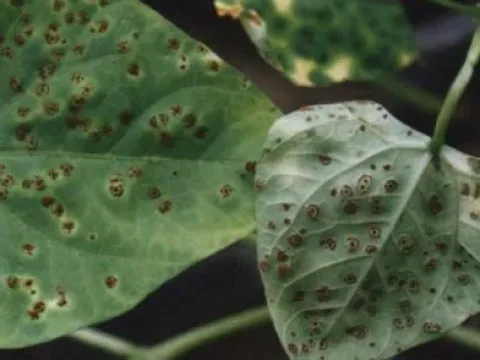
Pigeon pea rust
Uredo cajani
The causative agent of pigeon pea rust (Cajanus cajan) is the fungus Uredo cajani (synonym Physopella cajani). This is a highly specialized obligate parasite belonging to the rust fungi group, which relies entirely on the living host for its development.
What the section contains
Pigeon pea rust
The life cycle includes the production of urediniospores, which facilitate rapid spread throughout the growing season. The pathogen specifically targets species within the Cajanus genus, primarily the pigeon pea, a vital grain legume in tropical regions.
The fungus infects various aerial parts of the plant, including leaves, petioles, stems, and pods. While the fungus can survive on crop debris, the presence of live host plants in regions with mild winters is the primary factor for the pathogen's persistence.
The fungal mycelium develops within plant tissues, eventually erupting through the epidermis. This rupture of the cuticle facilitates the release of spores, which are then disseminated by wind, rain splashes, and human activity.
The biology of Uredo cajani is well-adapted to warm and humid climates. Understanding the genetic variability of the pathogen is essential for effective resistance breeding programs globally.
Initial symptoms consist of small chlorotic spots on the upper leaf surface, which gradually turn yellow or brown. Shortly after, characteristic pustules known as uredinia appear on the foliage.
These pustules are typically rust-colored or reddish-brown. They are usually found on the abaxial (underside) surface of the leaves, often clustered along the veins or scattered across the blade.
In cases of severe infection, pustules may coalesce, covering a large portion of the leaf area. This leads to premature chlorosis, necrosis, and widespread defoliation, significantly reducing the plant's photosynthetic capacity.
Infection on stems and petioles presents as elongated, rusty-colored streaks or blisters. When pods are infected, they develop larger pustules, directly impacting the quality and quantity of the developing seeds.
In the field, affected areas are characterized by zones of premature aging and senescence. Infected plants show stunted growth, reduced vigor, and are clearly distinct from healthy, green portions of the field.
High relative humidity, often caused by frequent rainfall, heavy dew, or fog, is critical for disease development. The optimal temperature for urediniospore germination ranges from +20°C to +28°C.
Surface moisture on leaves is a strict requirement for the germination of spores and the subsequent infection through the plant's stomata. Without a thin film of water, the infection cycle cannot proceed.
Dense planting patterns promote a microclimate characterized by restricted airflow and increased humidity, which significantly accelerates the rate of secondary infection cycles within the canopy.
Once established, the pathogen can spread rapidly across a field via wind-dispersed spores. Under favorable conditions, the incubation period is very short, allowing for quick development of epiphytotics.
Factors like high nitrogen availability and low light intensity may enhance plant susceptibility by creating softer tissues, which are easier for the fungal hyphae to penetrate during the initial infection phase.
The primary economic impact of pigeon pea rust is the significant reduction in leaf area. Early defoliation prevents the plant from accumulating enough photosynthates, which are necessary for proper pod filling and seed maturity.
Early-season infections can lead to heavy flower and pod abscission. This directly results in reduced grain yield, while surviving seeds in infected pods are often shriveled and possess poor quality and low viability.
The disease reduces the overall biomass of the plant, which is particularly detrimental when pigeon pea is cultivated for forage or green manure. The nutritional content, including protein levels, is often depleted in rusted tissues.
In severe years, yield losses can reach 30% to 50%. In highly susceptible varieties, the entire crop may suffer such severe damage that it becomes commercially unviable for harvest.
Weakened plants are prone to opportunistic secondary pathogens and pest infestations, increasing the overall cost of crop management and requiring integrated control strategies.
The most sustainable strategy is the cultivation of resistant or tolerant pigeon pea varieties. Breeding for rust resistance is a priority for research programs in many tropical countries.
Cultural practices include implementing crop rotation to break the life cycle of the pathogen. Avoiding continuous cropping of pigeon pea on the same land helps reduce the build-up of inoculum in the soil.
Spatial isolation of new fields from infected crops is recommended. Maintaining proper plant spacing to improve air circulation and diligent weed control also helps to limit the moisture microclimate that favors rust development.
Chemical control involving systemic fungicides, such as triazoles or strobilurins, can be effective if applied early at the onset of symptoms. Periodic applications are often required to manage the spread during the growing season.
Post-harvest hygiene, including the removal and destruction of crop residues through deep plowing or burning (where permitted), is effective in lowering the amount of overwintering inoculum available for the next season.