
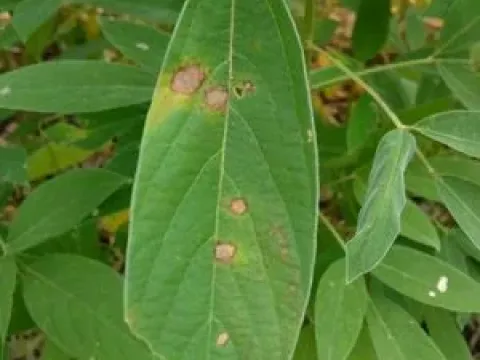
Pigeon pea phoma blight
Phoma cajanicola
The causative agent of this disease is the fungus Phoma cajanicola. It is a specialized pathogen that primarily targets pigeon pea (Cajanus cajan) crops, significantly impacting their development.
What the section contains
Pigeon pea phoma blight
The fungus produces small, flask-shaped structures known as pycnidia, which serve as the primary source of inoculum. These pycnidia contain large quantities of conidia, which are released during periods of high humidity.
Pathogen dispersal is highly dependent on environmental factors. Rain splashes and wind currents effectively spread conidia across the field, facilitating the rapid colonization of healthy host tissue.
Once the conidia land on the host, they germinate and form hyphae that penetrate the epidermal layer. The fungus then spreads through the plant's inter-cellular spaces, secreting enzymes that degrade cell wall integrity.
Phoma cajanicola is characterized by its ability to persist in plant debris and soil for extended durations, making it a persistent threat in agricultural environments with continuous cropping.
The first symptoms appear as small, irregular brown or greyish spots on stems, branches, and petioles. As the infection progresses, these spots expand into larger lesions.
A hallmark of the disease is the development of numerous tiny black dots within the necrotic lesions, representing the fungal pycnidia. These dots are easily visible under close inspection with a magnifying lens.
Lesions on the stem can often encircle the plant, causing girdling. This obstruction of vascular tissues leads to the wilting and eventual death of all parts of the plant located above the lesion.
Infected leaves exhibit chlorosis, curling, and eventually premature abscission. This leaf loss significantly reduces the plant's capacity for photosynthesis, impacting overall energy production.
- Dark brown or grey lesions on stems and branches
- Distinct black pycnidia visible within lesion centers
- Stem girdling and subsequent plant wilting
- Chlorosis and premature defoliation
- Dry, brittle appearance of affected plant sections
High humidity and moderate temperatures are the most critical factors driving the development of phoma blight. Frequent rainfall events provide the necessary moisture for rapid sporulation and dispersal.
Temperature plays a crucial role, with the optimal growth range for the fungus being approximately 20°C to 25°C. In these conditions, the infection cycle can repeat multiple times during a single season.
High planting density contributes to the severity of the disease by creating a humid microclimate within the canopy. Poor airflow prevents the rapid drying of plant surfaces, keeping them vulnerable to infection.
Nitrogen-rich fertilizer application can lead to lush, succulent growth that is more susceptible to fungal penetration. Proper fertilization balance is essential for maintaining natural plant resistance.
Wounds caused by insects, equipment, or handling provide entry points for the fungus, significantly increasing the probability of localized infection turning into a field-wide outbreak.
The primary economic impact is a drastic reduction in grain yield. Since the pathogen damages the conductive tissues of the plant, nutrients fail to reach the pods, leading to poor seed set.
Stunted plant growth and premature death result in substantial crop loss. Affected fields often show patchy development, which complicates harvesting operations and lowers total harvest quality.
Seed quality is severely compromised, with grains becoming shriveled and discolored. Such seeds are not only inferior for consumption but also carry the pathogen to the next planting season.
In severe cases, the entire plant can succumb to the infection, leading to a complete loss of output in the affected areas of the field. The overall vitality of the crop is weakened.
Long-term harm includes the contamination of the soil reservoir with fungal spores. This makes future cultivation of pigeon pea on the same land much riskier without strict disease management.
The most effective strategy is the use of resistant or tolerant cultivars. Breeding programs focus on identifying and incorporating genes that provide durable resistance against Phoma cajanicola.
Implementing a rigorous crop rotation program is essential for reducing soil-borne inoculum. Growing non-host crops for several years helps in the natural decline of the fungal population in the soil.
Sanitation practices such as removing and burning infected crop residues are highly effective in breaking the disease cycle. Deep plowing helps bury debris, speeding up decomposition and pathogen suppression.
Fungicide applications during the vegetative stage can protect the plants when weather conditions favor disease spread. Timing is critical, with initial applications needed at the first sign of symptoms.
Seed treatment with authorized fungicides ensures that the infection is not introduced through contaminated seeds. This creates a protective barrier for the crop during the early and most vulnerable developmental stages.