
Pilat's Lepiota
Leucoagaricus pilatianus
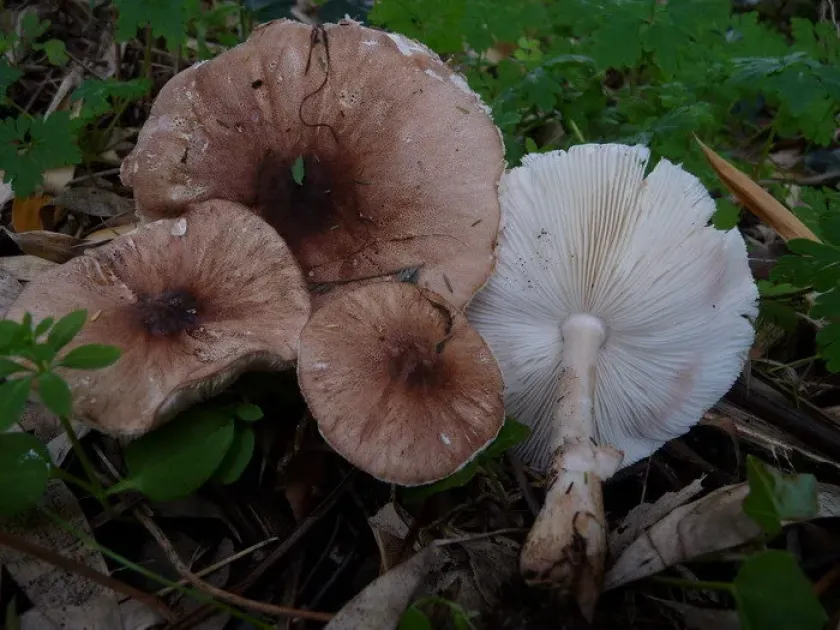
Description
Symptoms
The most visible sign is the appearance of light-colored, cream-to-white fruit bodies, typically with a slightly brownish center on the cap, emerging near the plant base.
A dense, white, thread-like mycelium network develops on the surface or within the soil, indicating the fungus is actively colonizing the area.
Plants affected by the fungus often exhibit chlorosis or wilting because the fungal growth interferes with nutrient uptake, particularly nitrogen and phosphorus.
Soil structure becomes compromised; it may appear clumped or develop a hydrophobic crust, which prevents water from reaching the plant roots uniformly.
A distinct, earthy, or musky fungal odor is often present in humid areas, indicating that the fungus is actively metabolizing organic matter in the root zone.
Pathogen
Pilat's Lepiota (Leucoagaricus pilatianus) is a mushroom species belonging to the Agaricaceae family. In agronomy, it is recognized as a facultative saprotroph capable of colonizing nutrient-rich organic substrates in greenhouses and garden beds.
While not a primary pathogen of cultivated crops, the fungus acts as a competitor for soil nutrients. Its mycelium can spread rapidly, impacting the rhizosphere and causing physiological stress to plants.
The fungus reproduces via basidiospores that are easily transported by air currents, water splashes, or contaminated tools. It thrives in environments where soil biology is neglected or where excessive organic matter is present.
Biologically, it is an efficient decomposer that alters the physical properties of the growing medium, often making it less favorable for sensitive crops.
Proper identification is crucial, as the presence of these mushrooms signals an imbalance in the growing substrate or poor sanitation in the facility.
Conditions for development
The fungus flourishes in environments with high levels of raw organic matter, such as uncomposted manure, sawdust, or rich potting mixes that have not been sterilized.
High humidity combined with temperatures between +18°C and +25°C provides the perfect climate for rapid mycelial development and sporulation.
Lack of proper aeration and poor drainage in containers or soil beds create the anaerobic conditions that Pilat's Lepiota exploits to establish its colony.
Introduction of contaminated commercial soil or the use of unclean gardening tools are the primary vectors for this fungus entering a greenhouse setting.
Over-crowded plant spacings that prevent light from reaching the soil surface also facilitate the growth of the fungus, as it thrives in shaded, moist areas.
Why it matters
The primary damage is nutrient depletion; the fungus competes directly with crops for available minerals, leading to stunted plant growth and reduced yields.
The accumulation of fungal metabolites in the soil can be toxic to young roots, often causing root decay and increasing the plant's susceptibility to other soil-borne diseases.
In greenhouses, the widespread development of the fungus can lead to "souring" of the substrate, making it unusable and requiring expensive soil replacement.
It creates an environment unfavorable for beneficial soil microbes, disrupting the biological balance required for healthy plant growth and development.
Furthermore, the presence of these fungi creates a negative visual impression and increases the labor costs associated with sanitation and soil maintenance.
Protection
Prevention is the most effective strategy; always use sterilized potting media and avoid adding raw manure or uncomposted waste to greenhouse beds.
Maintain optimal moisture levels through precise irrigation and improve airflow to ensure that the soil surface dries out adequately between watering sessions.
If mushrooms are spotted, remove them manually along with the surrounding soil to prevent spore release. Always sanitize tools after contact with affected areas.
Incorporate beneficial biological agents like Trichoderma species to create a competitive soil environment that naturally inhibits the growth of Pilat's Lepiota.
- Use only pasteurized or sterilized substrates.
- Ensure adequate ventilation in greenhouses.
- Regularly monitor soil moisture levels.
- Sanitize gardening tools between tasks.
Discussion
No discussions yet — be the first.