
Phytophthora root rot of primula
Phytophthora primulae
The causative agent of this disease is the oomycete Phytophthora primulae. This microorganism belongs to the class of oomycetes and acts as an obligate parasite, primarily affecting the root system and the root collar of the plant.
What the section contains
Phytophthora root rot of primula
Biologically, the pathogen is a soil-borne fungus-like organism capable of surviving in the substrate as resting spores (oospores) for several years. It becomes active under specific temperature ranges and moisture levels.
The infection spreads through infested soil, plant debris, and contact with contaminated gardening tools. High plant density facilitates the rapid movement of zoospores via water droplets.
The infection starts from small roots, gradually moving to the main rhizome and the stem of the plant. The pathogen produces enzymes that degrade cell walls, leading to tissue necrosis.
The main characteristic is the rapid infection of the entire root system, making the plant extremely vulnerable even after minimal initial contact with zoospores.
The first sign of infection is sudden wilting of primula leaves during daylight hours, which may temporarily recover at night during the early stages. Over time, the wilting becomes irreversible.
Leaf blades gradually turn yellow, starting from the edges, and subsequently acquire a brownish or tan discoloration. The plant begins to lag in growth and appears stunted.
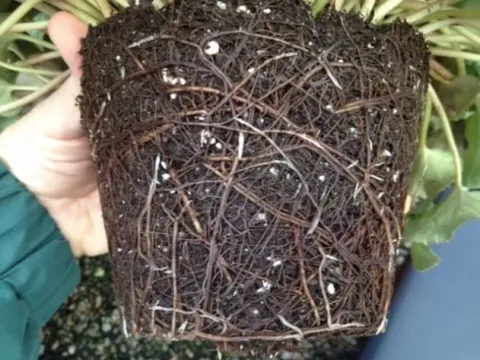
Upon examination of the root system, a characteristic softening and browning of the tissues are observed. Roots lose their firmness, become water-soaked, and eventually turn dark, almost black.
Dark sunken lesions may appear on the root collar, sometimes spreading further up the leaf stalks, causing them to collapse and decay.
Under high humidity conditions, a faint whitish or greyish mycelial growth may develop around the affected areas, which is extremely difficult to notice with the naked eye.
The critical factor for the development of the disease is soil waterlogging, which occurs due to the lack of drainage or excessive watering of the primula.
The optimal temperature for the reproduction of Phytophthora primulae zoospores is in the range of +15°C to +22°C, which often coincides with the spring growing season.
Heavy clay soils where water stagnates after rain create ideal conditions for the pathogen to spread across the entire planting area.
Overcrowded plantings that hinder normal air circulation contribute to moisture accumulation on the surface of the substrate, triggering the development of the disease.
Poor regulation of temperature and humidity in greenhouses or during seedling cultivation significantly increases the risk of a Phytophthora outbreak.
Phytophthora root rot of primula is considered one of the most dangerous diseases because it affects the root system, making timely diagnosis difficult.
The plant loses its ability to absorb nutrients and moisture from the soil, eventually leading to the complete death of the plant within a short period.
The disease spreads rapidly to neighboring plants, creating infection foci that can destroy an entire collection of primulas in a flower bed.
Contaminated soil becomes unsuitable for further cultivation of primulas and other susceptible crops, requiring radical disinfection or complete replacement.
The damage also lies in the difficulty of curative measures: often, by the time symptoms are detected, the root system is already almost entirely destroyed.
The basis of protection is strict adherence to agricultural practices, including the use of high-quality, disinfected substrate when planting.
It is necessary to ensure good soil drainage, preventing water stagnation in the root zone, and avoid overwatering the plants.
- Removal and destruction of diseased plants along with the surrounding soil.
- Application of copper-based fungicides or specific anti-oomycete preparations (preventive treatment).
- Adherence to crop rotation rules and maintaining proper distance between bushes.
- Regular disinfection of garden tools.
At the first signs of the disease, it is recommended to drench the soil with systemic fungicides that have activity against Phytophthora fungi.
As a preventive measure, it is important to monitor soil acidity and structure, as loose, well-aerated soil significantly reduces the risk of disease.