
Phytophthora rot of brassicas
Phytophthora brassicae
Description
Symptoms
Symptoms often begin with wilting of the lower leaves during the warmest parts of the day. As the disease progresses, the leaves turn yellow, then brown, and eventually dry out, indicating that the root system is failing.
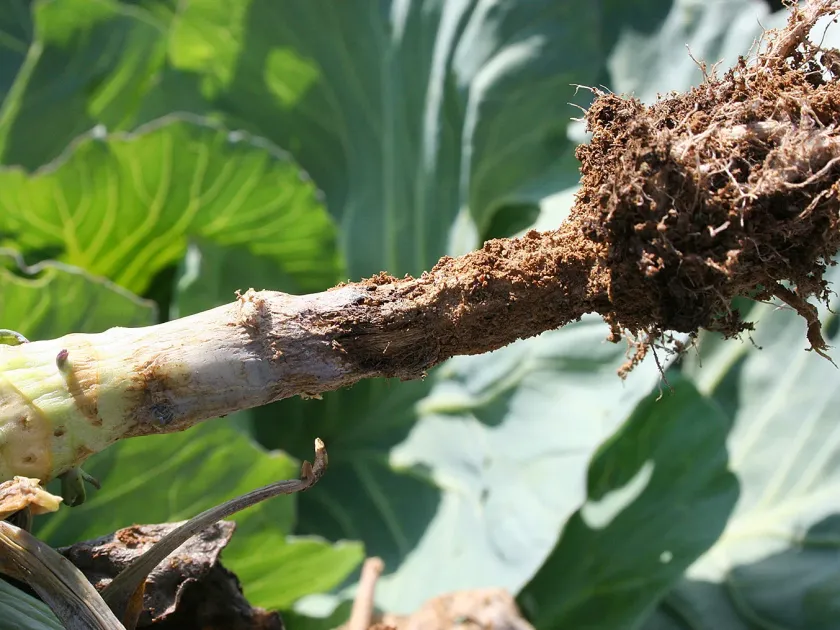
A wet rot develops on the roots, which become dark, soft, and mushy. The roots lose their structure and the ability to absorb water and nutrients, which eventually leads to the collapse of the entire plant.
In many cases, the stem base shows dark, water-soaked lesions that can expand until the entire stem is girdled. Under high humidity, a thin, white mycelial growth may appear on the affected surfaces.
Plants affected by this pathogen are easily pulled from the ground because the primary and secondary root systems have been largely destroyed by the rot.
When the roots of a diseased plant are sliced open, the internal tissues exhibit a dark brown or black discoloration, which is a definitive sign of severe Phytophthora infection.
Pathogen
The disease is caused by Phytophthora brassicae, an oomycete pathogen. As a soil-borne organism, it survives in crop residues and soil particles for several years by producing thick-walled oospores that resist environmental stress.
The pathogen utilizes a complex lifecycle, including the production of zoospores that require free water to swim and infect the roots or stems of healthy brassica plants. This mobility allows it to spread rapidly under moist conditions.
This disease affects a wide range of Brassicaceae crops, including cabbage, broccoli, cauliflower, radish, and mustard. Because of its broad host range, it represents a significant threat to diverse vegetable production systems.
The pathogen thrives in poorly drained soil and is often introduced into clean fields through contaminated tools, equipment, or irrigation water that has moved across infested patches.
As an oomycete, it is biologically distinct from true fungi. This distinction is crucial because traditional fungicides effective against common fungi may not be effective against Phytophthora species, requiring targeted management strategies.
Conditions for development
The development of the disease is highly correlated with saturated soil conditions. Excessive rainfall or over-irrigation that leads to standing water provides the perfect environment for the zoospores to infect the plant.
Optimal temperatures for the growth of Phytophthora brassicae fall between 15 and 22 degrees Celsius. During these moderate temperatures, the infection can progress very rapidly within the soil profile.
The lack of a proper crop rotation program is a major driver of the disease. Planting brassicas in the same soil year after year creates a massive buildup of the inoculum, making the soil increasingly dangerous for future plantings.
Acidic soil conditions are often associated with higher infection rates. Maintaining an optimal pH level helps support a diverse soil microbiome that can compete with the pathogen and limit its growth.
Poor soil structure and compaction reduce drainage, which is a key environmental condition that encourages the spread of the pathogen between adjacent plants in a field.
Why it matters
The primary impact of the disease is the loss of young plants and seedlings. In some cases, severe outbreaks can result in total crop failure, leading to significant financial losses for growers.
For mature plants, the disease limits the development of heads and significantly reduces the market value of the crop. Infected heads often rot post-harvest, making them unsuitable for long-term storage or retail.
Economic damage is also linked to the increased costs of management, including soil treatment and the application of specialized chemicals, which lowers the overall profitability of the farm.
Land infested with Phytophthora brassicae becomes restricted for future brassica cultivation. Farmers may be forced to switch to less profitable crops to break the disease cycle.
Furthermore, the uneven growth and quality loss of the harvest make it difficult to meet the high standards required by commercial buyers and wholesale distribution networks.
Protection
The most important control measure is long-term crop rotation, avoiding brassica crops for at least 4-5 years in infested fields to allow the natural decay of the oospores in the soil.
Improving soil drainage is essential. This can be achieved through raised beds, better field leveling, or installing tile drains. Avoid over-watering and ensure that irrigation systems are properly managed to prevent standing water.
Using disease-free certified seeds and nursery stock is critical. Proactive monitoring for early symptoms and the immediate removal of infected plants with a surrounding soil margin can limit the spread.
Incorporating organic matter and using bio-agents, such as Trichoderma species, can help suppress the pathogen by promoting a healthy root environment and competing for resources.
- Ensure proper equipment sanitation to prevent moving contaminated soil.
- Monitor pH levels and lime the soil to achieve neutral conditions.
- Avoid working in the field when the soil is overly wet.
- Use professional-grade fungicides if the local regulations and disease severity allow.
Discussion
No discussions yet — be the first.