
Phytophthora root rot of soybean
Phytophthora sansomeana
Description
Symptoms
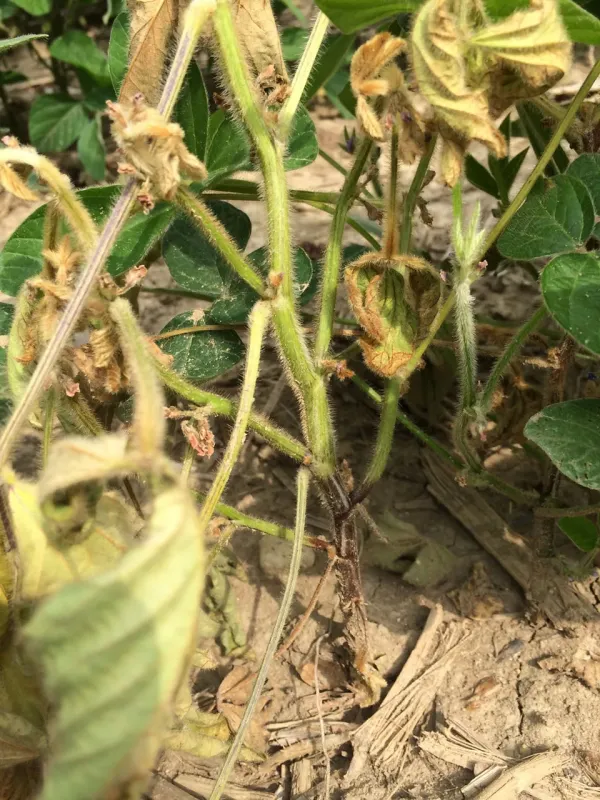
Symptoms typically include wilting of the plants, yellowing of the leaves, and eventual stunted growth. In severe cases, the entire plant may wither and die prematurely.
Examination of the roots reveals extensive dark-brown to black rot. The primary root system is often severely decayed, and the taproot may appear dark and necrotic.
A diagnostic feature is the presence of a brown lesion that extends from the root system up the stem, often reaching several centimeters above the soil line.
In the field, the disease usually appears in patches where water tends to accumulate after heavy rainfall, indicating that the pathogen is water-dependent.
Early-season infection results in poor seedling emergence and thin plant stands, as young plants succumb to the infection before or shortly after germination.
Pathogen
The causative agent of this disease is the oomycete Phytophthora sansomeana. Unlike some other Phytophthora species, it is a soil-borne pathogen that produces resilient oospores capable of surviving in the soil for several years.
This pathogen is known for its relatively wide host range, which poses a significant challenge for farmers trying to manage the disease through crop rotation alone.
The life cycle is highly dependent on environmental moisture. In saturated soil conditions, the pathogen releases motile zoospores that move through soil pores to infect the host's root system.
Once infection is established, the organism colonizes the root tissues, causing decay and interfering with the plant's ability to absorb water and essential nutrients.
As an oomycete, it thrives in wet environments and is highly aggressive, often leading to rapid colonization of root tissues under favorable conditions.
Conditions for development
High soil moisture is the primary driver for disease development. Fields with poor drainage or heavy, compact soils are at the highest risk for severe infections.
The pathogen is particularly active in cool to moderate soil temperatures, which are common during the early stages of the soybean growing season.
Compacted soil layers restrict water movement, creating stagnant areas that favor the production and dispersal of zoospores throughout the root zone.
Continuous soybean cropping without adequate breaks allows the population of the pathogen to build up in the soil, increasing the probability of severe outbreaks.
Tillage practices that incorporate infected residue deeply may help, but excessive moisture and lack of crop diversity remain the most significant risk factors.
Why it matters
The primary economic impact is the direct reduction in plant stand, which significantly limits the yield potential of the crop from the very beginning of the season.
Even if plants survive initial infection, their root systems remain compromised, making them much more susceptible to late-season water stress and nutrient deficiencies.
Seed quality and yield are negatively affected, as the impaired vascular system fails to supply enough energy for proper pod development and seed filling.
The presence of the pathogen in the soil creates a long-term liability for the field, often necessitating changes in cropping patterns and increased input costs.
Ultimately, the damage caused by Phytophthora sansomeana reduces overall farm profitability through yield loss and the expenses required to manage persistent soil infestations.
Protection
The most effective strategy for managing this disease is the use of resistant soybean varieties that have been bred to tolerate specific strains of Phytophthora.
Improving soil drainage is crucial to reduce the time that the soil remains saturated, thereby limiting the opportunity for zoospore movement and infection.
Seed treatment with systemic fungicides specifically active against oomycetes provides essential protection during the critical early growth stages.
Implementing a diverse crop rotation helps to reduce the inoculum load in the soil, effectively lowering the disease pressure in subsequent years.
- Selection of resistant varieties.
- Improved field drainage systems.
- Use of effective seed treatments.
- Proper soil structure management.
Discussion
No discussions yet — be the first.