
Phytophthora root rot of raspberry
Phytophthora rubi
The causative agent of this destructive disease is the soil-borne oomycete Phytophthora rubi, which specifically targets the roots of raspberry plants.
What the section contains
Phytophthora root rot of raspberry
This pathogen belongs to the water mold group and relies on moisture to spread its motile zoospores, which actively hunt for root tissues to infect.
It survives in the soil through thick-walled oospores, which can remain dormant and infectious for several years, waiting for favorable conditions.
The fungus invades the root system, colonizing the cortex and eventually destroying the plant's ability to transport water and nutrients from the soil.
As a specialized pathogen, it is highly persistent and thrives in environments where soil water management is poor or drainage is inadequate.
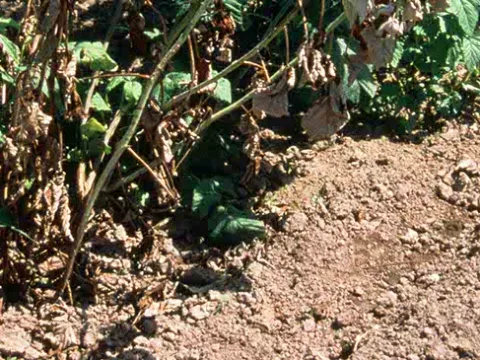
The primary symptom is a sudden decline in plant vigor, often starting with the yellowing or browning of leaves, which may resemble scorch symptoms.
If you inspect the base of the cane, the epidermis at the crown will often reveal a reddish-brown discoloration when the outer layer is scraped away.
The roots themselves become dark, necrotic, and brittle, losing their fine feeder rootlets, which are essential for water and nutrient uptake.
Above ground, plants appear stunted, and in severe cases, the entire cane wilts and collapses during hot weather because the compromised root system cannot meet the transpiration demand.
The pattern of infection is usually patchy, with diseased plants appearing in low-lying areas or sections of the field where water typically accumulates.
Excessive soil moisture is the primary driver for Phytophthora rubi outbreaks; saturated soil provides the necessary water for zoospore movement.
Heavy clay soils that lack sufficient drainage or become waterlogged after heavy rainfall are high-risk environments for developing root rot.
The pathogen prefers moderate temperatures, typically between 15°C and 20°C, making spring and early autumn the most critical periods for initial infection.
Compacted soil prevents proper aeration, reducing root health and creating a low-oxygen environment that favors fungal growth over plant root development.
Human activity, such as moving contaminated soil on equipment or planting infected nursery stock, is the most common way this disease is introduced into new fields.
This disease is widely considered the most serious threat to raspberry production worldwide, often causing complete failure of a commercial planting.
The impact is severe because the damage to the root system is irreversible; once a plant is infected, it cannot recover and will die.
Significant economic losses occur as the disease spreads rapidly through the root zone, rendering large patches of land unsuitable for raspberry cultivation.
The infestation pressure remains in the soil for years, meaning that growers are forced to abandon productive sites or invest heavily in soil decontamination.
Beyond individual plant death, the disease leads to a drastic reduction in fruit quality and total yield loss, impacting the farm's financial viability.
The first line of defense is selecting well-drained soil and ensuring that raspberry fields are established on raised beds to improve root zone oxygenation.
Only certified, disease-free planting stock from reputable nurseries should be used to avoid introducing the pathogen into clean fields.
Biological control using Trichoderma species can help build a suppressive soil environment, protecting roots from early-stage infections.
- Monitor irrigation carefully to prevent waterlogging.
- Remove and destroy infected plants immediately, including a significant volume of surrounding soil.
- Rotate crops and avoid planting raspberries in the same spot for at least 5–7 years.
- Ensure adequate row spacing to promote air circulation and soil drying.
Fungicide treatments, such as those containing phosphonates, can be used preventively in high-risk areas, though they are not a cure for established infections.