
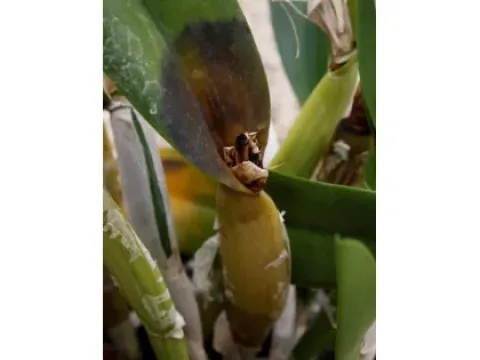
Phytophthora rot of orchids
Phytophthora multivesiculata
The causative agent of this disease is the oomycete Phytophthora multivesiculata. It is a highly destructive pathogen that specifically targets orchid species, leading to systemic infection.
What the section contains
Phytophthora rot of orchids
Biologically, this organism is classified as a water mold, utilizing motile zoospores that travel through moisture to infect new plant tissues efficiently.
The pathogen gains entry into the orchid via natural openings like stomata or through accidental wounds caused during repotting or handling.
Once inside, the pathogen spreads through the vascular system, effectively choking the plant by preventing the transport of water and nutrients.
Due to its resilience, the pathogen can persist in potting media for extended periods, making dormant contamination a significant risk for growers.
The first signs are dark, water-soaked spots on leaves or pseudobulbs that expand rapidly, often turning black or deep brown.
A distinctive yellow halo frequently develops around the active lesions, marking the front line of the fungal colonization.
Roots infected by Phytophthora lose their turgor, become soft, mushy, and often turn dark brown or completely black as they decay.
The base of the plant, including the rhizome, may soften and rot, leading to the complete detachment of the foliage from the root system.
- Water-soaked lesions on foliage.
- Rapid softening of pseudobulbs.
- Sudden collapse of the plant structure.
- Darkening and decay of the root system.
Excessive moisture in the growing medium is the primary catalyst for the development and spread of Phytophthora multivesiculata.
High temperatures combined with stagnant air provide ideal conditions for the pathogen's life cycle to accelerate significantly.
Poor drainage in orchid pots leads to water accumulation, which facilitates the swimming of zoospores and their movement to healthy tissues.
Contaminated tools, unsterilized pots, or the use of infected potting media are the main ways this pathogen enters a healthy collection.
Environmental stress, such as low light or poor air circulation, reduces the orchid's resistance, making it more susceptible to infection.
The disease is highly lethal; without immediate intervention, it can destroy an entire specimen in a very short period of time.
Because it is highly contagious, one infected plant can easily jeopardize an entire collection if hygiene standards are not strictly followed.
The systemic nature of the infection means that even if parts of the plant are saved, the pathogen may remain latent in the remaining tissues.
Phytophthora rot causes severe physiological disruption, leading to stunted growth, flower abortion, and eventually total plant death.
The economic impact for nurseries and hobbyists is substantial due to the difficulty of curing advanced infections and the risk of recurring outbreaks.
Immediate isolation of the infected plant is the most critical step to prevent the spread of water-borne spores to neighboring orchids.
Affected tissues must be removed by cutting at least an inch into healthy tissue using a sterilized blade, followed by disinfection of the cut.
Systemic fungicides, specifically those containing metalaxyl or mefenoxam, are recommended to control the internal spread of the oomycete.
Preventive measures include optimizing the irrigation schedule, ensuring superior drainage, and providing constant airflow around the foliage.
Strict sanitation protocols, such as disinfecting tools between plants and using only fresh, sterile substrate, are essential for long-term prevention.