
Phytophthora root rot of raspberry
Phytophthora idaei
The causative agent of this disease is the oomycete Phytophthora fragariae var. rubi (often associated with Phytophthora idaei). It is a highly specialized soil-borne pathogen that targets the root systems of the Rubus genus.
What the section contains
Phytophthora root rot of raspberry
The pathogen's life cycle is strictly dependent on soil moisture. It produces motile zoospores that can navigate through water films in the soil to locate and infect the root hairs of raspberry plants.
Phytophthora can persist in the soil for many years in the form of thick-walled oospores, which are highly resistant to desiccation and extreme temperatures, making it a long-term threat to any planting site.
The infection initiates in the fine, fibrous roots. From there, the mycelium spreads to the primary roots and the root crown, destroying the vascular tissue and blocking the plant's nutrient and water uptake.
Dissemination often occurs through infected nursery stock, contaminated water runoff, or the movement of infested soil via machinery, footwear, and tools used across different parts of the field.
The first symptoms are typically characterized by stunted growth and a general lack of vigor in the plants. New cane production is reduced, and existing canes may look thin and weak.
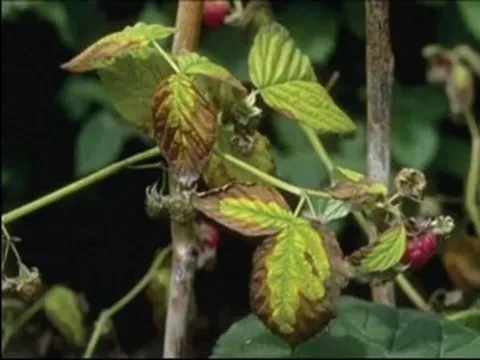
Foliage symptoms include premature yellowing, followed by a bronze or reddish-brown discoloration. Leaves eventually dry up but remain attached to the canes for an extended period.
When the roots are inspected, they exhibit severe decay. The feeder roots are often missing entirely, and the main roots show a distinct dark brown or reddish-brown necrotic appearance.
A diagnostic cross-section of the roots reveals a sharp contrast between the healthy white tissue and the diseased, reddish-brown vascular tissue, which is a classic sign of this infection.
In hot and dry conditions, the affected plants suddenly collapse and wilt. Because the root system is incapable of supporting the foliage, the entire plant may die rapidly during the peak of the growing season.
The development of Phytophthora root rot is almost exclusively linked to poor drainage and excessive soil moisture. The disease is most severe in heavy, compacted soils where water stands after rain.
Water-saturated soil creates an anaerobic environment that suppresses root respiration and favors the movement and infection efficiency of the oomycete zoospores.
Temperature plays a role, with 15°C to 20°C (approx. 60°F–68°F) being optimal for the pathogen. However, the presence of free water is the mandatory requirement for the disease cycle to initiate.
Poor horticultural practices, such as planting too deeply or applying excessive irrigation, increase the vulnerability of the raspberry bushes to the pathogen.
High levels of soil nitrogen can exacerbate the problem by promoting rapid, succulent growth that is more easily penetrated by the pathogen's hyphae, particularly if the plant's natural defenses are low.
Phytophthora root rot is arguably the most destructive disease for raspberries, capable of causing total plantation failure. It is a chronic disease that depletes the plantation's profitability over several years.
The impact is cumulative; as the pathogen spreads through the root system, yield decreases significantly, the berries become small and crumbly, and the canes eventually lose their productivity.
Economic losses are devastating, often requiring the complete abandonment of the site for raspberry cultivation for many years, as soil fumigation is often impractical or insufficient.
The disease spreads rapidly across a field. Once a patch is infected, the movement of irrigation water ensures that the spores spread to adjacent healthy plants, creating new infection foci.
Because the disease affects the roots, there is often no way to "cure" a plant once it shows advanced symptoms; therefore, the harm is typically irreversible and requires site management.
The primary strategy for managing this disease is site selection and preparation. Only well-drained soils should be chosen, and the use of raised beds is highly recommended to improve root zone aeration.
The use of certified disease-free planting material is crucial. Inspecting the root systems of new seedlings before planting can prevent the introduction of the pathogen into clean fields.
Maintaining proper sanitation is essential, including the immediate removal and destruction of symptomatic plants, including the entire root ball, to limit the spread of spores.
Chemical control options include the use of specific systemic fungicides like metalaxyl or fosetyl-aluminium, which should be used according to local agricultural guidelines, primarily as a preventative measure.
- Improve drainage systems in the field to prevent water stagnation.
- Rotate crops to non-susceptible species for several years before replanting raspberries.
- Disinfect all tools, machinery, and footwear when moving from infected to clean areas.
- Avoid excessive irrigation, especially during cool and wet weather periods.