
Pistachio phytophthora
Phytophthora pistaciae
The causative agent of this disease is the oomycete Phytophthora pistaciae. It is a soil-borne pathogen specifically known for infecting the root system and the root crown of pistachio trees.
What the section contains
Pistachio phytophthora
The disease is classified as a type of root rot. The pathogen survives in the soil as oospores, which are highly resilient structures capable of enduring adverse environmental conditions for many years.
The life cycle of the pathogen is intrinsically linked to moisture. The zoospores are motile and possess flagella, allowing them to swim through water-saturated soil to locate and infect host roots.
Infection can occur at various growth stages. The pathogen primarily enters the plant through micro-injuries in the root system or the collar, often triggered by excessive moisture levels.
Taxonomically, this organism belongs to Oomycota. This classification is vital for management, as conventional fungicides targeting true fungi are often ineffective against this specific pathogen.
The initial signs of infection are often non-specific, including stunted growth, leaf chlorosis, and premature leaf drop, reflecting the disruption of water and nutrient transport.
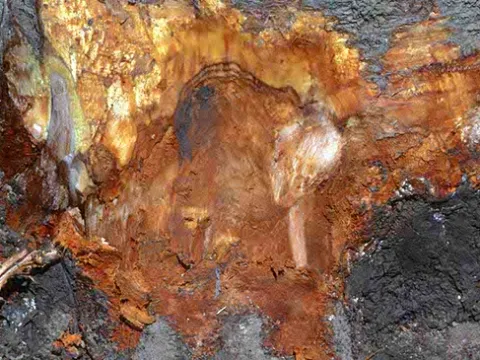
A diagnostic symptom is the appearance of brown or necrotic lesions at the root crown. The bark in the affected areas becomes soft and may separate from the underlying wood, often emitting a distinct foul odor.
Cross-sections of the roots reveal dark, necrotic tissue that extends deep into the xylem. These lesions often girdle the tree trunk, effectively cutting off the supply of nutrients from the roots to the canopy.
As the disease progresses, secondary roots die off. If the infection reaches the base of the trunk, the tree loses stability and may die within one or several growing seasons.
The canopy gradually thins, starting from the wilting of individual branches, eventually leading to complete defoliation and the death of the entire tree.
Waterlogged soil is the primary driver for disease development. Excessive irrigation or poor drainage systems create an environment where zoospores can thrive and migrate to roots.
Heavy clay soils that hold water are particularly susceptible to outbreaks. Furthermore, poorly graded fields that allow for pooling of water after rainfall increase the risk of infection significantly.
Temperature plays a crucial role in the activity of Phytophthora pistaciae. The pathogen is most aggressive in warm and wet soil conditions, typically seen during spring and autumn, which coincide with high metabolic activity of the trees.
Mechanical damage to roots caused by tillage equipment or feeding by soil-dwelling pests provides direct entry points for the pathogen into the tree's vascular system.
Introducing infested nursery stock is a frequent cause of disease outbreaks in new orchards, where the pathogen can establish itself silently before symptoms appear.
Phytophthora root rot is a devastating disease in commercial orchards, leading to high mortality rates. Treating established, infected trees is difficult and often yields poor results.
The infection causes substantial reductions in yield long before the tree dies. Fruit quality declines, nut development is stunted, and the tree's overall vigor is compromised due to restricted vascular flow.
The economic impact is high, requiring the removal and destruction of dead trees. Furthermore, infested soil remains contaminated for years, making replanting the same spot highly risky.
The disease spreads in patches or centers. Without prompt management, the infection can spread through irrigation runoff or mechanical movement, destroying large sections of an orchard.
Because the disease often has a long latent phase, growers may be unaware of the extent of the damage until the tree is beyond the point of recovery.
The cornerstone of disease management is strict water management. Ensuring excellent field drainage and avoiding irrigation water pooling are essential to prevent infection cycles.
Use only certified, disease-free nursery stock. Selecting rootstocks known for tolerance to Phytophthora species is a recommended long-term strategy for planting new orchards.
- Implement regular scouting, focusing on the root collar, for early identification of necrotic lesions.
- Apply targeted fungicides, such as those containing fosetyl-aluminum, when early signs of infection are detected.
- Immediately remove and burn infected trees along with the surrounding root ball to limit inoculum spread.
- Sanitize tools with disinfectant between trees to prevent the mechanical transmission of the pathogen.
Limit mechanical cultivation near the base of the trees to minimize root wounds that serve as infection sites for the pathogen.
Biological control agents, such as beneficial fungi in the genus Trichoderma, can be introduced to the soil to suppress the activity of pathogenic oomycetes through competition and parasitism.