
Pitch canker
Fusarium circinatum
Description
Symptoms
In seedlings, the initial symptoms include damping-off, discoloration of the root collar tissue, and eventual rapid wilting and death of the entire plant.
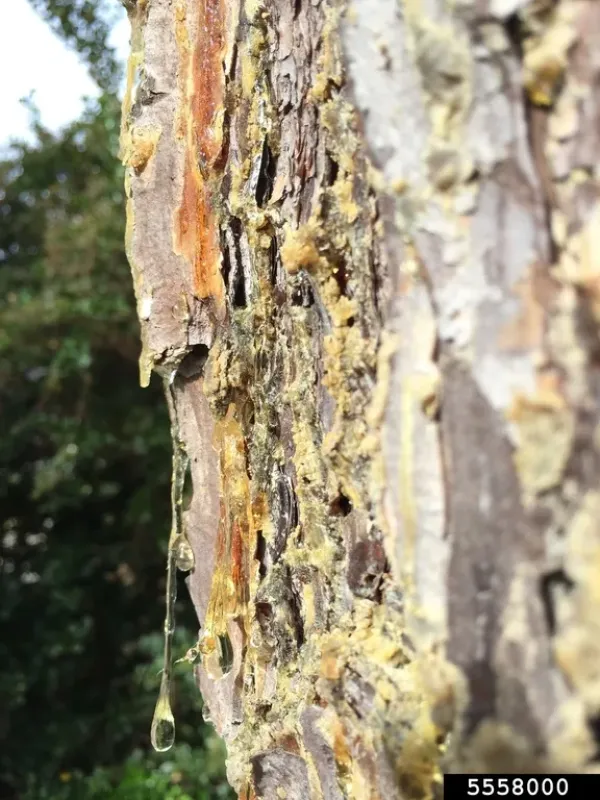
In older trees, the disease manifests as pitch-soaked cankers on stems and branches, which restrict the flow of water and nutrients throughout the tree canopy.
Needles on infected branches typically yellow, turn brown, and drop, eventually leading to branch dieback or total crown death as the infection girdles the tree.
A distinctive sign of the disease is the presence of heavy resin exudation at the site of infection, often referred to as "pitch," which attracts secondary wood-boring insects.
Examination of the infected wood beneath the bark reveals necrotic, reddish-brown lesions that penetrate deep into the sapwood, compromising the structural integrity of the tree.
Pathogen
The causative agent of this devastating disease is the fungus Fusarium circinatum. It is a highly virulent ascomycete fungus that primarily infects pine species (Pinus) and some Douglas-fir varieties.
The pathogen is capable of attacking trees at all life stages, ranging from germinating seeds in nursery beds to mature trees in commercial plantations and natural forest stands.
The fungus can persist in soil and infected plant debris for extended periods, and it is known to be seed-borne, making international trade in seeds a primary risk factor for its spread.
Its life cycle involves the production of microconidia, macroconidia, and chlamydospores, which allow the fungus to endure harsh environmental conditions and facilitate rapid dispersal.
Due to its destructive potential, the pathogen is classified as a quarantine organism in many countries, posing a significant threat to global conifer biodiversity.
Conditions for development
The development and spread of Fusarium circinatum are favored by high humidity and moderate temperatures, which are optimal for spore germination and fungal growth.
The fungus typically enters trees through wounds caused by insects, mechanical injuries, or natural factors like hail, which provide an entry point for the mycelium.
Trees experiencing physiological stress, such as drought, waterlogging, or nutrient deficiency, are significantly more susceptible to successful infection by the pathogen.
In nurseries, high planting density and poor hygiene practices, such as the reuse of contaminated tools or substrates, are critical drivers of rapid disease outbreaks.
The spread of the disease is also accelerated by the use of non-sterile growth media and the failure to implement strict quarantine protocols during the propagation phase.
Why it matters
Pitch canker causes immense economic losses in the forestry sector by decimating young nursery stock and reducing the merchantable volume and quality of timber.
Widespread infections often necessitate large-scale sanitary logging and clear-cutting, resulting in direct financial loss and severe damage to local ecosystems.
Infected trees suffer from reduced growth rates and increased brittleness, making them highly susceptible to wind-throw and breakage during severe weather events.
The pathogen is notoriously difficult to contain once established, as its spores are easily dispersed by wind, rain splash, and human-mediated transport.
The presence of the disease triggers strict phytosanitary regulations that can disrupt international markets for wood products and forest reproductive material.
Protection
The primary control strategy involves rigorous quarantine measures to prevent the introduction of contaminated seeds and seedlings into disease-free regions.
Nurseries should employ certified disease-free seeds and ensure that all growth substrates are thoroughly sterilized before use to eliminate potential inoculum.
Effective management includes regular surveillance of forest plantations, immediate removal and destruction of symptomatic trees, and careful disposal of all woody debris.
Chemical fungicides can be used in controlled nursery environments to protect plants, although they are rarely effective as a standalone solution for established field infections.
Long-term resistance breeding programs and the deployment of tolerant pine genotypes are considered the most sustainable methods for mitigating the impact of this disease.
Discussion
No discussions yet — be the first.