
Pistachio rust
Pileolaria terebinthi
Description
Symptoms
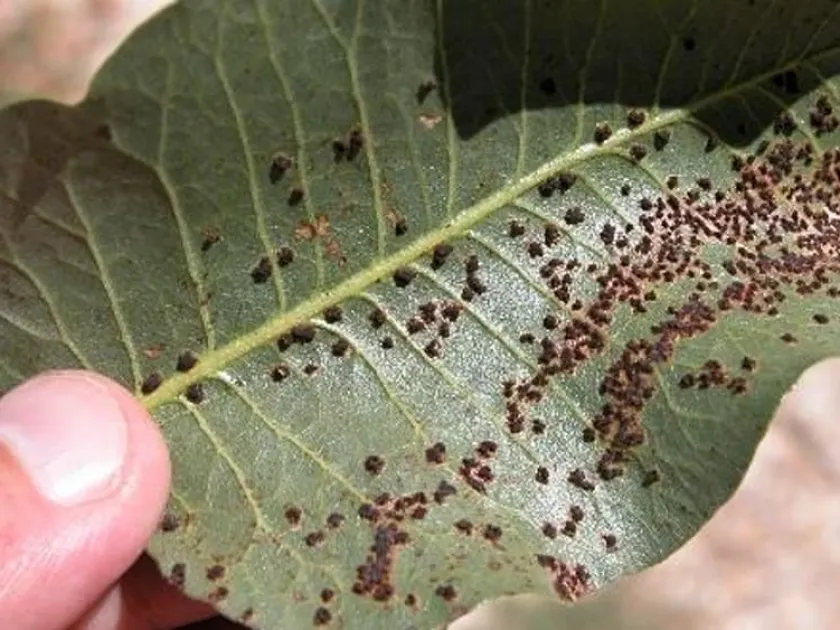
Symptoms initially appear as small, yellowish or pale brown spots on the underside of the leaves. Over time, these spots develop into prominent pustules filled with fungal spores.
As the disease progresses, these pustules turn dark brown or black, leading to necrosis of the surrounding tissue. Severely infected leaves lose their function and typically drop prematurely.
The leaf surface may show chlorosis or curling, which significantly reduces the tree's photosynthetic capacity. Shoots and petioles can also be infected, showing lesions that distort plant growth.
The appearance of a dusty, rusty-colored mass on the foliage is a diagnostic indicator of this fungal pathogen. This mass consists of millions of microscopic spores waiting for wind dispersal.
- small yellowish spots turning into dark brown pustules;
- premature leaf yellowing and defoliation;
- distortion and stunted growth of young shoots;
- reduced vigor and overall tree health;
- presence of spore masses on the undersides of leaves.
Pathogen
The causal agent of this disease is the rust fungus Pileolaria terebinthi. It is an obligate parasite that specifically attacks members of the Anacardiaceae family, including the pistachio tree.
The fungus completes its complex life cycle by producing various types of spores. It derives nutrition from the host plant by invading leaf tissues with specialized haustoria structures that extract nutrients.
Overwintering occurs primarily through teliospores, which remain on fallen leaves on the orchard floor. These spores serve as the primary inoculum for the next growing season.
The mycelium grows within the leaf parenchyma, causing significant physiological disruption. The pathogen's ability to propagate quickly allows it to spread across entire orchards once environmental conditions align.
Wind is the primary vector for spore dispersal, making localized containment challenging. Secondary infections continue as long as susceptible tissues are present and weather conditions remain favorable.
Conditions for development
High relative humidity and moderate temperatures are the primary requirements for Pileolaria terebinthi development. Prolonged periods of dew or light rain create the ideal environment for infection.
Optimal temperatures for spore germination typically range between 18°C and 25°C. These conditions often coincide with spring and early summer weather patterns in major pistachio-growing regions.
Poor orchard sanitation and dense canopy structures facilitate disease buildup. Lack of proper airflow keeps the foliage wet for longer periods, allowing spores to establish successful infections.
Overhead irrigation systems are known to increase the incidence of rust by frequently wetting the leaf surfaces. Switching to drip or micro-sprinkler irrigation can help manage the humidity within the orchard.
Variable weather conditions, particularly high humidity combined with stagnant air, can trigger rapid outbreaks in previously healthy orchards.
Why it matters
The main impact of pistachio rust is the significant loss of foliage, which directly reduces the tree's ability to produce energy through photosynthesis. This leads to lower yields and smaller nut sizes.
Premature defoliation weakens the tree, making it more susceptible to environmental stressors such as winter cold and drought. Chronic infections over several years can permanently reduce orchard productivity.
Quality reduction is a major concern, as affected trees may produce nuts with poor kernel development or lower nutritional value. This significantly impacts the market value of the crop.
Economic damage also stems from the increased costs of repeated fungicide applications and orchard maintenance. Growers must balance the cost of control with the projected losses caused by the disease.
Neglected orchards may become sources of inoculum, endangering neighboring plantations and increasing regional disease pressure. Long-term management is essential for sustainable production.
Protection
Sanitation is the most effective initial step in controlling pistachio rust. Removing and destroying fallen leaves during autumn significantly reduces the primary inoculum for the following spring.
Pruning techniques that improve light penetration and air circulation help keep the canopy dry. Drier environments are naturally less conducive to fungal spore germination and development.
Chemical control usually involves the application of registered fungicides, such as copper-based products or systemic triazole compounds. Treatments should be timed based on climate monitoring and growth stages.
Implementing a rotation program for fungicides is crucial to prevent the development of resistance in the pathogen population. Monitoring programs help detect early signs of rust to initiate rapid action.
Choosing proper orchard locations with good drainage and adequate spacing between trees can minimize the risk of severe infections. Integrated pest management strategies provide the best long-term outcomes.
Discussion
No discussions yet — be the first.