
Pistachio Septoria leaf spot
Septoria pistaciarum
Description
Symptoms
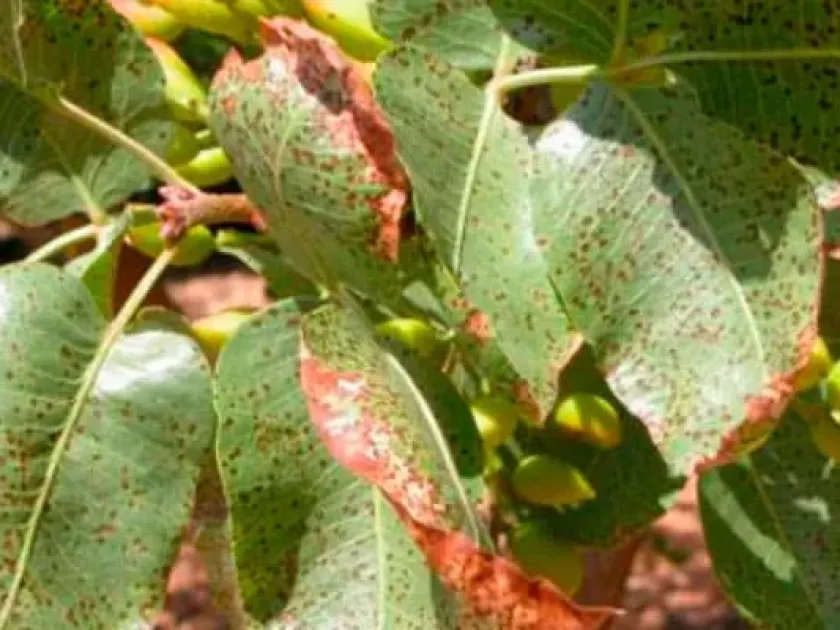
Initial symptoms of Septoria leaf spot appear as small, circular, or irregular lesions on the leaf surface. Initially, these spots are light brown, but they gradually darken as the tissue dies and the infection matures.
A distinctive yellow or chlorotic halo often surrounds the necrotic spot, caused by the host's reaction to fungal toxins. Over time, tiny black dots—the pycnidia—develop in the center of these lesions, which are diagnostic indicators of the disease.
In severe infections, the lesions coalesce, resulting in large, dead patches on the leaf. This severe damage often triggers premature leaf drop, which can strip an entire tree of its foliage before the end of the season.
The disease also affects the fruit-bearing structures. When the petioles or rachises are infected, the pistachio fruit may fail to develop properly or drop prematurely, significantly impacting the yield quantity and quality.
On young twigs, the infection may manifest as depressed necrotic areas that can inhibit branch growth. Under high humidity, a thin, grayish spore mass may be visible on the surface of the lesions.
Pathogen
The causative agent of this disease is the pathogenic fungus Septoria pistaciarum, which specifically targets pistachio trees. This fungus belongs to the class of Deuteromycetes and is known for its ability to persist in harsh conditions.
The pathogen overwinters as pycnidia and mycelium within fallen leaves or on infected twigs left in the orchard. As spring temperatures rise and humidity increases, the fungus produces spores that serve as primary inoculum for the new season's growth.
Infection occurs when spores are dispersed by splashing rain or wind onto susceptible leaves. Once the spores land on a leaf surface, they germinate and penetrate the tissue through stomata, beginning the colonization process.
Within the leaf tissue, the fungus forms dense mycelial mats, eventually developing new fruiting bodies known as pycnidia. These structures release thousands of conidia, which facilitate secondary spread throughout the growing season.
Understanding the life cycle of Septoria pistaciarum is essential for timing orchard interventions effectively. The pathogen's ability to survive in plant debris makes orchard sanitation a cornerstone of disease control.
Conditions for development
The development of Septoria leaf spot is heavily reliant on environmental moisture. Rain, heavy fog, and dew provide the necessary conditions for fungal spores to germinate and infect healthy plant tissue.
The fungus thrives in moderate temperature ranges, typically between 20°C and 25°C (68°F–77°F). During these periods, the rate of infection and secondary spore production reaches its peak intensity.
Orchards with dense canopies or poor air circulation are at higher risk. In such environments, the microclimate remains humid for longer periods, significantly increasing the risk of rapid disease outbreaks.
Inadequate irrigation practices, such as overhead sprinklers that wet the foliage, can mimic natural rain and accelerate the spread of the pathogen. Transitioning to drip irrigation is highly recommended to manage canopy moisture.
Host susceptibility is increased by environmental stress, poor soil nutrition, and the presence of competing pests. Trees that are managed for optimal vigor are generally more resilient and better able to withstand the infection pressure.
Why it matters
The primary damage caused by Septoria leaf spot is the loss of photosynthetic area. Because the leaves drop early, the tree is unable to produce the carbohydrates required for fruit filling and energy storage.
Reduced carbohydrate storage directly affects the tree’s cold hardiness. Trees that lose their foliage early are often more susceptible to frost damage during winter, which can lead to significant dieback of twigs and smaller branches.
The economic impact is substantial due to yield loss and reduced nut quality. The fruit may be shriveled, discolored, or carry signs of infection, making it less marketable and reducing the overall profitability of the harvest.
Chronic infection weakens the overall health of the tree, potentially shortening its productive lifespan. Over several years, untreated orchards may experience declining vigor, requiring costly interventions to restore productivity.
Direct costs of managing the disease, including fungicide applications and sanitation labor, add to the financial burden. If left uncontrolled, the disease can lead to cycles of boom and bust yields, complicating long-term orchard planning.
Protection
Sanitation is the most critical management strategy. Removing and destroying fallen leaves during the dormant season significantly reduces the primary inoculum source for the following year.
Pruning is essential to improve airflow and light penetration within the canopy. By maintaining an open structure, growers can ensure that foliage dries quickly after rain, which limits the window for fungal infection.
Chemical control involving copper-based fungicides or systemic products is necessary in high-pressure years. Preventive applications should be made according to local monitoring, particularly during the wet months of spring.
Integrated Pest Management (IPM) practices, including regular monitoring of leaves, are highly effective. Early detection allows for targeted treatments that prevent the disease from becoming established in the canopy.
- Implement strict orchard sanitation by removing plant debris.
- Use systemic fungicides during the early development stages.
- Maintain optimal tree nutrition to enhance natural defenses.
- Prune trees annually to promote better air circulation.
- Use drip irrigation to prevent unnecessary canopy wetting.
Discussion
No discussions yet — be the first.