
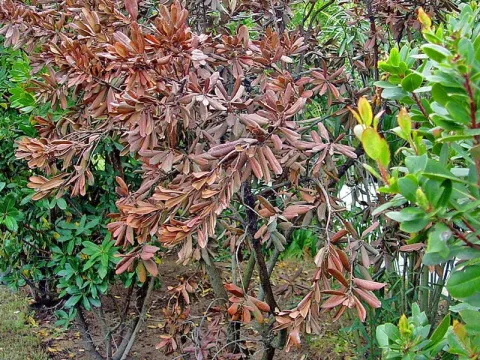
Phytophthora parvispora
Phytophthora parvispora
The causal agent of this disease is the oomycete Phytophthora parvispora. It is a fungus-like pathogen within the genus Phytophthora, known for attacking the root systems and the crown area of various plants.
What the section contains
Phytophthora parvispora
This pathogen reproduces via zoospores, which are motile in water. These spores can easily navigate through irrigation systems or waterlogged soil to find new host plants, making it a significant threat in greenhouse environments.
The organism persists in the soil for extended periods as oospores. These thick-walled resting spores are highly resistant to adverse environmental conditions and can survive even when no host is present.
Upon infection, the mycelium penetrates the roots, destroying the plant’s vascular tissues. This physical damage prevents the plant from transporting essential nutrients and water, leading to systemic decline.
Transmission of Phytophthora parvispora typically occurs through contaminated soil, infected nursery stock, or dirty gardening tools, which often serve as mechanical vectors for the pathogen.
The initial symptoms often manifest as a general decline in plant vigor. Infected plants may appear stunted, lose their natural color, and show signs of wilting despite regular and proper watering.
A closer inspection of the root zone reveals browning, softening, and decay of the smaller feeder roots. Over time, the necrosis spreads to the main roots, leading to a total breakdown of the root system.
At the base of the stem or the crown, dark, water-soaked lesions may appear. As the infection progresses, these lesions can girdle the stem, causing the entire plant to collapse and die.
Because the symptoms are initially restricted to the root system, visual identification above ground may only occur once the infection is advanced and severe damage has already taken place.
- Stunting and lack of growth
- Wilting during peak daylight hours
- Browning and decay of roots
- Darkened lesions at the plant crown
High moisture levels are the most critical factor for the development of Phytophthora parvispora. Waterlogged soil provides the perfect environment for zoospores to swim and infect healthy roots.
The optimal temperature range for the pathogen is between +18°C and +25°C. In these conditions, the metabolic activity and reproduction rate of the pathogen increase dramatically.
Poor soil aeration or compacted substrates limit oxygen availability to the roots. Weakened plants under these stress conditions become much more susceptible to the encroachment of the pathogen.
Fluctuations in pH levels or imbalances in the soil microbial community can also facilitate the rapid colonization of Phytophthora parvispora by reducing natural antagonistic organisms.
Lack of sanitation in production facilities, including failure to sanitize recycled drainage water, frequently leads to widespread outbreaks within greenhouse settings.
Phytophthora parvispora causes substantial economic losses, particularly in nurseries and intensive crop production, where plants are grown in close proximity.
The primary damage is the complete loss of plant vigor, resulting in drastically reduced yields. In many cases, infected plants cannot be saved once the roots have significantly rotted.
The disease poses a long-term threat to production areas because the resting spores can remain in the soil, making it difficult to replant susceptible species for several seasons.
The cost of managing this pathogen is high, as it requires rigorous quarantine, proper disposal of infected crops, and complete disinfection of the growing area.
The ability of the pathogen to affect a wide range of host plants makes it a difficult challenge for farmers to implement effective long-term crop rotation cycles.
Effective management begins with strict hygiene. Always use certified disease-free nursery stock to avoid introducing the pathogen into your production environment.
Proper water management is essential. Ensure that irrigation systems are optimized and that soil or growth substrates have excellent drainage to prevent standing water.
Chemical control using systemic fungicides containing active ingredients like metalaxyl or fosetyl-aluminum can be effective when applied in the early stages of the disease.
Routine sanitation of equipment, such as potting benches, trays, and tools, using appropriate disinfectants is necessary to minimize the risk of spreading the pathogen.
Biological control methods, specifically the introduction of Trichoderma species into the root zone, can help protect plants by suppressing the growth and spread of Phytophthora pathogens.