
Phytophthora pseudosyringae
Phytophthora pseudosyringae
The causative agent of the disease is the oomycete Phytophthora pseudosyringae, a pathogen known for infecting various tree and shrub species.
What the section contains
Phytophthora pseudosyringae
This organism is a soil-borne pathogen capable of surviving for long periods in the environment by forming resilient resting spores in the soil.
Its biology is characterized by the production of motile zoospores, which facilitate the rapid spread of the disease through water films or saturated soil.
The pathogen utilizes mycelial growth to colonize host tissues, gradually invading the vascular system and roots, which prevents the uptake of water and nutrients.
It is distinct from other Phytophthora species, yet it shares similar mechanisms of infection, posing a significant risk to forest and nursery health.
The most common symptoms include chlorosis and wilting of the leaves, often accompanied by premature leaf fall throughout the growing season.
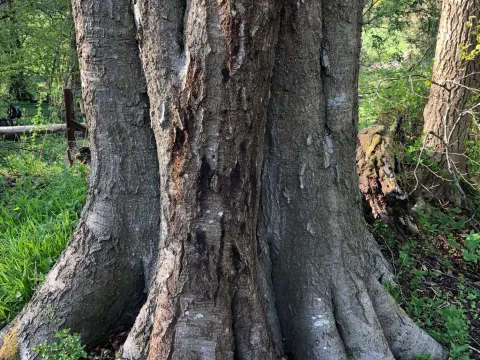
Cankers or necrotic lesions may appear on the bark, particularly near the base of the stem, sometimes exuding a dark sap or resinous discharge.
Root systems show clear signs of rot: fine feeder roots die off, while larger roots exhibit brown, discolored tissue under the bark when inspected.
Trees affected by the pathogen show a general loss of vigor, with reduced annual growth rates and thinning crowns that indicate chronic vascular damage.
In advanced stages of the disease, entire limbs or the main trunk may collapse as the internal tissue dies and the tree loses its structural integrity.
High moisture levels are the most critical factor for the development and spread of Phytophthora pseudosyringae infections in plant populations.
The pathogen thrives in cool, wet environments, making spring and autumn seasons particularly high-risk periods for active disease propagation.
Areas with poor drainage and compact soils are susceptible to outbreaks because water saturation creates an ideal environment for zoospores to move and infect roots.
Physical injuries to the roots or stems, caused by machinery or soil pests, create entry points that make trees significantly more vulnerable to infection.
Repeated rainfall and high humidity contribute to the longevity of the spores in the soil, ensuring the pathogen persists across multiple seasons.
The disease causes substantial damage to forest stands and ornamental trees, leading to tree death and loss of biodiversity in affected areas.
Nurseries are at extreme risk, as the pathogen can spread rapidly through water systems and infected potting media, destroying large quantities of seedlings.
Trees stressed by the pathogen often become susceptible to secondary pests, including bark beetles, which further accelerate the decline of the forest.
Economic losses are significant, not only due to the death of trees but also due to the high cost of site decontamination and loss of productive land.
The persistence of the pathogen in the soil creates a long-term threat, requiring strict quarantine measures and careful site selection for future plantings.
Strict phytosanitary practices are the first line of defense, ensuring that all introduced plant materials are free from Phytophthora infection.
Improving soil drainage is essential to mitigate the risk of infection, as removing excess moisture prevents the pathogen from completing its life cycle.
If infection is detected, prompt removal and destruction of infected trees, including the root system and adjacent soil, are necessary to prevent further spread.
Sanitation of tools and equipment after working in potentially infested areas is vital to prevent the mechanical transfer of the pathogen to clean sites.
- Application of phosphite-based fungicides to protect high-value trees from infection.
- Use of well-drained, sterile substrates in nursery production settings.
- Monitoring and early detection programs to catch disease outbreaks before they escalate.