
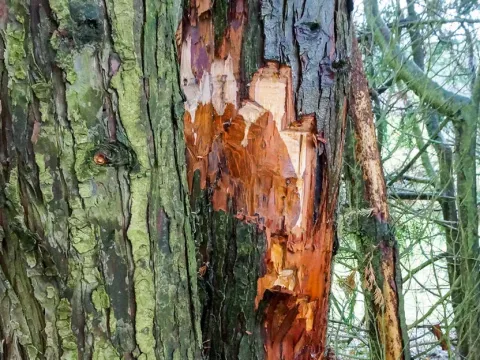
Phytophthora root rot
Phytophthora lateralis
The primary symptom is a gradual yellowing or browning of foliage, typically starting on the lower branches and progressing throughout the canopy.
What the section contains
Phytophthora root rot
A diagnostic sign is the distinctive reddish-brown discoloration of the inner bark and cambium layer at the base of the tree or root crown.
As the infection advances, the tree loses its turgor, foliage turns into a bronze or greyish color, and eventually, the entire tree dies.
The root system becomes necrotic and fragile, with the fine feeder roots completely decaying, leading to the rapid decline of the plant.
Symptoms often appear suddenly during the warm season, although the internal infection of the vascular system may have begun long before.
The pathogen is an oomycete called Phytophthora lateralis, a specialized organism known for causing lethal root rot in specific conifer species.
It survives in the soil and water through resistant spores that can remain viable for many years, waiting for suitable environmental conditions.
The disease spreads primarily through motile zoospores that move freely in saturated soil or water towards the roots of the host plant.
Once it colonizes the roots, it moves upwards, destroying the cambium and xylem tissues, effectively cutting off water transport to the upper canopy.
The most susceptible host is the Port Orford cedar (Chamaecyparis lawsoniana), but the pathogen can infect other cypress species in nursery settings.
High soil moisture and water saturation are the most critical environmental triggers for the germination and spread of Phytophthora lateralis.
Poor drainage, excessive irrigation, and low-lying sites where water accumulates create a perfect environment for the pathogen to thrive.
Human activity is a major factor in spreading the disease, particularly through contaminated nursery equipment, muddy footwear, and infested irrigation water.
The pathogen is highly active in cool to moderate temperatures, which frequently coincide with periods of high rainfall and spring humidity.
Planting methods that bury the root crown or improper spacing that restricts airflow can exacerbate the conditions favoring infection.
Phytophthora lateralis is an extremely destructive pathogen, often causing total mortality in nurseries and sensitive landscape settings.
The disease is notoriously difficult to treat once the symptoms are visible, as the destruction of the vascular system is usually permanent.
Economic impact is significant due to the loss of nursery inventory and the need to abandon or heavily remediate infected production sites.
The pathogen poses a severe threat to natural forests where it can eliminate entire populations of susceptible cypress species within a short timeframe.
The longevity of the pathogen in the soil complicates long-term management and restricts the future use of the infected land for sensitive crops.
Prevention is the most effective approach: use only certified disease-free stock and maintain strict quarantine procedures for all new plants.
Implement rigorous sanitation protocols, including the disinfection of tools, pots, and shoes with appropriate chemicals after handling any plant material.
Ensure optimal drainage in nursery sites and avoid any practice that leads to water stagnation, such as overhead irrigation that keeps the soil too wet.
Promptly identify, isolate, and remove symptomatic trees along with their root balls to minimize the risk of inoculum spreading to healthy neighbors.
- Apply preventative fungicides specifically formulated to target oomycetes, such as fosetyl-aluminum, during high-risk periods.