
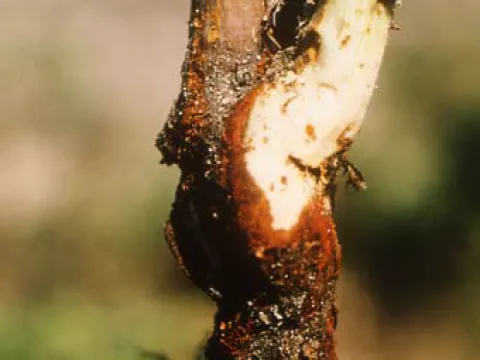
Phytophthora root rot
Phytophthora megasperma
The causative agent of this disease is the oomycete Phytophthora megasperma. This soil-borne pathogen belongs to the class Oomycetes and persists in the soil for many years in the form of dormant oospores.
What the section contains
Phytophthora root rot
The pathogen's mycelium infects plant roots, causing tissue necrosis and disrupting the transport of water and nutrients. P. megasperma is known for its high level of specificity to certain crop hosts.
The pathogen utilizes motile zoospores that swim through water-saturated soil to reach new roots, making water management a key component in the disease's lifecycle.
Environmental conditions trigger the release of zoospores, allowing the disease to spread rapidly across a field during periods of heavy rainfall or over-irrigation.
The survival of oospores in soil debris makes this pathogen particularly resilient and difficult to eradicate once it has become established in a field.
Initial symptoms include stunted plant growth and leaf yellowing, which often mimic symptoms of nitrogen deficiency. Affected plants are usually smaller than their neighbors.
Digging up plants reveals decayed and discolored roots. The root system often turns brown or dark brown, and the taproot may appear rotten, soft, and mushy.
In seedlings, the disease causes damping-off, leading to stand loss. Young plants may wither and collapse shortly after emergence, leaving gaps in the rows.
Mature plants may exhibit permanent wilting, especially under heat stress, as the compromised root system can no longer support the plant's water demands.
Symptoms are often distributed in patches across the field, correlating with low-lying areas where water tends to accumulate after heavy rain events.
The most important environmental factor promoting Phytophthora megasperma is high soil moisture. Water-saturated soil creates the necessary environment for zoospore movement.
Heavy clay soils and soils with poor internal drainage are at the highest risk for severe disease outbreaks because they remain wet for extended periods.
The optimal temperature range for the pathogen's activity is generally between 18°C and 25°C. Warm and wet conditions during the seedling stage are particularly favorable for infection.
Soil compaction, often caused by heavy machinery, reduces soil porosity and aeration, thereby creating localized environments where the pathogen thrives.
Frequent or excessive irrigation practices can inadvertently exacerbate the spread of the disease if the water does not drain properly from the rooting zone.
The primary damage caused by Phytophthora root rot is a reduction in plant population, which significantly decreases the overall yield potential of the field.
The disease affects seed quality, as stressed plants produce fewer and smaller seeds, directly impacting the economic value of the harvested crop.
Significant economic losses occur due to the necessity of replanting fields where stand loss has been too severe to maintain productive yields.
The long-term persistence of oospores in the soil complicates future farming plans, as growers must select less susceptible varieties for several years to mitigate risk.
Management of this disease requires substantial investment in specialized seed treatments and potentially expensive fungicides to protect crops from severe damage.
- Planting resistant or tolerant cultivars is the most effective management strategy.
- Implementing long-term crop rotation cycles to reduce the pathogen population in the soil.
- Improving field drainage through tiling or land leveling to prevent standing water.
- Using high-quality fungicidal seed treatments specifically labeled for protection against oomycetes.
- Practicing good sanitation by cleaning farm machinery before moving from infested fields to clean areas.