
Phytophthora root rot
Phytophthora cambivora
The causal agent of the disease is the oomycete Phytophthora cambivora, which belongs to the class of pseudofungi. This microorganism is primarily soilborne and can persist in the substrate for long periods in the form of oospores, which exhibit high resistance to adverse environmental conditions.
What the section contains
Phytophthora root rot
The life cycle of the pathogen involves the formation of sporangia, from which motile zoospores are released when free water is present. These zoospores possess flagella, allowing them to actively swim through soil moisture to reach the roots of a susceptible host plant to initiate infection.
The mycelium of the pathogen penetrates root tissues, destroying their structural integrity and preventing the normal uptake of water and essential nutrients. During its metabolic activity, the organism releases enzymes that cause necrosis of the roots and the base of the trunk.
The biology of Phytophthora cambivora is closely tied to soil moisture regimes. Optimal temperatures for active mycelial growth allow the pathogen to threaten plantations across various climatic zones where waterlogging is a frequent occurrence.
Unlike true fungi, Phytophthora species are sensitive to specific fungicides, such as phenylamides, which makes the correct selection of chemical treatments a critical factor in any effective plant protection strategy.
The first noticeable symptom of infection is a general decline in the tree canopy, often mistaken for nitrogen deficiency. Leaves become chlorotic, decrease in size, and in advanced cases, drop prematurely, starting from the top of the crown.
Upon examination of the root system, areas of decay are found on fine feeder roots. These roots turn a dark, brown, or black color, become soft and flaccid, and easily separate from the central vascular cylinder.
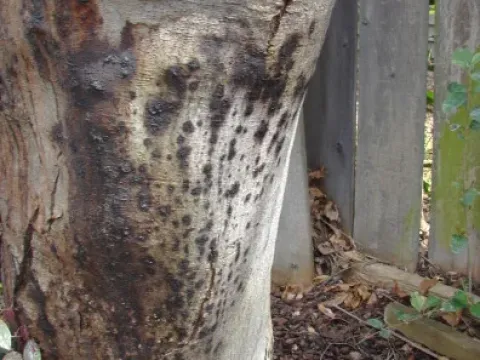
Dark, weeping lesions may appear on the root collar of affected plants. When the bark is removed from the infected area, a distinct boundary is visible between healthy, light-colored tissue and the dead, dark tissue, which often displays a reddish-brown hue.
Under high humidity conditions, a subtle mycelial or sporangial growth may be visible on the surface of affected areas. However, the disease usually progresses hidden from view until the root system has suffered critical damage.
Trees severely affected by Phytophthora root rot show a drastic reduction in growth and symptoms of "dieback," which ultimately leads to total loss of productivity or the death of the entire tree over several growing seasons.
The primary driver for the development of Phytophthora cambivora is soil waterlogging. Heavy clay soils with poor drainage create ideal conditions for standing water, which is essential for the dissemination of the pathogen's motile zoospores.
Disease development is further promoted by low soil oxygen levels caused by prolonged flooding. Roots in such conditions become weakened, their natural resistance to infection drops, facilitating the pathogen's penetration into healthy tissues.
Infection frequently occurs during periods of persistent rainfall or excessive irrigation. Zoospores can be transported by runoff water or through contaminated tools used for soil cultivation or maintenance around the root collar.
Optimal temperatures for active infection range from 15 to 25 degrees Celsius. During this period, the pathogen exhibits maximum aggressiveness, attacking the youngest and most active parts of the root system.
The presence of plant debris from previously infected plants in the soil allows the pathogen to remain viable for several years even in the absence of a primary host, keeping the infection pressure consistently high in infested fields.
The main danger of the disease lies in the fact that symptoms only become apparent when a significant portion of the root system is already destroyed. This makes it virtually impossible to rescue an established tree once the infection is advanced.
Phytophthora cambivora affects a wide range of crops, including chestnut, nut trees, and many fruit tree species. Losses in nurseries can reach 100% if the phytosanitary status of the substrate is not properly managed.
The disease disrupts the transport of nutrients and water from the roots to the aerial parts, leading to plant exhaustion and gradual wilting. Fruit on infected trees becomes smaller, loses quality, and drops prematurely before maturity.
The high persistence of the pathogen in the soil makes it impossible to cultivate susceptible crops on infested sites for many years, requiring crop rotation or expensive chemical soil sterilization processes.
Economic damage includes not only the loss of yield but also the significant costs associated with removing affected trees and preparing the soil for replanting, which may include clearing and site sanitation.
The cornerstone of protection is prevention, specifically focused on improving site drainage. It is essential to manage excess water and create conditions for good soil aeration to minimize the risks of water stagnation that favors the development of the oomycete.
Using only healthy planting material from certified nurseries is crucial. Before planting, it is recommended to treat the roots of seedlings with specialized systemic fungicides to protect against soilborne infections.
- Maintain strict hygiene: disinfect tools and footwear when moving between different zones.
- Apply balanced fertilizers to boost plant immunity and vigor.
- Promptly remove and destroy infected trees along with the surrounding root ball.
- Apply fungicides based on fosetyl-aluminum or metalaxyl at the first sign of symptoms.
Systematic monitoring of orchard health allows for the early detection of infection foci. In cases of localized infection, surgical removal of diseased bark on the root collar followed by disinfection and the application of protective sealants may be feasible.
An integrated pest management (IPM) system should include the use of resistant rootstocks where available and the application of biological agents, such as Trichoderma, which act as antagonists to the pathogen and suppress Phytophthora activity in the soil.