
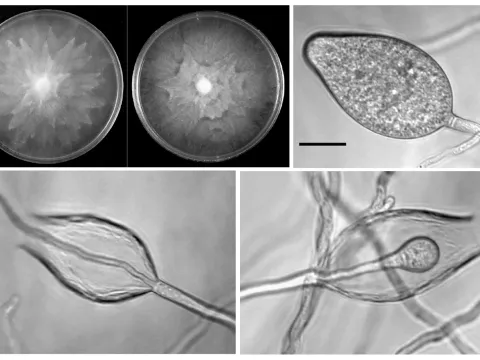
Phytophthora riparia
Phytophthora riparia
Phytophthora riparia is an oomycete, a fungus-like organism that acts as a significant pathogen for a variety of plant species, particularly in riparian or high-moisture environments.
What the section contains
Phytophthora riparia
This pathogen reproduces via zoospores, which are highly motile spores that navigate through water films, allowing them to rapidly infect roots and other plant tissues in saturated conditions.
The life cycle is characterized by the production of oospores, which are thick-walled resting structures capable of surviving in the soil for extended periods, serving as the primary inoculum for new infections.
Taxonomically, it belongs to the genus Phytophthora, a group of organisms notorious for causing devastating root rots and blights across various botanical families.
Genetic and biological studies indicate that P. riparia is well-adapted to aquatic habitats, reflecting its ability to persist in diverse ecological niches associated with damp soil and moving water.
Disease outbreaks of Phytophthora riparia are almost exclusively linked to periods of high moisture, such as heavy rainfall, flooding, or poor drainage within a cultivation site.
The pathogen thrives in cool to moderate temperature ranges, which are ideal for the germination of sporangia and the active motility of zoospores in soil water.
Saturated soils create a low-oxygen environment that weakens plant roots, making them significantly more susceptible to infection by this oomycete pathogen.
Frequent splashing of water during rain events facilitates the movement of the pathogen from the soil to the lower leaves and stems of susceptible plants, initiating foliar infection.
Effective control of moisture levels in nursery containers or fields is the most critical factor in preventing the spread and establishment of the disease.
The damage caused by this pathogen includes severe root decay, which prevents the host plant from efficiently absorbing water and essential nutrients from the substrate.
Symptoms often manifest as sudden wilting, chlorosis, and general stunting, which can lead to complete plant death if the infection reaches the vascular tissues.
In nursery settings, Phytophthora riparia can spread rapidly through shared irrigation water or contaminated tools, causing significant financial losses due to mass plant failure.
Affected plants often display reduced biomass and poor overall health, making them susceptible to secondary infections by other opportunistic pathogens or pests.
Crop loss is frequently irreversible once symptoms appear, emphasizing the importance of early detection and prophylactic management in susceptible plant populations.
Management of the disease must be proactive, focusing on improving drainage and avoiding the accumulation of standing water around the root zones of the plants.
Sanitation practices, such as sterilizing containers and tools, are essential to prevent the mechanical transfer of the pathogen between different crop batches or field areas.
Chemical control involving fungicides, specifically those targeting oomycetes (such as metalaxyl or phosphonates), can be effective when applied preventatively or early in the infection stage.
Utilizing high-quality, disease-free planting material reduces the risk of introducing the pathogen to previously clean growing areas.
- Implement a strict soil moisture management program.
- Install effective drainage systems in field plots.
- Use certified, pathogen-free nursery stock.
- Apply preventive systemic fungicides when conditions favor disease.