
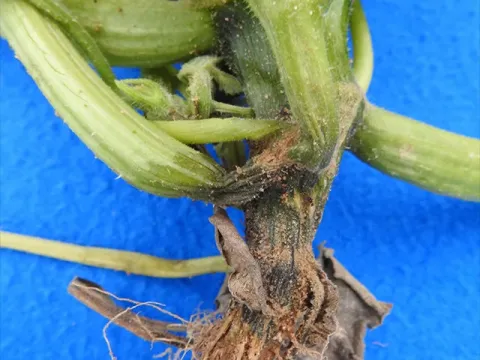
Phytophthora glovera blight
Phytophthora glovera
The causative agent of this disease is the oomycete Phytophthora glovera. As a member of the Oomycetes class, this pathogen acts as an obligate parasite, thriving in environments that support its complex life cycle.
What the section contains
Phytophthora glovera blight
The biology of Phytophthora glovera is highly dependent on liquid water. Its zoospores are biflagellated, allowing them to swim through film moisture to reach host tissues, where they initiate the infection process.
The pathogen possesses a robust survival mechanism, forming oospores in the soil. These structures allow Phytophthora glovera to persist for several seasons, making crop rotation a critical component of disease management.
Once it colonizes the host, the pathogen secretes hydrolytic enzymes. These enzymes break down plant cell walls, allowing the mycelium to spread through intercellular spaces and effectively extract nutrients from the plant.
Genetic diversity within Phytophthora glovera populations poses a challenge for breeders. The emergence of new, more aggressive strains requires constant updates to disease resistance protocols in commercial crop varieties.
The first signs of Phytophthora glovera infection appear as small, water-soaked spots on leaves. These spots typically start with a pale green or yellowish chlorotic halo before expanding rapidly.
Under high humidity, a thin, white fungal-like growth often appears on the underside of infected leaves. This corresponds to the active sporulation phase, where the pathogen produces thousands of sporangia for further spread.
Stem lesions are a common and severe symptom. These dark, necrotic bands can girdle the stem, cutting off the supply of water and nutrients to the upper parts of the plant, leading to sudden wilting and collapse.
In fruits and tubers, Phytophthora glovera causes rapid rot. The affected area becomes soft, sunken, and dark brown. If conditions are humid, the rot progresses internally, leading to total decomposition of the organ.
The rate of symptom progression is highly dependent on moisture levels. In dry periods, the disease might go dormant, but it quickly resumes activity and spreads as soon as wet weather returns.
Environmental conditions are the primary drivers of Phytophthora glovera outbreaks. Temperatures between 15°C and 22°C combined with high relative humidity create the perfect storm for rapid disease propagation.
Persistent rainfall or heavy fog ensures that leaf surfaces remain wet for extended periods. This moisture is essential for the germination of sporangia and the subsequent penetration of the plant epidermis.
Poor airflow in dense crop canopies leads to stagnant air and high humidity near the soil level. This microclimate provides an ideal nursery for Phytophthora glovera to thrive and move between plants.
Poor soil drainage or waterlogged conditions are particularly dangerous. They not only promote the growth of the pathogen in the soil but also stress the root system, making the entire plant more susceptible to infection.
Excessive use of nitrogen-based fertilizers can lead to succulent growth, which is softer and easier for the pathogen to penetrate. Balancing nutrients is essential to maintain a strong physical barrier against infection.
The harm caused by Phytophthora glovera is substantial, characterized by severe foliage loss and yield reduction. The pathogen's ability to destroy photosynthetic tissue rapidly leads to stunted plant growth.
In addition to direct yield loss, the disease impacts post-harvest quality. Produce infected with Phytophthora glovera is highly prone to storage rot, which can spoil an entire shipment in a warehouse.
The disease can cause total crop failure in susceptible fields if left unmanaged. This loss is not only financial but also impacts the supply chain and regional food security if the crop is a staple commodity.
Economic losses are compounded by the high costs of protective fungicide applications. Farmers are often forced to spray frequently, increasing production costs and impacting the environmental footprint of the farm.
Reduced crop quality affects marketability. Infected crops often fail to meet aesthetic standards and nutritional requirements, resulting in significant losses during the sorting and grading process at packing facilities.
Integrated Pest Management (IPM) is the most effective approach against Phytophthora glovera. This starts with selecting resistant cultivars, which significantly reduce the reliance on chemical treatments.
Proper field hygiene is essential. Removing and destroying all infected plant debris prevents the buildup of the inoculum in the soil and reduces the risk of recurrence in the following season.
Modifying the canopy structure through wider spacing and proper pruning improves air circulation. A drier canopy environment acts as a natural deterrent to pathogen movement and germination.
Chemical control should be implemented early using preventative fungicides. To prevent the development of fungicide resistance, it is crucial to alternate between different classes of active ingredients.
- Utilize long-term crop rotation cycles.
- Optimize irrigation to avoid surface wetting.
- Monitor weather data to predict high-risk infection periods.
- Improve soil drainage to prevent water accumulation.