
Phytophthora humicola
Phytophthora humicola
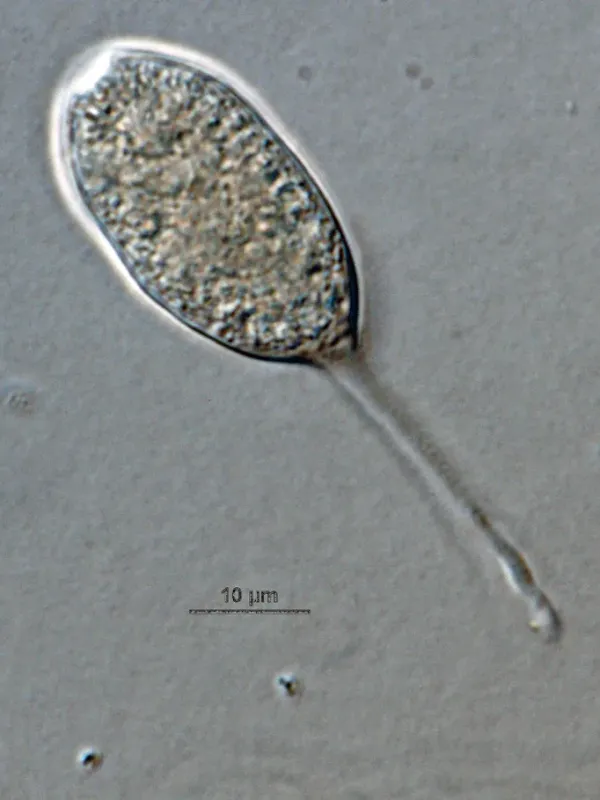
Description
Symptoms
The first clinical signs of Phytophthora humicola infection involve generalized stress in the plant, often appearing as stunted growth, leaf chlorosis, and sudden wilting.
Diagnostic examination of the root system reveals significant necrosis, with fine feeder roots becoming discolored, soft, and brittle due to tissue degradation.
In cases of severe infestation, lesions may develop on the taproot or crown, further obstructing the plant's ability to uptake water and dissolved nutrients.
Under high humidity or poorly drained soil conditions, a subtle, white, mycelial growth may appear at the base of the stem or on damaged root sections.
The cumulative effect of these symptoms is the eventual collapse of the root architecture, which leads to total plant death and observable patches of crop loss in the field.
Pathogen
Phytophthora humicola is a soil-borne oomycete pathogen belonging to the genus Phytophthora, known for its ability to affect plant root systems.
This microorganism resides primarily in the upper layers of the soil, persisting through adverse environmental conditions via the formation of resilient oospores.
Its life cycle is strictly dependent on soil moisture, as it utilizes mobile zoospores to migrate through water films toward the root exudates of susceptible host plants.
Biologically, it acts as a facultative parasite, capable of surviving on decaying organic matter in the soil when living host tissues are not currently available.
Research indicates that this species is well-adapted to habitats characterized by high organic matter content and consistent moisture levels, defining its specific ecological niche.
Conditions for development
Development and spread are primarily facilitated by excessive soil moisture, making over-irrigation or poor field drainage the most significant risk factors.
Moderate temperatures, common during spring and autumn cycles, provide the optimal environment for the germination of spores and subsequent colonization of host tissues.
Heavy, poorly aerated soil textures retain excess water for longer periods, providing the continuous liquid medium required for the active movement of zoospores.
Soils enriched with high amounts of organic matter may provide a substrate that supports the long-term survival and inoculum potential of the pathogen.
Failure to implement crop rotation practices promotes a gradual accumulation of the pathogen's propagules, exponentially increasing the disease pressure in subsequent years.
Why it matters
The primary impact of this pathogen is the degradation of the root system, which severely compromises the plant's vital physiological functions.
Reduced vigor and poor nutrient uptake lead to lower biomass production, which results in significant losses in total crop yield and product quality.
Infected plants exhibit a weakened defense system, becoming highly susceptible to colonization by opportunistic secondary bacteria and fungi that accelerate death.
For tuber and root crop industries, contamination can lead to storage rot, as the pathogen persists and continues to degrade produce after harvest in storage facilities.
The long-term economic burden involves the cost of remediation efforts, potential yield reduction, and the need for specialized disease management protocols.
Protection
Integrated pest management strategies focusing on cultural practices, such as proper crop rotation with non-host species, are essential to break the pathogen's life cycle.
Improving soil drainage and optimizing irrigation schedules are the most effective preventive measures to minimize the environmental suitability for the pathogen.
The application of biological control agents, particularly beneficial Trichoderma strains, can help suppress pathogen growth and enhance root system resilience.
Sanitation practices, including the removal of infected debris and the use of certified, disease-free planting material, are critical for preventing disease spread.
- Utilizing systemic fungicides as a targeted treatment for root zone protection.
- Monitoring soil moisture levels using sensor technology to prevent waterlogging.
- Enhancing soil health through cover cropping to foster natural antagonistic microbes.
Discussion
No discussions yet — be the first.