
Phytophthora heterospora
Phytophthora heterospora
The causal agent of this disease is the oomycete Phytophthora heterospora, which is classified as a water mold, capable of surviving and spreading effectively in moist environments.
What the section contains
Phytophthora heterospora
This pathogen reproduces by forming zoospores, which utilize flagella to swim through the soil water film, facilitating rapid transmission to healthy host tissues.
Upon reaching a host plant, Phytophthora heterospora penetrates the epidermis, colonizing the root cortex and vascular system, which leads to the breakdown of essential nutrient transport.
The organism can persist in soil for extended periods by producing oospores, which are thick-walled structures resistant to environmental stresses and chemical degradation.
Due to its high adaptability, this pathogen remains a significant challenge for sustainable agriculture, especially in regions with high rainfall or improper water management.
Early symptoms typically manifest as chlorosis on lower leaves, followed by the appearance of dark, water-soaked spots that spread rapidly across the foliage.
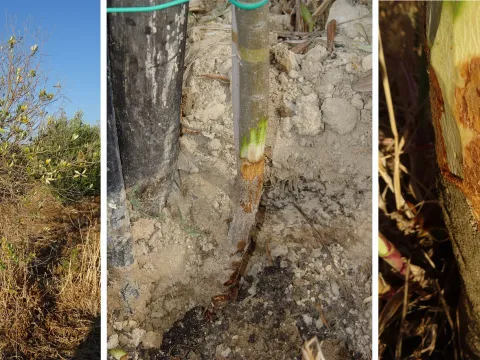
Stems often exhibit dark, necrotic lesions near the soil line, which weaken the plant structure and cause it to lose vitality and upright posture.
In humid conditions, a sparse white mycelial growth may appear on the affected surfaces, indicating active sporulation of the oomycete.
Roots show clear evidence of rot, becoming soft, discolored, and prone to secondary colonization by soil-borne bacteria, resulting in a foul smell.
Plants affected by the disease often show stunted growth and wilting that cannot be corrected by irrigation, eventually leading to plant collapse.
The development of Phytophthora heterospora is heavily dependent on soil moisture; water-saturated soil provides the optimal medium for zoospore movement.
Mild temperatures ranging from +15 to +22 degrees Celsius are highly conducive to the pathogen's growth and infection rates.
Dense planting patterns reduce airflow and increase humidity levels around the crop canopy, creating a favorable microenvironment for disease spread.
Soils with poor drainage capacity or compacted structures are more susceptible to the disease because they easily accumulate excess moisture.
Successive cropping of vulnerable host plants in the same area without a rotation break leads to a dangerous buildup of the soil-borne inoculum.
The disease causes substantial economic losses by reducing both the yield volume and the quality of the agricultural product harvested.
Stunted development due to root system degradation leads to lower metabolic efficiency in plants, significantly impacting overall biomass production.
Severe infestations can result in total crop failure in specific areas, creating patches of dead vegetation that undermine field uniformity.
Post-harvest losses are common, as infected plant parts remain highly susceptible to further decay, making them unsuitable for long-term storage.
Management costs increase significantly due to the need for continuous monitoring, sanitation efforts, and the application of chemical control agents.
The primary control strategy involves crop rotation, which breaks the pathogen's life cycle by eliminating the host source for a sufficient number of years.
Improving soil drainage through structural modifications or ridging techniques is essential for preventing the aquatic conditions needed for pathogen spread.
- Utilizing disease-resistant or tolerant crop varieties.
- Implementing strict field sanitation to remove and destroy plant debris.
- Applying fungicides with systemic activity as a preventive or curative measure.
Integrated pest management, including the use of beneficial biological organisms like Trichoderma, can help suppress the population of the pathogen.
Regular surveillance during the high-risk periods of high rainfall allows for targeted interventions that minimize the need for broad-spectrum chemical application.