
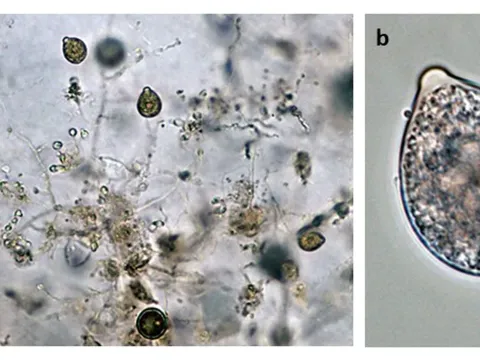
Phytophthora hedraiandra Phytophthora root rot
Phytophthora hedraiandra
Phytophthora hedraiandra is an oomycete, a fungus-like organism that functions as a serious soil-borne pathogen. It is highly specialized in attacking woody ornamental plants, targeting their root systems.
What the section contains
Phytophthora hedraiandra Phytophthora root rot
Unlike true fungi, this organism thrives in water-saturated conditions. Its biology centers on the production of motile zoospores that can navigate through the soil moisture to locate and infect host roots.
The pathogen is capable of surviving for extended periods in the soil through the formation of robust structures called chlamydospores, which remain dormant until conditions for growth become favorable.
Once it colonizes the host, the pathogen secretes enzymes that degrade root tissues, effectively destroying the plant’s ability to transport water and essential nutrients from the soil to the foliage.
This species is recognized for its aggressive nature in nurseries and landscape settings, posing a significant threat to a wide range of susceptible plant species that are often valuable for horticultural purposes.
The primary symptom of infection is a general decline in plant vigor. This manifests as chlorosis of the leaves, followed by wilting and eventual browning or necrosis, mimicking symptoms of severe drought stress.
A key diagnostic feature is observed at the root collar or base of the stem. The bark in this region may show dark, sunken lesions or necrotic patches, often feeling soft or spongy to the touch.
Root system examination reveals extensive decay. Affected roots typically lack white, healthy tips; instead, they appear discolored, ranging from light brown to black, and often emit a characteristic musty odor.
As the disease progresses, the plant may exhibit branch dieback, often starting from the bottom and moving upwards. The overall canopy density decreases as foliage drops prematurely.
- Stunted growth and leaf chlorosis
- Wilting that does not respond to irrigation
- Darkening and necrosis of the root collar
- Decay of fibrous and woody roots
- Gradual branch dieback and overall decline
The development of Phytophthora hedraiandra is heavily dictated by soil moisture levels. Poorly drained, heavy clay soils act as a primary driver for the proliferation of this pathogen.
The presence of standing water around the root zone for prolonged periods, especially during cooler seasons or periods of high rainfall, significantly increases the likelihood of infection.
Temperature plays a crucial role, with the pathogen being most active during warm, moist weather. These conditions facilitate the rapid release and movement of zoospores in the soil environment.
Human activity is a major factor in spreading the disease. Movement of infested soil via contaminated footwear, garden tools, or machinery is a common pathway for introducing the pathogen to new sites.
Cultural practices that involve deep planting or piling mulch directly against the tree trunk create a moist environment at the base of the plant, which is ideal for the infection of the crown and stem.
The economic impact of Phytophthora hedraiandra is substantial, particularly in ornamental horticulture. Infected plants often show no symptoms until the root system has been severely compromised.
In landscape settings, the loss of mature trees and shrubs requires expensive removal and replanting. Furthermore, the residual nature of the pathogen in the soil complicates the re-establishment of susceptible species.
Nurseries face total losses of inventory when the pathogen is introduced to propagation beds. The rapid spread in confined areas makes effective containment extremely challenging and costly.
The ecological damage is significant when considering the reduction of biological diversity in public parks and botanical gardens, where high-value or long-lived species can be eradicated.
Due to the difficulty of curing an established infection, the primary harm is often the irreversible destruction of plants, necessitating focus on preventative management rather than curative measures.
The cornerstone of management is sanitation. Always start with disease-free nursery stock and ensure that pots and tools are thoroughly cleaned and disinfected before use to prevent cross-contamination.
Improving site drainage is essential. Installing subsurface drainage systems or planting on raised mounds can prevent the waterlogging that provides the environment necessary for pathogen activity.
If an infection is identified, the immediate removal and destruction of the symptomatic plant, including the root ball and surrounding soil, is critical to stop the spread of the pathogen to adjacent plants.
Chemical control can be achieved through the application of fungicides specifically labeled for oomycete management, such as those containing metalaxyl or fosetyl-aluminum, used as a preventative or early treatment.
Maintain proper plant vigor through balanced fertilization and appropriate irrigation practices. Healthy plants are better able to withstand environmental stress, though no plant is fully immune to severe pathogen pressure.