
Phytophthora gonapodyides
Phytophthora gonapodyides
The causative agent of the disease is the oomycete Phytophthora gonapodyides, a microorganism that thrives in aquatic and moist soil environments.
What the section contains
Phytophthora gonapodyides
It belongs to a group of pathogens known for producing motile zoospores, which utilize water films in the soil to locate and infect plant root systems.
Biologically, this species functions both as a saprotroph, decomposing organic matter, and as a facultative parasite, attacking stressed or weakened roots.
The resilience of P. gonapodyides is supported by its ability to form persistent structures that survive in diverse environmental conditions for extended periods.
Research indicates that it is often identified in forest soils and nurseries, contributing to the complex decline of woody plant species.
Waterlogged soil and poor drainage are the primary environmental drivers for the development and spread of Phytophthora gonapodyides.
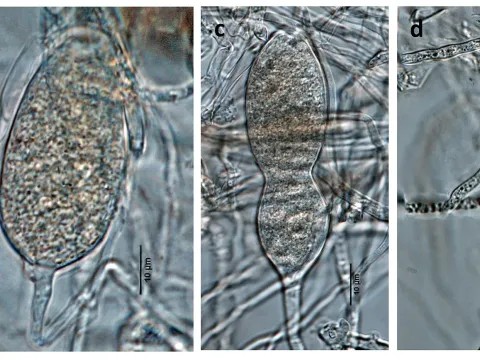
The pathogen is highly active in environments where temperature and humidity levels are moderate, facilitating the rapid production of sporangia.
Contaminated irrigation water from rivers, ponds, or reservoirs is a frequent source of introduction into nurseries and cultivated plots.
Human activity, such as moving soil with tools, footwear, or machinery from infested to clean areas, significantly accelerates the spread of the disease.
Cultural practices that lead to root zone compaction and insufficient oxygen availability make plants more susceptible to initial infection.
The damage caused by P. gonapodyides primarily involves the destruction of fine feeder roots, which impairs the plant's ability to absorb water and nutrients.
Symptoms often manifest as crown thinning, chlorosis, and stunted growth, eventually leading to dieback of twigs and larger branches.
Severe infestations can lead to necrotic lesions at the root collar, effectively girdling the tree and resulting in rapid death.
The economic impact is significant in commercial nurseries, where mortality rates of seedlings can become unsustainable without intervention.
In addition to direct damage, the infection lowers the plant's resistance to environmental stresses and secondary attacks by opportunistic pests or fungi.
Integrated pest management strategies start with ensuring all nursery stock and growing media are certified free from Phytophthora species.
Improving site hydrology through sub-surface drainage is essential to eliminate the moist conditions that favor the pathogen's lifecycle.
Sanitation practices, including the regular disinfection of boots, tires, and all horticultural equipment, are critical for preventing cross-contamination.
If an outbreak occurs, affected plants and surrounding soil should be promptly removed and incinerated to prevent the dispersal of spores.
Application of fungicides, such as phosphonates, can be used as a preventative measure to increase plant tolerance and suppress active infection in nursery settings.